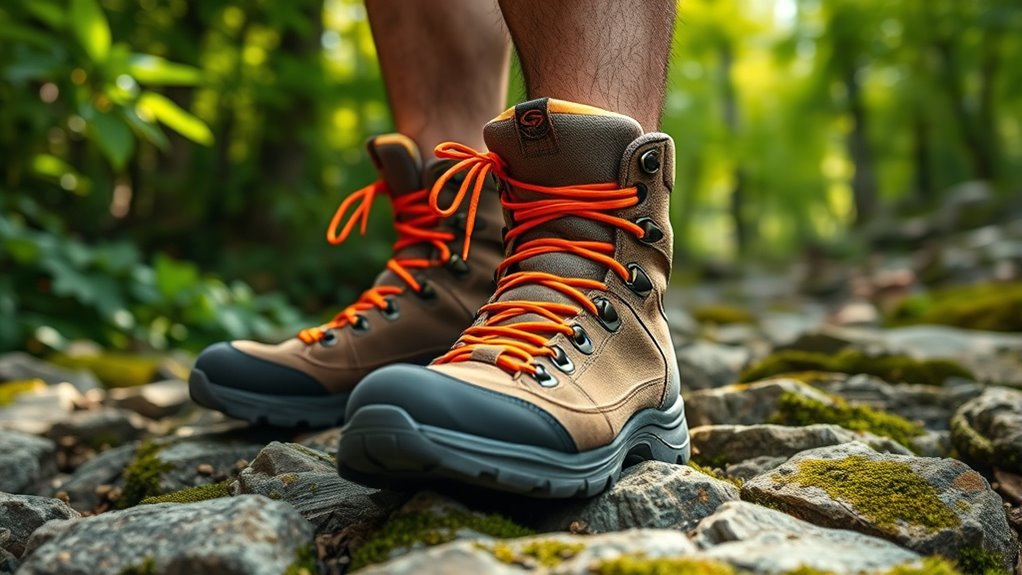

To find the perfect hiking boots, start by evaluating your terrain and hiking style to determine the best support and sole features. Focus on how the boots feel—prioritize comfort and a proper fit over size alone. Try different brands and models, walk in them with your hiking socks, and make certain they support your heel and midfoot without pinching. Break them in gradually and keep maintenance in mind for long-lasting comfort. Keep exploring for more tips to perfect your fit.
Key Takeaways
- Prioritize proper fit by ensuring heel secureness, enough toe room, and comfort, not just relying on size numbers.
- Assess your hiking needs, terrain, and weather to select appropriate materials, support, and traction features.
- Test boots by walking in them with similar socks, gradually breaking them in to prevent blisters and ensure comfort.
- Choose breathable, waterproof materials to balance moisture control, support, and protection against different environments.
- Regularly inspect and maintain your boots, replacing them when support diminishes or wear and tear affect performance.
Assess Your Hiking Needs and Terrain
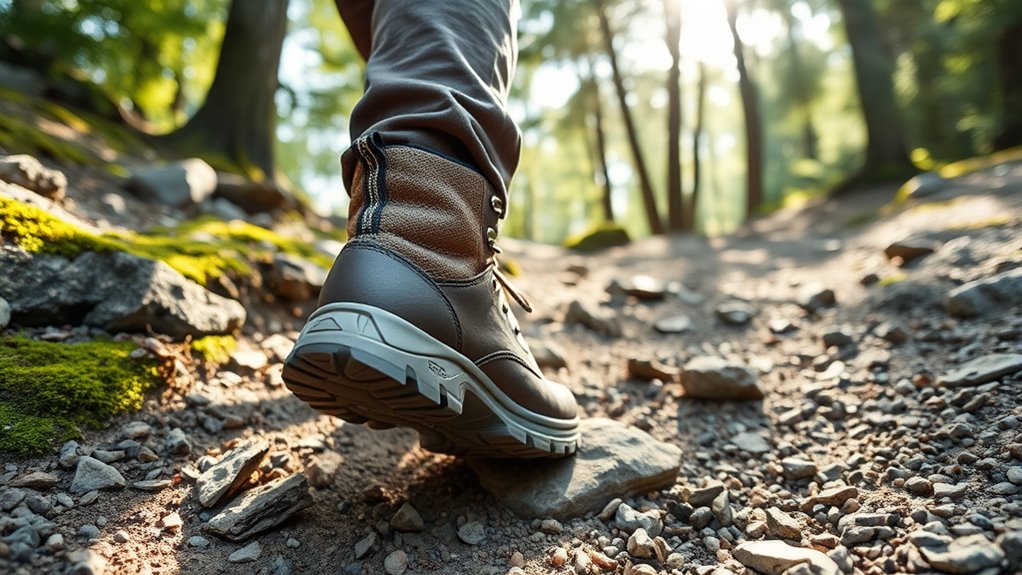
Before choosing hiking boots, you need to understand your specific hiking needs and the terrain you’ll be traversing. Are you planning day hikes on well-maintained trails or multi-day backpacking trips through rugged wilderness? Consider the terrain’s difficulty, elevation changes, and surface type. If you’re tackling rocky paths or uneven ground, look for boots with sturdy soles and ankle support. For smooth, flat trails, lighter footwear might suffice. Think about weather conditions too — wet or snowy environments require waterproof boots. Your intended hiking style influences the boot features you should prioritize. Clarifying these needs helps narrow your options, ensuring you select boots that offer the right balance of support, protection, and comfort for your adventures.
Know Your Foot Shape and Size
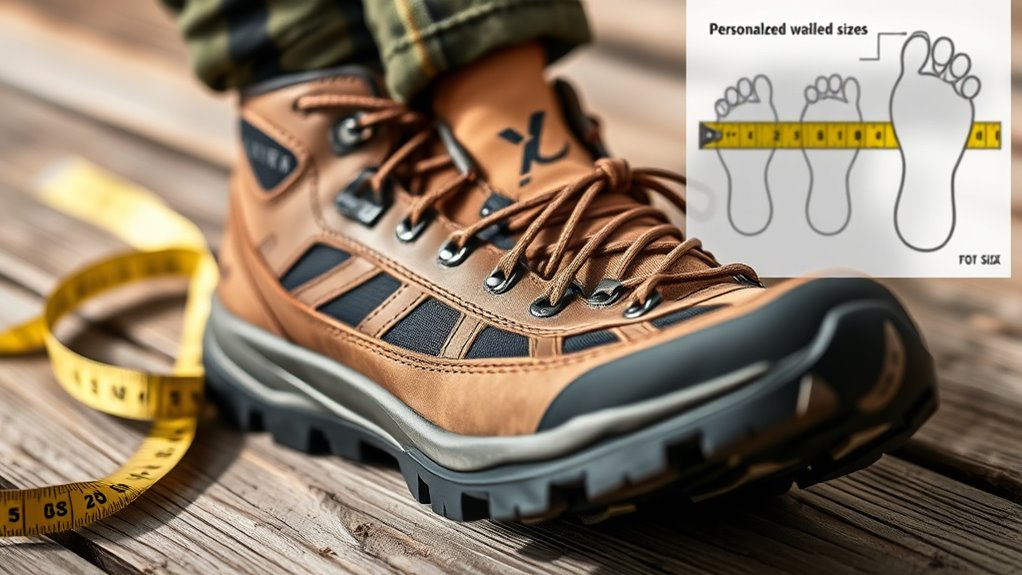
Start by properly measuring your feet to find the right size and length. Next, identify your arch type—whether high, normal, or flat—to choose supportive footwear. Finally, evaluate how wide your feet are to ensure a comfortable fit that won’t cause blisters or pinching.
Properly Measure Your Feet
To find the right hiking boots, you need to know your foot shape and size accurately. Start by measuring your feet at the end of the day when they’re most swollen. Use a ruler or a Brannock device to measure the length from heel to longest toe and the width across the widest part of your foot. Write down these measurements for both feet, as they may differ. Always fit new boots based on the larger foot to ensure comfort. Remember, sizes vary between brands, so try on boots before buying. Wear the socks you’ll hike in to get an accurate fit. Proper measurements help you find boots that provide support without pinching or slipping, making your hikes more enjoyable and safer.
Identify Your Arch Type
Understanding your arch type is essential for choosing hiking boots that offer the right support and comfort. To identify your arch, wet your foot and step onto a piece of paper. Observe the imprint: if you see most of your sole, you likely have a flat arch; if only the heel and ball of your foot are visible, you have a high arch; and if there’s a distinct curve along the inside, you have a normal arch. Knowing this helps you select boots with appropriate insoles and support structures. Flat arches may need stability features to prevent overpronation, while high arches benefit from extra cushioning to absorb shock. Correctly identifying your arch ensures your hiking boots support your feet properly, reducing fatigue and discomfort on rough trails.
Assess Foot Width Needs
Knowing your foot shape and size is essential for choosing hiking boots that fit comfortably and prevent blisters or discomfort. Your foot width influences the overall fit and comfort during long hikes. To assess your foot width, compare the width of your foot at the widest point to the shoe size chart below:
| Foot Width | Description | Suitable Boot Type |
|---|---|---|
| Narrow | Slim, high arches | Slim or narrow-fit boots |
| Medium | Average width | Standard fit boots |
| Wide | Broader forefoot | Wide or extra-wide boots |
Imagine walking with a snug fit in narrow shoes, a comfortable feel in medium, or ample room in wide boots. Proper evaluation ensures you pick a pair that offers support without pinching.
Prioritize Proper Fit Over Size
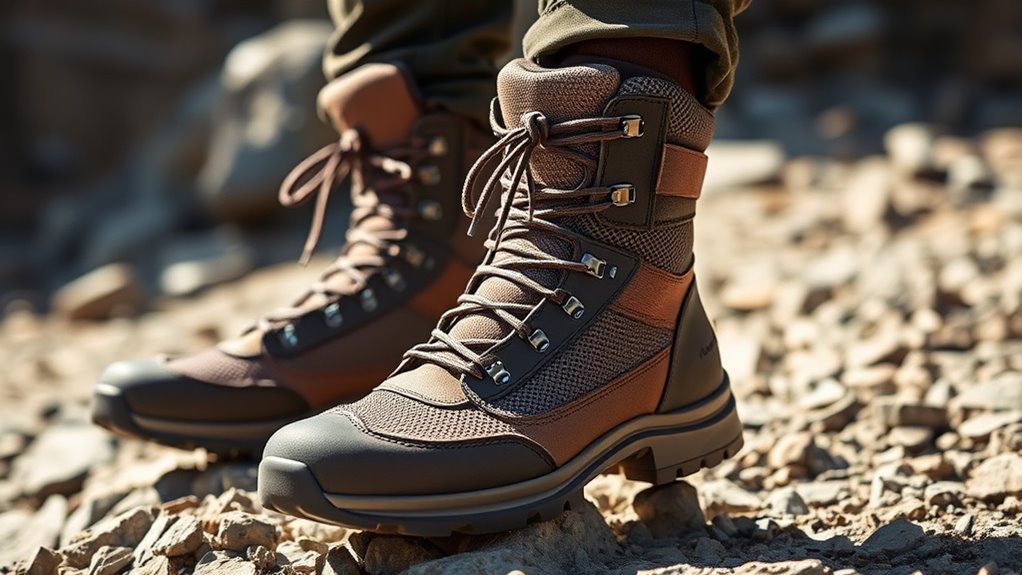
While shoe size provides a general guideline, focusing on proper fit is essential for comfortable hiking boots. Even if your shoes are the right size, they might not fit well if they’re too narrow, wide, or don’t match your foot shape. Prioritize how the boots feel when you wear them. Check for snugness around the heel and midfoot without causing pressure or pinching. Make sure there’s enough room in the toe box to wiggle your toes comfortably. Remember, your feet swell during hikes, so a slightly loose fit offers better comfort and reduces blisters. Don’t rely solely on size numbers—try on different brands and styles to find a fit that feels secure yet comfortable throughout your foot.
Test Boots for Comfort and Support
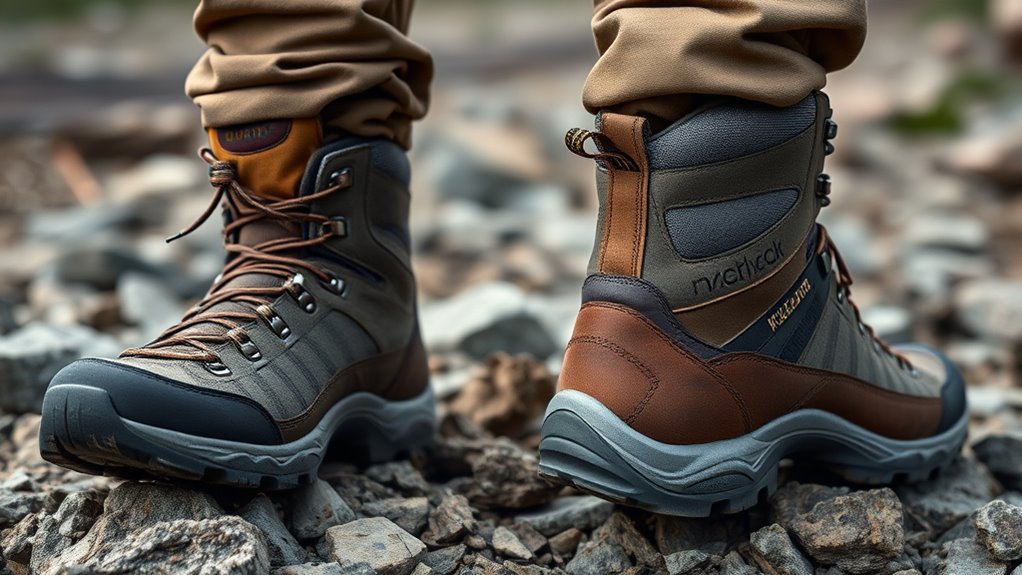
When trying on hiking boots, it’s essential to test them for both comfort and support before making a decision. Walk around the store or your home, paying attention to how the boots feel with each step. Your heel should stay secure without slipping, and there shouldn’t be any pinching or pressure points. Flex the boots to see if they bend naturally with your foot’s movements. Supportive boots should hold your arch comfortably without causing fatigue. Notice if the midsole feels cushioned enough for shock absorption. Take your time to move naturally, mimicking your usual hiking stride. If a boot feels slightly tight, don’t assume it will stretch; it’s better to choose a fit that feels snug but not restrictive. Proper testing guarantees your boots will keep you comfortable on the trail.
Consider Boot Materials and Breathability

Choosing the right boot materials affects both durability and flexibility, so consider options like leather or synthetic fabrics based on your needs. Breathability is key to keeping your feet dry and comfortable during long hikes, helping manage moisture effectively. By balancing material strength with ventilation, you can find boots that last and keep your feet feeling fresh.
Material Durability and Flexibility
Selecting hiking boots with the right material is essential for durability and comfort. You want materials that can withstand rough terrains without wearing out quickly. Leather, especially full-grain, offers excellent durability and molds to your foot over time, but it can be stiff initially. Synthetic materials like nylon or polyester are lighter and often more flexible, making break-in easier and providing more immediate comfort. Consider how flexible the material is; too stiff, and your movement feels restricted, but too flexible might compromise support. Look for boots with a sturdy construction that balances toughness with flexibility. This balance ensures your boots can handle rugged trails without sacrificing comfort or risking damage early in your hikes.
Breathability and Moisture Control
Breathability and moisture control are essential factors in ensuring your hiking boots keep your feet dry and comfortable during extended treks. Choosing the right materials can make a big difference.
- Look for boots with breathable uppers, like mesh or Gore-Tex, which allow air to circulate and reduce sweat buildup.
- Opt for moisture-wicking linings that pull sweat away from your skin, keeping your feet dry and reducing blisters.
- Consider boots with waterproof membranes that balance moisture barriers with breathability, preventing sweat from seeping in while releasing excess moisture.
- Check for ventilation features like perforations or breathable panels that promote airflow even in non-waterproof models.
Focusing on these aspects guarantees your feet stay dry, comfortable, and ready for whatever your hike throws at you.
Pay Attention to Sole and Traction
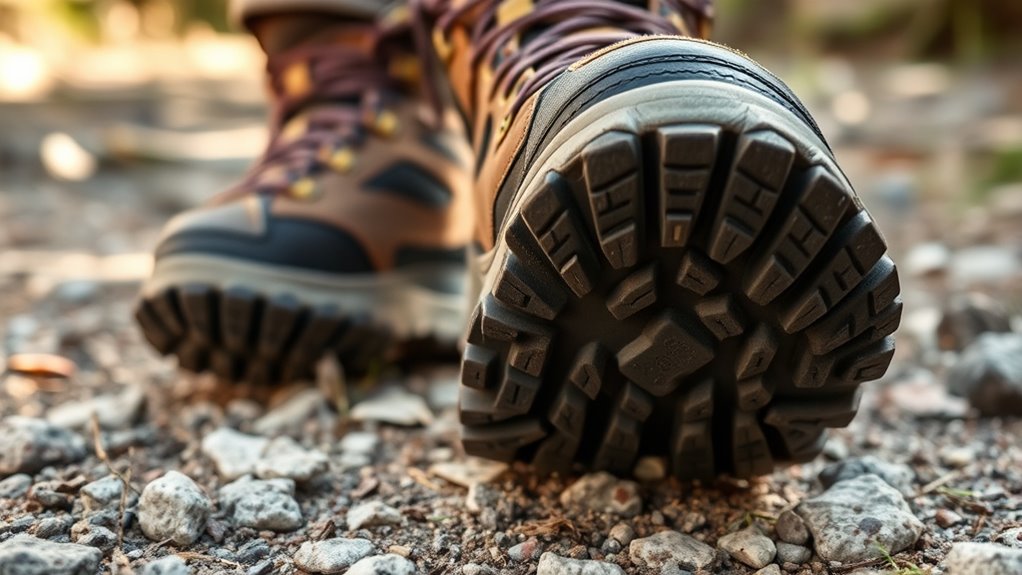
The sole and traction of your hiking boots are essential for maintaining stability and safety on varied terrains. A durable, grippy sole helps prevent slips and falls, especially on wet or uneven surfaces. Look for deep lugs and multidirectional patterns that provide better grip and control. Softer rubber offers more traction but wears faster, while harder soles last longer but may be less sticky. Consider the terrain you’ll hike: rugged trails need aggressive tread, while smoother paths require less aggressive soles. Here’s a quick guide:
| Terrain Type | Sole Characteristics | Traction Features |
|---|---|---|
| Mountain Trails | Thick, rugged sole | Deep lugs, multidirectional |
| Forest Trails | Flexible, mixed rubber | Sharp edges, sticky grip |
| Wet Surfaces | Water-resistant, slip-resistant rubber | Enhanced grip, siped patterns |
| Rocky Terrain | Firm, protective sole | Strong grip, textured tread |
| Urban Paths | Lightweight, durable rubber | Moderate tread, slip-resistant |
Break Them In Before Your Hike

Before hitting the trail, it’s important to break in your new hiking boots to prevent blisters and discomfort. Taking time to do this guarantees your boots mold comfortably to your feet. Here’s how to do it effectively:
- Wear them around the house for short periods to get used to the fit.
- Walk on different surfaces, like carpets and pavement, to simulate trail conditions.
- Use thicker socks to mimic what you’ll wear during your hike.
- Gradually increase the duration of wear until your boots feel comfortable for longer walks.
This process helps soften stiff materials and reduces the risk of hot spots. Don’t rush, and listen to your feet. Properly broken-in boots will feel like an extension of your legs on the trail.
Maintain and Replace Your Hiking Boots Regularly

Regular maintenance and timely replacement of your hiking boots are essential to guarantee they perform safely and comfortably on the trail. You should clean your boots after each hike to remove dirt and mud, which can cause deterioration over time. Dry them properly, avoiding direct heat, to prevent cracking and material damage. Inspect the soles regularly for wear; worn-out soles reduce traction and stability. Apply waterproofing treatments as needed to maintain water resistance. Replace your hiking boots when they no longer support your feet or show significant damage like torn uppers or thin soles. Worn-out boots can lead to blisters, injuries, or discomfort. Prioritize regular care, and don’t hesitate to get new boots when your current pair no longer provides proper fit and protection.
Frequently Asked Questions
How Often Should I Replace My Hiking Boots?
You should replace your hiking boots every 500 to 700 miles or when you notice significant wear, such as worn-out soles, reduced support, or leaks. Keep an eye on the tread and the overall condition—if the boots are no longer providing proper grip or comfort, it’s time for a new pair. Regularly inspecting them guarantees you stay safe and comfortable on every hike.
Can I Wear Hiking Boots for Everyday Use?
Yes, you can wear hiking boots for everyday use, especially if they’re comfortable and suited to your daily activities. They provide good support and durability, making them a practical choice for walking around town or running errands. However, keep in mind that hiking boots tend to be stiffer and heavier than regular shoes, so they might not be suitable for all-day wear or formal settings.
What’s the Best Way to Break in New Hiking Boots?
To break in new hiking boots, start by wearing them around your house for an hour or two each day. Gradually increase the time and add light outdoor walks. Focus on areas that feel tight, and use thick socks for extra cushioning. If certain spots cause discomfort, use moleskin or boot stretchers to loosen them. Consistent, gentle use helps mold the boots to your feet comfortably.
How Do I Prevent Blisters During Long Hikes?
Blisters are like uninvited guests that can ruin your hike. To prevent them, keep your feet dry and well-lubricated, and wear moisture-wicking socks. Break in new boots gradually and choose the right fit, ensuring they aren’t too tight or too loose. Take regular breaks to air out your feet, and if you feel hotspots, stop and adjust your socks or lacing. Proper precautions keep blisters at bay and your hike enjoyable.
Are Waterproof Boots Always the Best Choice?
Waterproof boots aren’t always the best choice, especially if you hike in hot or humid conditions. They can trap moisture and cause your feet to sweat, leading to discomfort and blisters. Consider your typical terrain and weather—if it’s rainy or wet, waterproof boots are great. Otherwise, breathable options might keep your feet cooler and dry, providing better overall comfort and preventing issues during your hikes.
Conclusion
Choosing the right hiking boots isn’t just about style — it’s about comfort and support. While new boots promise adventure, ignoring fit can turn your trek into a nightmare. Remember, perfect fit isn’t just comfort; it’s your safety. So, balance the excitement of new gear with careful selection. Because in the end, the right boots make every step enjoyable, turning challenging terrain into a walk in the park. Happy hiking!