
Space vacations are getting closer as technological advances make orbital trips more affordable and frequent. With companies like SpaceX and Blue Origin already offering suborbital flights at around USD 600,000, costs are predicted to decline as reusable rockets and increased competition improve accessibility. Regional infrastructure, especially in North America, supports rapid growth, and orbital stays may soon become routine. If you want to explore future space travel developments and potential experiences, there’s more to discover ahead.
Key Takeaways
- Over 800 people have already reserved space tourism tickets, with about 63 having flown as of 2024.
- Suborbital flights are currently the primary revenue source, offering brief Earth views and weightlessness.
- Costs are decreasing, with seat prices around USD 600,000, making space travel more accessible over time.
- Industry growth is rapid, with a projected market reaching over USD 5 billion by 2032 and increasing flight frequency.
- Future developments include space hotels, orbital resorts, and extended stays beyond Earth, bringing orbit vacations closer.
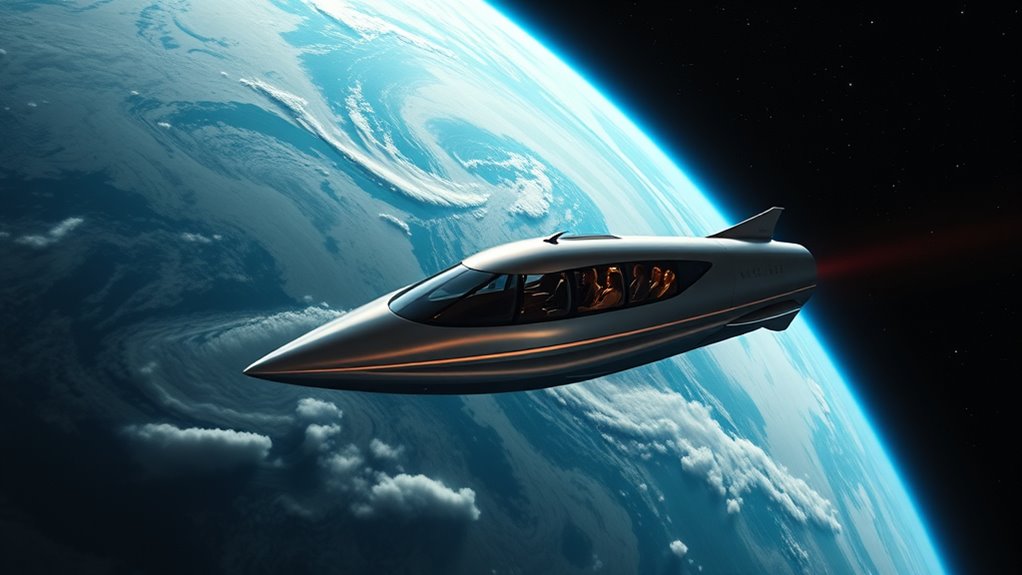
While space tourism is still in its early stages, it’s rapidly evolving into a noteworthy industry with promising growth prospects. Today, the global market is valued at around USD 1.3 to 1.6 billion in 2025 and is expected to nearly triple by 2032, possibly reaching up to USD 5.27 billion by the early 2030s. The industry is growing at a compound annual rate between 15% and 20%, with the orbital segment leading the charge, projected to capture nearly half of the market share in 2025. North America dominates this landscape, holding roughly 39% to 49% of the global market, driven by established infrastructure and active private sector involvement.
Space tourism market projected to triple by 2032, driven by orbital flights and North American industry leadership.
Most space tourism revenue still comes from suborbital flights, which offer a few minutes of weightlessness and stunning Earth views. These flights are more accessible and affordable than orbital experiences, which are still rare and costly but are the fastest-growing segment with a compound annual growth rate estimated at 36.6%. Orbital tourism allows for longer stays in low-Earth orbit, paving the way for future space hotels, orbital resorts, and zero-gravity entertainment venues. Several companies and governments are planning to develop commercial space stations and orbital hotels, signaling a future where extended stays beyond Earth could become routine. Additionally, technological innovations such as reusable rockets have significantly lowered costs and increased flight frequency.
Demand for space travel is rising steadily. As of 2024, only about 63 people have flown as space tourists, but over 800 have already reserved tickets for upcoming flights. By 2025, projections suggest that between 250 and 400 individuals might venture into space, driven by a mix of affluent adventure seekers, researchers, educators, and artists. The appeal lies in the unique, immersive experience that space offers—something vastly different from traditional tourism. Prices for upcoming spaceplane seats hover around USD 600,000, but as technology advances and competition intensifies, costs are expected to decrease, making space travel more accessible in the future.

The Young Scientists Club Space Adventures Pack, STEM Kit, 13 Educational Activities, Includes Reusable Backpack, Space Navigator, DIY Constellations, Space Card Game & More, Multi (204755)
EXPLORE SPACE WITH THE YOUNG SCIENTISTS CLUB: Go on an intergalactic adventure and unpack a variety of solar…
As an affiliate, we earn on qualifying purchases.
As an affiliate, we earn on qualifying purchases.
Frequently Asked Questions
When Will Space Tourism Become Affordable for the General Public?
Space tourism will become more affordable for the general public around the 2040s. As technology advances, reusable spacecraft and increased competition will lower costs considerably. You’ll see prices drop as industry growth continues, making trips more accessible beyond wealthy adventurers. Governments and private companies are working toward broader participation, so if you’re patient, space vacations could be within reach in the next two decades, transforming space travel from an exclusive experience into a common adventure.
What Safety Measures Are in Place for Space Tourists?
You’ll find that safety measures for space tourists are evolving rapidly, with industry investments and regulations improving standards. About 50% of funding comes from governments, focusing on passenger training, safety protocols, and spacecraft testing. Reusable launch vehicles and advanced communication tech reduce risks, and partnerships prioritize safety. As the industry grows, stricter safety regulations and rigorous training will guarantee your space adventure is as secure as possible, making this once-futuristic experience increasingly safe.
How Environmentally Sustainable Is Current Space Tourism Technology?
Current space tourism technology is making strides toward environmental sustainability. You’ll find reusable spacecraft reducing waste and emissions, and companies are exploring sustainable propulsion systems to minimize planetary impacts. Advances in communication and training also promote eco-friendly practices. While challenges remain, industry efforts focus on balancing growth with environmental responsibility, so your future space trips could be greener, safer, and more sustainable, helping preserve orbital and planetary ecosystems for generations to come.
Will Space Hotels Offer Long-Term Stays or Just Short Visits?
Space hotels will likely offer both long-term stays and short visits, depending on your interests. As technology advances, you’ll see more options for extended orbital hotel stays that go beyond brief trips, providing immersive experiences in zero gravity and breathtaking views. Short visits will remain popular for quick, spectacular Earth glimpses. With ongoing innovation and infrastructure growth, long-term accommodations are becoming more feasible, making space hotel stays an exciting reality for future travelers.
How Accessible Will Space Tourism Be to People With Disabilities?
You’ll find space tourism becoming more accessible for people with disabilities as industry leaders prioritize inclusive design. They’re developing specialized spacecraft, adaptive training, and onboard support to guarantee safety and comfort. While challenges remain, ongoing technological innovations and regulatory efforts aim to remove barriers. This progress signifies a future where space travel isn’t just for the privileged but for everyone enthusiastic to experience the cosmos, fostering greater equality in exploration.

GRAOSO Carrying Bag for Folding Chair, Storage Case Fits for Beach Chair, Zero Gravity Lounge Chair, Director Chair, Folding Walker/Wheelchair, Great for Camping, Travel, Outdoors, Black
ROOM ENOUGH: Dimension: 41.5”*27.5”*8.8”; The lawn chair carrier is enough roomy to carry two chairs for transport chair,…
As an affiliate, we earn on qualifying purchases.
As an affiliate, we earn on qualifying purchases.
Conclusion
As you stand on the cusp of space tourism becoming a reality, remember that we’re approaching a new chapter in human adventure. It’s like reaching for the stars, finally within our grasp. While we’re not quite there yet, each breakthrough brings us closer to turning dreams of orbit vacations into everyday experiences. Keep your eyes on the sky — soon, the universe will be just a doorstep away, waiting for you to step through.
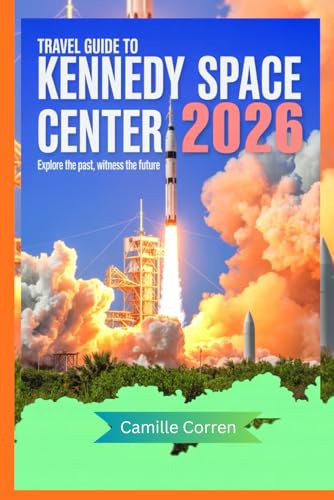
TRAVEL GUIDE TO KENNEDY SPACE CENTER 2026
As an affiliate, we earn on qualifying purchases.
As an affiliate, we earn on qualifying purchases.

3D VR Headset, Virtual Reality Glasses Headset Helmets, Compatible with 5.0-7.0 inch with Controller, for Mobile Games & Movies(Black)
【Immersive 3D Movie Viewing】Gaming and watching movies in 3D works best when proper your eyes properly align with…
As an affiliate, we earn on qualifying purchases.
As an affiliate, we earn on qualifying purchases.