
TL;DR

Get the little things that make your day delivered free with Prime
- Fast, free delivery on millions of items
- Prime Video, Amazon Music and more included
- Member-only deals all year
Halloween-themed party decorations work best when you choose one clear mood, repeat a small palette, and connect the decor to your party’s costumes, food, music, and activities. Use LED lights, secure outdoor pieces against wind, and mix reusable basics with a few handmade details so the space feels atmospheric without becoming unsafe or expensive.
A dark hallway, one orange lamp, and a paper ghost that swings when the door opens can feel spookier than a room packed with decorations. The best Halloween-themed party decorations don’t just fill space; they guide guests into a mood, point them toward the snacks, and give the evening a look that feels intentional.
You can build that feeling on a small budget or go all-in with fog, projections, and a graveyard lawn. This guide helps you choose a theme, decorate rooms and outdoor areas, use lighting safely, and add DIY or tech touches without turning your home into a storage problem. You’ll leave with a practical plan you can adapt to a kids’ afternoon party, a costume night, or a cozy gathering with friends.
Choose one party mood, a three-color palette, and two or three motifs before shopping.
Build the look around a focal point, then repeat a handmade detail in other areas.
Use layered LED lighting and keep paths, stairs, and food stations easy to see.
Secure outdoor decorations, keep cords away from walkways, and check the display after dark.
Save sturdy basics for reuse and add a few temporary or DIY details each year.
Choose one Halloween mood before you buy anything
Halloween-themed party decorations look more polished when you choose one mood and repeat a few visual cues throughout the space. A haunted-house look might use black cloth, dusty gray paper, and candle-shaped LEDs, while a playful pumpkin party could lean on orange, green, and smiling jack-o’-lanterns. The goal is a clear feeling, not a matching catalog set. A consistent mood helps guests understand the atmosphere as soon as they arrive, while a few repeated cues keep separate spaces from feeling like unrelated displays.
Classic themes include witches, ghosts, graveyards, pumpkins, and skeletons; modern trends incorporate pop culture references, spooky minimalism, or humorous takes on horror. Pick what suits your guests. For a family gathering, friendly ghosts and smiling gourds can feel festive without startling toddlers. For a grown-up movie night, a few eerie silhouettes and a soundtrack of creaking doors may do more than a dozen plastic monsters. Consider not only what looks good but how guests will experience it: an intense scare may delight horror fans but make younger children or people unfamiliar with the theme uncomfortable.
Try a simple palette of three colors and choose two or three motifs. For example, a “moonlit garden” party could pair deep purple, silver, and black with paper bats and bare branches. Repeat those details on the invitation table, snack station, and photo corner, and the room will feel connected even if each area serves a different purpose. Limiting the palette also makes it easier to mix handmade, thrifted, and existing items; the tradeoff is that a restrained scheme can look less varied, so use differences in texture and height to keep it visually interesting.
Before shopping, write down your theme, colors, and guest age range. That small pause helps you avoid buying a neon skeleton that clashes with your candlelit Victorian setup—or decorations that feel too frightening for the people coming over. It also clarifies what you can reuse from home, reducing impulse buys and the storage burden of pieces that only suit one look.
As an affiliate, we earn on qualifying purchases.
Make a small budget feel like a full party setup
You can make a room feel party-ready with one focal point, repeated details, and a few DIY pieces rather than buying decorations for every corner. A snack table, entryway, or photo backdrop can carry the visual weight; smaller accents then echo the same colors elsewhere. This approach saves money and keeps the room from feeling cluttered. It also gives guests an obvious visual anchor, so the party reads as intentional even when much of the room stays undecorated. Concentrating your effort means you can spend a little more time on placement and finish, though it also makes the chosen focal point more noticeable if it looks untidy or is hard to use.
For instance, cover a folding table with a black cloth, add a bowl of mini pumpkins, and hang a handmade “Boo!” banner behind it. Cut paper bats from black cardstock and place a few along the wall leading to the table. A $5 pack of paper can tie the entrance and food area together more effectively than several unrelated decorations. The tradeoff is that a focused display draws attention to its details, so take a minute to straighten the cloth and arrange the objects rather than spreading your effort across more pieces. Make sure the table still has space for serving dishes; a decorative setup that crowds the food creates friction precisely where guests need room to gather.
Use this short plan to build your setup:
- Choose a focal spot. Pick the place guests will notice first, such as the front door or snack table.
- Set your palette. Limit yourself to three colors so thrifted or homemade pieces still look related.
- Add height and texture. Combine a hanging banner, tabletop objects, and a soft cloth or paper backdrop.
- Repeat one motif. Use the same ghost, pumpkin, or bat shape in at least two areas.
- Check the room from the doorway. Remove anything that blocks a path or makes the main gathering spot hard to use.
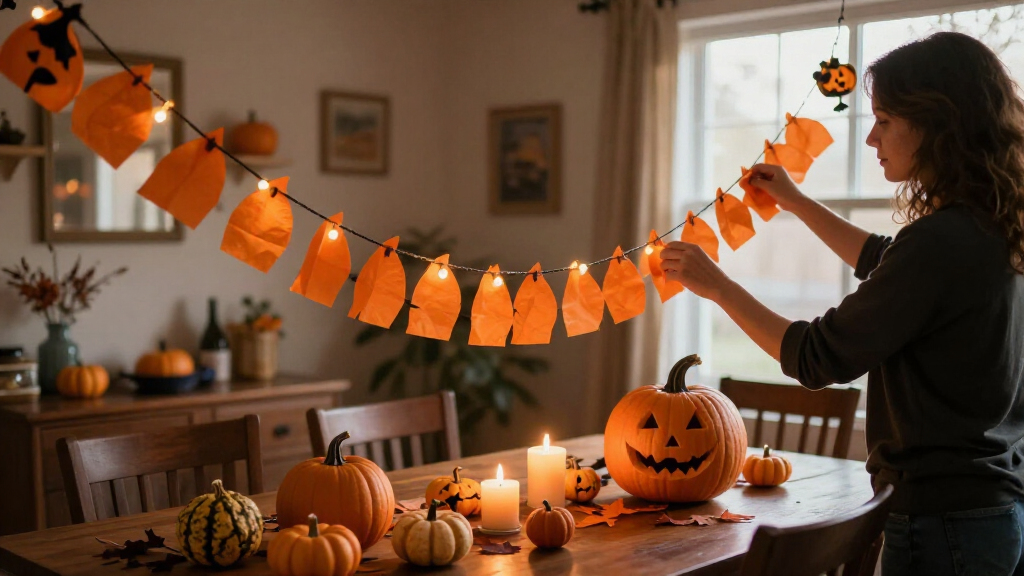
DIY decorations work best when the project is simple enough to finish before party day. Painted jars, paper garlands, and fabric scraps can look charming; elaborate crafts that take the whole weekend can turn the fun into a chore. Save the effort for one detail guests will actually notice. Homemade pieces also tend to be less durable than store-bought basics, so treat them as seasonal accents and build the setup around items you can use again. That balance keeps the personal, handmade character without making the whole display dependent on fragile pieces or last-minute crafting.
outdoor Halloween decoration stakes
As an affiliate, we earn on qualifying purchases.
As an affiliate, we earn on qualifying purchases.
Use lighting to make the room feel spooky, not hard to see
Layered lighting creates atmosphere while keeping guests able to see stairs, food, and one another. Use a soft general light for movement, then add orange, purple, or green accents near a wall or centerpiece. Flickering LED candles bring a warm glow without an open flame, and string lights can outline a doorway or snack station. The useful distinction is between ambient light, which helps people move, and accent light, which creates drama; relying on accent light alone may look striking in photos but makes ordinary tasks harder. Guests often carry drinks, serve food, or move through unfamiliar rooms, so light that supports those tasks matters as much as the mood-setting effect.
Think of light as the soundtrack for your eyes: a dim purple wash can make paper bats look mysterious, while a warm amber lamp makes a pumpkin display feel welcoming. If you’re hosting a children’s party, keep paths bright and place the spookiest effects away from the entrance. A sudden flash or pitch-black corridor may be startling rather than fun. Brighter light can soften the spooky mood, but it also helps guests recognize faces, find food, and notice changes in floor level—an important tradeoff when the room is busy. Instead of dimming the entire room to achieve atmosphere, keep the basic light usable and make one corner or wall more dramatic.
Newer options include app-controlled smart bulbs, motion-triggered sound, and projection effects. You could set a porch light to shift from purple to orange when guests arrive, or project drifting clouds onto a plain wall. Keep the effect simple; a small projector aimed at a sheet can look more magical than a complicated setup that needs constant troubleshooting. Added technology can create a memorable moment, but it brings extra power, setup, and reliability needs, so use it as an accent rather than something the whole party depends on. Consider what happens if the app disconnects or a device runs out of power: the party should still feel complete without the effect.
Before guests arrive, test the lighting from several points in the room. Check that nobody has to cross a dark patch to reach the bathroom, and keep cords away from walkways. A dramatic corner should be a place to take a photo, not a place where someone trips over an extension lead. If an effect only works when the room is too dark to move around safely, reduce its brightness or confine it to one wall. Testing in advance also shows whether colored bulbs distort food or faces, giving you time to adjust the balance before people arrive.
As an affiliate, we earn on qualifying purchases.
Decorate your yard safely and keep the welcome clear
Safe outdoor decorations stay stable in changing weather, leave a clear path, and use lighting that won’t create a fire risk. Choose weather-resistant pieces for the lawn, secure lightweight props against wind, and keep cords and stakes away from walkways. The effect can be spooky; the route to your door should still be easy to see. Outdoor setups face conditions an indoor display doesn’t: wind can shift props, rain can affect materials and electrical equipment, and darkness can hide hazards. Planning for those conditions protects guests and saves you from having to rebuild the display midway through the evening. A setup that looks impressive in daylight may become difficult to navigate after dark, so consider the path and the display as separate design priorities.
A family-friendly graveyard is a good example: place foam tombstones along the edge of the lawn, add a few artificial spiderwebs to shrubs, and use battery-powered lanterns to mark the path. Keep decorations low enough that they don’t hide steps or trip hazards. If you use an inflatable, follow its anchoring instructions and check the forecast before setting it up. A large inflatable can make a strong impression from the street, but it takes more space and is more exposed to wind than small, weighted decorations; scale it to your yard and conditions. Smaller weighted props may have less dramatic impact from a distance, but they are often easier to secure and less likely to obstruct the entrance.
LED lights are a safer choice than open flames near dry leaves, fabric, and paper. Avoid placing fog machines where mist could make steps slippery or obscure the walkway. If you use a motion-activated prop, aim it away from the public sidewalk and give guests enough room to pass without being startled into the street. These effects can heighten the surprise, but the closer they are to a route people must use, the more they can interfere with visibility and movement. Keep the spectacle to the edges and preserve a calm, well-lit path through the middle. This may make the display less immersive, but it prevents a theatrical effect from compromising the basic purpose of an entryway: getting people safely to the door.
Do one final walk from the curb to the front door after dark. Look for loose cables, dim steps, sharp stakes, and decorations that block access. Pay attention to the view from a guest’s height, too: a low cord or hidden step may not be obvious when you’re looking down from the porch. A good display invites people in; it doesn’t make them guess where to put their feet. If weather changes, recheck the setup rather than assuming decorations stayed where you placed them; a quick adjustment is a better tradeoff than leaving a shifted prop or obscured path in place.
DIY Halloween paper ghost decorations
As an affiliate, we earn on qualifying purchases.
As an affiliate, we earn on qualifying purchases.
Connect your decorations to food, costumes, and party activities
A cohesive party repeats its theme across decorations, food, costumes, music, and activities. That doesn’t mean every object must match; it means guests can recognize the same mood as they move from the doorway to the snack table. Decorations then support the evening rather than sitting apart from it. When details connect to what guests are doing, they become part of the experience instead of visual clutter people have to navigate around. The practical benefit is that a few decorations can do double duty as signage, a photo backdrop, or an activity prompt, but each item still needs to leave the space usable.
For a “mad scientist” party, place clear jars with paper labels near the drinks, use green lighting around the snack station, and set out a simple potion-mixing activity with juice and sparkling water. At a cozy pumpkin party, arrange mini gourds beside the cider and make a small table where guests can draw faces on paper pumpkin cutouts. The theme becomes something people can join, not just look at. Leave enough room around these displays to serve food and take part in the activity; a beautifully themed table that is hard to use undermines its purpose. Activities add interaction and give guests something to remember, but they also need materials, supervision, and clear space, so choose an activity that fits the group and the room.
Pop culture references can make a theme instantly recognizable, but use them in a way your guests will enjoy. A few nods to a favorite film or game can add personality; filling the room with competing references can make the setup feel scattered. Humorous takes on horror—like a skeleton “guarding” the chips—work especially well when you want a relaxed, social atmosphere. The more specific a reference is, the more it may delight fans but leave other guests out, so pair niche details with familiar Halloween cues that keep the overall theme easy to read. This lets enthusiasts enjoy the extra layer without making everyone else feel they need to know the source material to understand the party.
Let the room layout guide your choices. Put decorations around, not on top of, the food and activity areas. If guests need space to serve themselves or move between rooms, leave open surfaces and clear pathways. The best themed detail often becomes part of the party: a photo backdrop, a pumpkin-painting table, or a sign pointing to the “witches’ brew.” Give each activity enough space to work, and it can serve as both entertainment and decor without forcing guests to choose between joining in and moving comfortably through the room. Before finalizing the layout, imagine where a queue might form; a popular photo spot or food station can create a bottleneck even when the decorations themselves don’t block the path.
Choose reusable materials that still look festive
Reusable decorations reduce waste and make next year’s setup easier when you choose sturdy basics and store them carefully. Fabric banners, cloth table coverings, LED lights, and durable plastic or metal lanterns can return season after season. Add paper crafts or fresh pumpkins for a temporary touch instead of replacing every item each October. Reusables cost more upfront in some cases, but they can pay off over several parties; temporary pieces offer flexibility and a lower initial cost, though they need replacing or disposing of afterward. The best choice depends on how often you host, how much storage you have, and whether you enjoy changing the theme each year.
For example, a black table runner and warm-white string lights can work for a witch’s dinner this year, then shift to a haunted library next year. Change the centerpiece and paper details, not the foundation. That small habit keeps your storage box from filling with decorations that only work for one specific party. Neutral basics are easier to adapt, but they may feel less distinctive on their own, so use a few inexpensive seasonal accents to give each year’s setup its own personality. If a reusable item is bulky or awkward to store, its theoretical longevity may not be worth the space it takes; choose pieces you can realistically pack and bring out again.
To keep materials in good shape, let fabric dry before folding it, wrap lights loosely around a piece of cardboard, and store fragile items in a labeled box. Keep batteries out of decorations during long storage if the maker recommends it. For outdoor pieces, wipe off dirt and check for cracks before packing them away. A little maintenance takes time, but it prevents a reusable item from becoming a broken or unsafe decoration next year and helps you see what you already own before shopping again. Labeling by type or location also makes setup faster, which matters when the party schedule leaves little time for searching through mixed boxes.
DIY options can be gentler on your budget and waste bin when you repurpose what you have: old jars become lanterns, cardboard becomes a tombstone, and fabric scraps become a table runner. Use non-toxic paint and adhesives when children help. A handmade object doesn’t need to look perfect; slightly crooked paper bats can give a room the lively, homemade charm that store-bought sets sometimes miss. Reusing household materials also means the result may not withstand outdoor weather, so keep delicate crafts indoors or make them knowing they are temporary. Repurposing avoids buying new materials, but it still takes time and may produce items that cannot be stored or reused; choose projects whose effort matches how much enjoyment they add to the party.
Frequently Asked Questions
What are the safest outdoor Halloween decorations?
Choose stable, weather-resistant decorations, secure inflatables as directed, and keep cords, stakes, and props away from walking routes. Use LED lights instead of open flames, and keep steps and the path to your door clearly lit. Check the setup after dark, when hidden hazards are easier to spot.
How can I make Halloween decorations on a budget?
Focus on one visible area, such as the snack table or entryway, and repeat a simple motif elsewhere. Paper bats, painted jars, cardboard tombstones, and a reused black cloth can make a strong display for little money. Pick a few colors first so inexpensive pieces look like part of the same plan.
How do I make a yard spooky but family-friendly?
Use smiling pumpkins, friendly ghosts, soft orange or purple lighting, and low foam tombstones rather than graphic props or sudden scares. Keep the walkway bright and leave a clear route to the door. A gentle motion effect can be fun, but place it where it won’t startle guests into a street or driveway.
What are easy Halloween lighting ideas?
Try LED candles on a table, string lights around a doorway, and one colored bulb aimed at a blank wall. Orange feels warm and festive; purple or green can add a more mysterious look. Test the room before guests arrive so the mood stays atmospheric while stairs and serving areas remain visible.
How can I add technology to Halloween decorations without a complicated setup?
Start with one app-controlled smart bulb or a small projector, rather than building a full synchronized display. Set the light to a steady color or use a simple looping projection on a plain wall. Test the app, power source, and placement ahead of time so your party doesn’t become a troubleshooting session.
How should I store decorations so I can reuse them next year?
Let fabric and outdoor pieces dry before packing them, wrap light strings loosely, and label boxes by category. Keep delicate items in a separate container and remove batteries for long-term storage when the product instructions advise it. A quick check before packing helps you spot broken pieces before they disappear into the closet.
Conclusion
Start with a mood, not a shopping cart: choose your colors, set one focal point, and repeat a few details where guests will notice them. Keep pathways bright and open, then add one playful or spooky surprise that makes the setup feel like yours.
A bowl of pumpkins, a warm orange glow, and a paper ghost that goes whoosh in the doorway can be all the Halloween magic your party needs.
Fall Picks
fall essentials
As an affiliate, we earn on qualifying purchases.