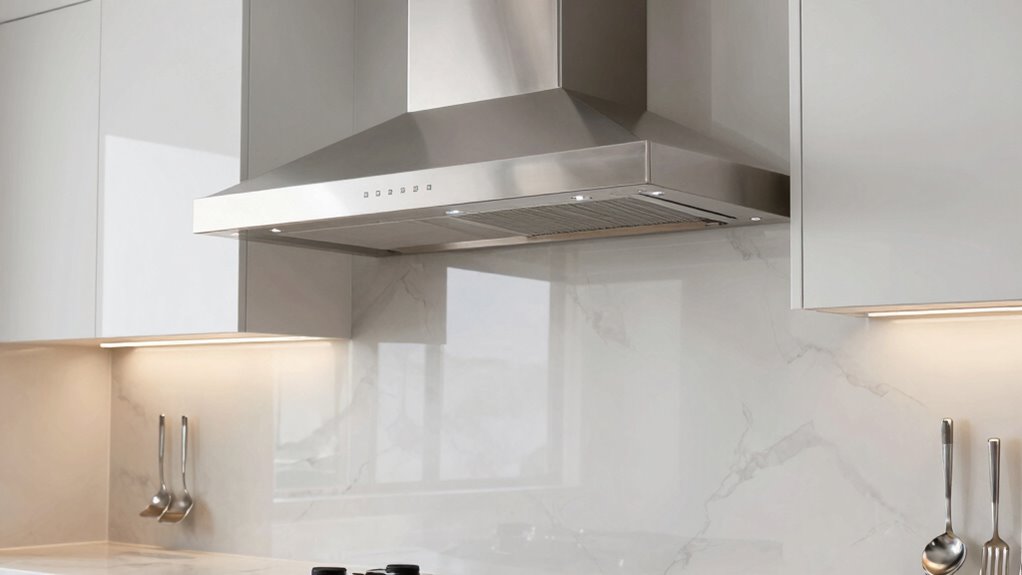

Before upgrading your kitchen ventilation, consider airflow patterns to guarantee fumes are efficiently expelled and odors don’t settle. Choose a system that matches your kitchen size and cooking habits, and plan ductwork for minimal resistance and noise. Focus on noise levels, aesthetic design, and proper installation for best performance. Also, look for adjustable settings to suit different cooking needs. If you want to learn how these factors combine for the perfect upgrade, keep exploring further.

Get the little things that make your day delivered free with Prime
- Fast, free delivery on millions of items
- Prime Video, Amazon Music and more included
- Member-only deals all year
Key Takeaways
- Assess your kitchen size, cooking habits, and airflow needs to select appropriately sized ventilation systems.
- Ensure ductwork layout is straight and short to optimize airflow, reduce noise, and improve efficiency.
- Choose systems with adjustable airflow settings for versatile cooking and better air control.
- Consider noise levels and opt for sound-dampening features to maintain a peaceful environment.
- Prioritize professional installation for proper sealing, optimal airflow, and seamless integration with your kitchen decor.
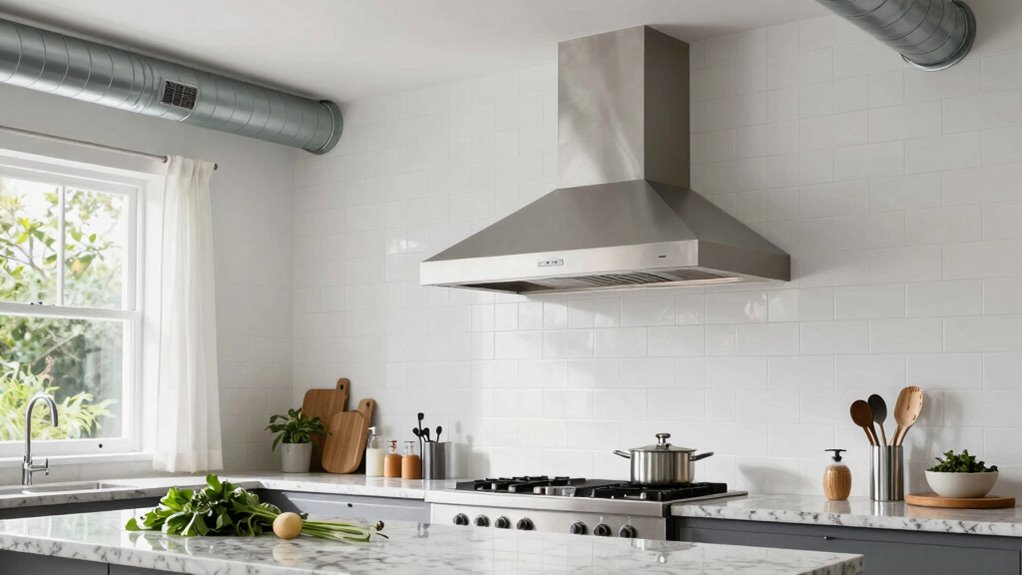
Upgrading your kitchen ventilation is vital for maintaining a clean, healthy, and comfortable cooking environment. Before diving into a new system, it’s important to understand how airflow patterns play a key role in effectively removing smoke, odors, and moisture. Proper airflow ensures that airborne contaminants are quickly carried away from your cooking area and expelled outside. When selecting a ventilation system, consider how it influences airflow within your kitchen space. An efficient setup creates a consistent, directional flow that pulls cooking fumes upward and out through the exhaust, preventing stale air from lingering. Poor airflow patterns can lead to uneven ventilation, causing odors to settle and moisture to accumulate, which may promote mold growth and damage cabinetry or walls over time. Additionally, ensuring your ventilation system supports natural airflow can enhance overall efficiency and energy savings. Incorporating airflow patterns that promote effective air movement can also help reduce energy consumption by minimizing the workload on your ventilation system. Understanding airflow dynamics can further optimize your system’s performance by ensuring that air moves smoothly and effectively throughout the kitchen space. Recognizing the importance of airflow control can also help you make informed decisions when designing or upgrading your ventilation setup. Furthermore, choosing a system with adjustable airflow settings allows you to tailor ventilation to different cooking activities and conditions, maximizing efficiency and comfort.
Proper airflow in your kitchen vents ensures smoke, odors, and moisture are effectively removed, preventing damage and mold growth.
Another key factor to think about is noise levels. Many homeowners overlook this aspect, but a noisy ventilation system can greatly impact your kitchen’s comfort. When upgrading, look for units designed with noise reduction features—such as insulated fans or sound-dampening materials—that operate quietly without sacrificing performance. You don’t want to be distracted or disturbed every time you cook, especially if your kitchen is open to living or dining areas. Balancing power with quiet operation is essential; high-capacity systems shouldn’t be so loud that they disrupt conversations or peace in your home.
In addition to airflow and noise considerations, you should evaluate the size and capacity of your new ventilation system. It needs to match your kitchen’s square footage and your cooking habits. A system that’s too small won’t adequately vent smoke and odors, while an oversized unit could be unnecessarily loud or consume excess energy. Proper sizing ensures ideal airflow, energy efficiency, and a quieter operation. It’s also worthwhile to examine the ductwork layout—shorter, straight paths with minimal bends improve airflow efficiency, reduce noise, and lessen the strain on the fan.
Finally, consider the aesthetics and installation process. Modern systems come in sleek designs that blend seamlessly with your kitchen decor. Professional installation is recommended to ensure the ventilation system is correctly connected, sealed, and vented outside. Proper installation boosts performance, minimizes noise, and guarantees the airflow patterns work as intended. By taking these factors into account—airflow patterns, noise levels, capacity, and installation—you set yourself up for a successful upgrade that enhances your cooking space’s comfort, safety, and functionality.
Products Worth Considering

LEVOIT Vital 200S-P Smart Air Purifier for Large Rooms, White

Hisense 55-Inch E6SR Series Hi-QLED 4K UHD Smart Roku TV (55E6SR, 2026 Model)

Dyson V8 Cordless Vacuum
As an affiliate, we earn on qualifying purchases.
Frequently Asked Questions
How Much Does a Kitchen Ventilation Upgrade Typically Cost?
A kitchen ventilation upgrade typically costs between $1,000 and $4,000, but it varies based on scope and equipment type. For accurate cost estimation, consider factors like ductwork, hood size, and installation complexity. Use budgeting tips such as getting multiple quotes, prioritizing essential features, and planning for potential upgrades. Remember, investing in quality ventilation improves air quality and safety, making it a worthwhile expense.
Can I Upgrade My Ventilation System Myself?
You can attempt DIY installation if you’re comfortable with basic electrical work and understanding ventilation types. However, upgrading your kitchen ventilation system involves handling ductwork, fans, and possibly electrical wiring, which can be complex. If you’re inexperienced, it’s safer to hire a professional. Proper installation guarantees effective ventilation and safety, preventing issues like poor airflow or fire hazards. Assess your skills carefully before deciding on a DIY upgrade.
What Permits Are Required for a Ventilation Upgrade?
You’ll need to obtain permits for your ventilation upgrade by submitting a permit application to your local building department. Building codes specify safety standards and ventilation requirements you must meet. Before starting, check if your project qualifies for any exemptions, but generally, permits are mandatory to guarantee your upgrade complies with regulations. Securing these permits helps avoid fines and ensures your new system is safe and effective.
How Long Does a Kitchen Ventilation Upgrade Take?
A kitchen ventilation upgrade typically takes about one to two days, depending on the complexity of the ventilation design and your kitchen’s airflow needs. If your project involves extensive ductwork or new exhaust systems, it might take longer. You should plan for some disruption, but a professional can usually complete the upgrade efficiently. Proper ventilation design guarantees ideal airflow, improving your kitchen’s safety and comfort during and after the upgrade.
Will a New Ventilation System Increase My Home’s Energy Bills?
A new ventilation system can seem like it’s sucking energy and boosting bills, but that’s not usually the case. In fact, modern systems are designed to boost energy efficiency, helping you save money in the long run. With improved airflow and better filtration, you’ll notice cost savings on your energy bills, making your upgrade a smart investment rather than a drain. So, don’t worry—your home’s energy bills might actually shrink!
Conclusion
Upgrading your kitchen ventilation can seem like a hassle, but it’s worth the effort for cleaner air and a fresher space. Don’t worry about the mess or costs—you’ll wonder how you ever managed without it. With the right planning, your new system will improve cooking experiences and keep your home smelling fresh. Just take the leap—you’ll enjoy a healthier, more comfortable kitchen that’s easier to love every day.