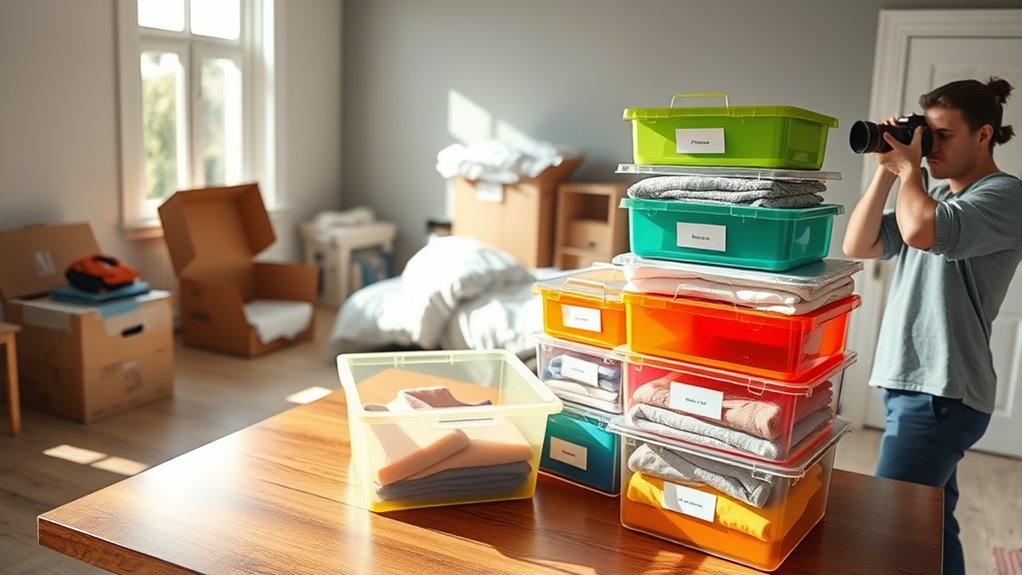

To pack your home efficiently, start with a detailed checklist to stay organized and set clear deadlines. Use sturdy boxes, pack heavier items in smaller ones, and wrap fragile belongings carefully. Pack non-essentials early and keep essentials accessible. Label boxes clearly and optimize space by filling gaps with soft items. Regularly review your progress and adjust as needed to stay stress-free. Keep going to discover even more expert tips to make your move smooth and hassle-free.
Key Takeaways
- Create a detailed moving checklist with deadlines to stay organized and track progress.
- Use sturdy, appropriately sized boxes and label them clearly for efficient packing.
- Pack non-essential items first, keeping essentials accessible to avoid last-minute stress.
- Reserve packing supplies early and plan to avoid last-minute store runs.
- Implement space-maximizing techniques and wrap fragile items carefully to ensure safety.

Are you feeling overwhelmed by the thought of moving? The endless boxes, packing supplies, and looming deadlines can make you want to give up before you even start. But don’t worry—by adopting some effective packing strategies and using moving checklists, you can turn this intimidating task into a manageable process. The key is to stay organized from the beginning, which means creating a detailed moving checklist. This checklist will help you break down tasks into smaller, achievable steps, ensuring nothing gets overlooked. Start by listing everything that needs to be packed, changed over, or cleaned, and set deadlines for each task. Having a clear plan reduces anxiety and keeps you on track.
Once you have your checklist, focus on packing smartly. Instead of rushing to fill boxes haphazardly, develop packing strategies that maximize space and protect your belongings. Use sturdy boxes of varying sizes, and pack heavier items in smaller boxes to avoid overloading. Wrap fragile items carefully with bubble wrap or packing paper, and fill gaps with clothing or towels to prevent shifting during transit. Label each box clearly with its contents and the room it belongs to, which will save you time when unpacking. Also, pack non-essential items first—things you won’t need right away—so you’re not scrambling at the last minute. Keep essentials like toiletries, a change of clothes, and important documents separate and accessible for your first few days in your new home.
Organizing your packing process around your moving checklist ensures you stay on top of everything. Assign deadlines to each task, such as packing the kitchen by a certain date or cleaning out the garage next week. This way, you can pace yourself and avoid last-minute chaos. As you pack, periodically review your checklist to track your progress and add any new tasks that arise. Don’t forget to reserve supplies early, including boxes, tape, markers, and cushioning materials, to prevent last-minute runs to the store. Additionally, understanding how to efficiently pack fragile items and optimize space can significantly reduce damages and make unpacking easier. By implementing these packing strategies, you’ll find that the entire process becomes less stressful and more systematic.

BOX USA Moving Boxes Medium 18"L x 14"W x 12"H 10-Pack | Corrugated Cardboard Box for Shipping, Mailing, Packing, Packaging and Storage 18x14x12
Perfect Moving Supplies – Designed to fit clothing, books, household, kitchen, garage, basement, office supplies and other personal…
As an affiliate, we earn on qualifying purchases.
As an affiliate, we earn on qualifying purchases.
Frequently Asked Questions
How Do I Choose the Right Moving Company?
When choosing the right moving company, start by researching reputable movers with good reviews and proper licensing. Make certain they offer moving insurance to protect your belongings during transit. Ask for a detailed quote and compare it with others. Use a packing checklist to prepare and verify that the company handles your items carefully. Confirm their experience with your specific move, and don’t hesitate to ask questions about their services.
What Supplies Are Essential for Packing Fragile Items?
Did you know that 80% of breakage occurs during packing? To protect fragile items, you need essential packing materials like bubble wrap, packing paper, and sturdy boxes. Use bubble wrap for delicate objects, packing paper for cushioning, and guarantee boxes are well-padded and labeled for fragile protection. These supplies help prevent damage and make unpacking easier, giving you peace of mind during your move.
How Can I Organize My Moving Day Schedule?
You should create a detailed packing timeline and follow your moving checklist to stay organized. Start early by packing non-essentials and set specific times for each task. Allocate extra time for fragile items and confirm your moving arrangements. Keep important documents and essentials accessible. Regularly review your schedule to stay on track, and don’t forget to communicate with your movers for a smooth moving day.
What Should I Do With Perishable Food During a Move?
Your perishable food is on the brink of disaster! To prevent this, you should consume or donate perishables before moving day, or freeze items for food preservation. Pack non-perishables separately, and consider using coolers with ice packs for essentials during transit. Proper grocery management helps avoid spoilage and mess. Remember, quick action keeps your food fresh and your move stress-free!
How Do I Handle Last-Minute Moving Emergencies?
When a last-minute moving emergency strikes, stay calm and act quickly. Use packing tips like prioritizing essentials and labeling boxes clearly. Keep emergency contacts handy, including your moving company and local services. Quickly gather important documents and valuables. Communicate changes to your movers if needed. Staying organized and prepared helps you manage the chaos, ensuring a smoother progression despite the surprise.
![Bubble Cushioning Wrap Rolls, 3/16" x 12" x 72' ft Total [2 Rolls of 36 Feet] Perforated Every 12", 20 Fragile Stickers for Packaging, Shipping, Mailing](https://m.media-amazon.com/images/I/41azI2zaEYL._SL500_.jpg)
Bubble Cushioning Wrap Rolls, 3/16" x 12" x 72' ft Total [2 Rolls of 36 Feet] Perforated Every 12", 20 Fragile Stickers for Packaging, Shipping, Mailing
Premium quality: Made from original nylon bubble, strong, flexible, lightweight, well tear, and moisture resistant. Easy to store…
As an affiliate, we earn on qualifying purchases.
As an affiliate, we earn on qualifying purchases.
Conclusion
So, after all this advice, you might think moving is a breeze. Ironically, the hardest part isn’t packing or planning—it’s pretending you’re not secretly panicking inside. But hey, with these tips, you’ll be the calm, collected mover everyone envies. Or at least, you’ll get there faster than you thought, and maybe even enjoy the chaos a little. Just remember: even the best planners forget a box or two—welcome to the wonderful world of moving!

Cadie Permanent Freezer Marker Set of 2 – Waterproof Fast-Drying Black Ink Pens with Chisel Tip for Food Labeling, Fridge & Freezer Storage, Kitchen & Lab Use & General Organization.
PERMANENT FREEZER MARKERS FOR COLD STORAGE Designed with premium permanent ink that resists smearing, fading, and cracking in…
As an affiliate, we earn on qualifying purchases.
As an affiliate, we earn on qualifying purchases.

BlissTotes Collapsible Moving Bags – Heavy Duty Boxes with Zippers and Handles, Space Saving Packing Totes for Moving Supplies Storage (93L, 6-Pack, Black)
✔[Large Capacity] 28.74 "x14.17 "x13.98"-93 L. BlissTotes moving bags can be used to store clothes, quilts, pillows, shoes,…
As an affiliate, we earn on qualifying purchases.
As an affiliate, we earn on qualifying purchases.