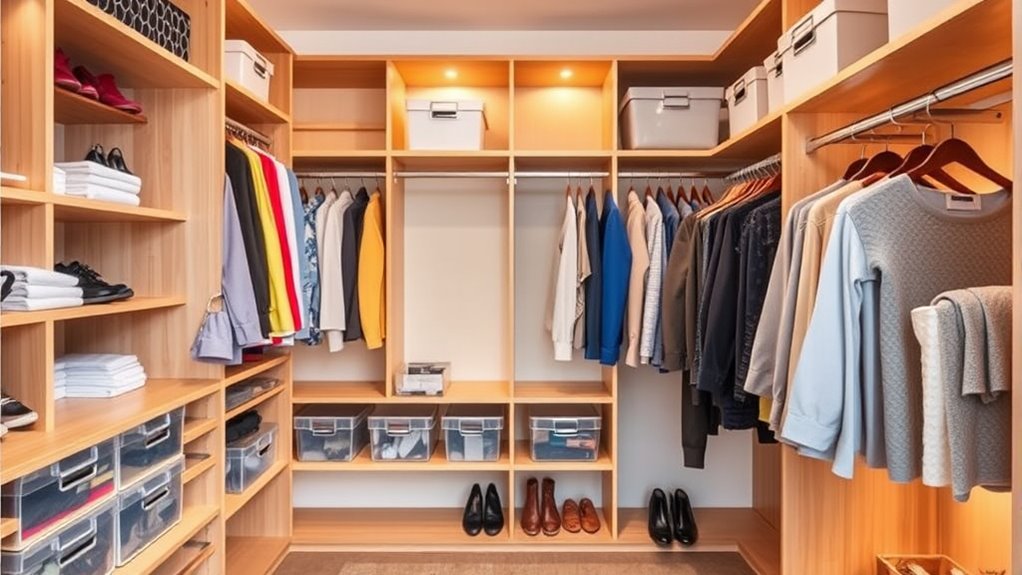

To organize your closet like a pro on a budget, start by decluttering everything to keep only what you love and often wear. Use DIY solutions like wall-mounted shelves, shoe organizers, and household containers to maximize space. Invest in versatile storage items such as storage ottomans or over-the-door racks, and organize by category and how often you use items. Label everything for easy access and develop simple routines to keep things tidy. Keep going to discover even more efficient tips to maintain your organized space.
Key Takeaways
- Assess, declutter, and categorize clothing to create a streamlined, functional space.
- Use household items and DIY solutions like baskets, crates, and wall shelves to maximize space affordably.
- Incorporate multi-functional storage such as ottomans and over-the-door organizers for added capacity.
- Label containers and arrange items by category for quick access and visual clarity.
- Maintain organization with regular seasonal decluttering and small, consistent tidying routines.
Assess and Declutter Your Closet
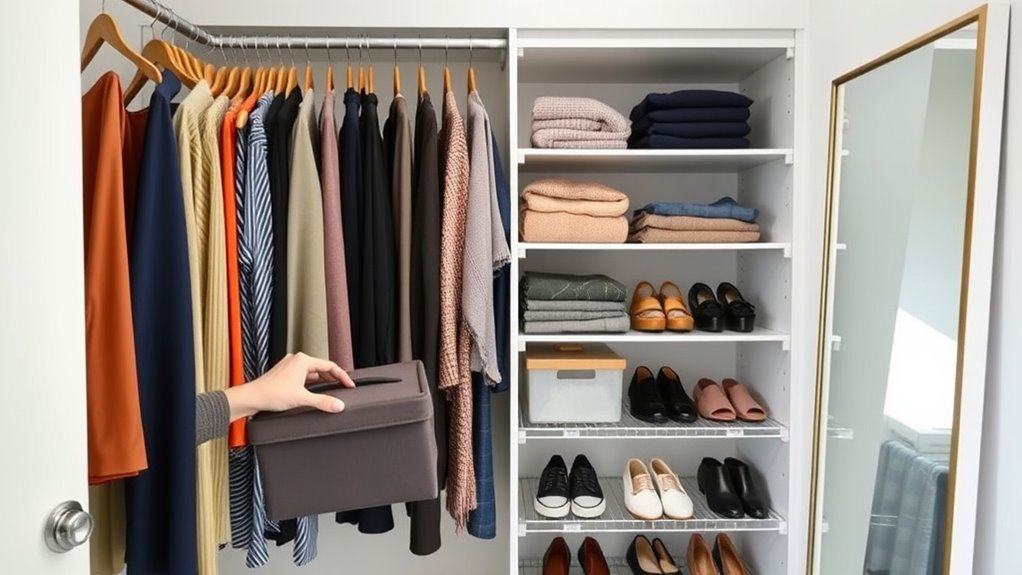
Before organizing your closet, you need to evaluate what you actually wear and what just takes up space. Take everything out and be honest with yourself. Keep only the items you love, wear regularly, or truly need. Set aside clothes that no longer fit, are out of style, or haven’t been worn in the past year. Consider donating or recycling these pieces to free up space and help others. As you sort, ask yourself if each item serves a purpose or sparks joy. Avoid holding onto things out of guilt or nostalgia. This process helps you identify duplicates, seasonal clothes, and items ready for retirement. Decluttering isn’t just about tidiness; it’s about creating a functional space that makes your daily routine easier and more enjoyable.
Maximize Space With DIY Solutions
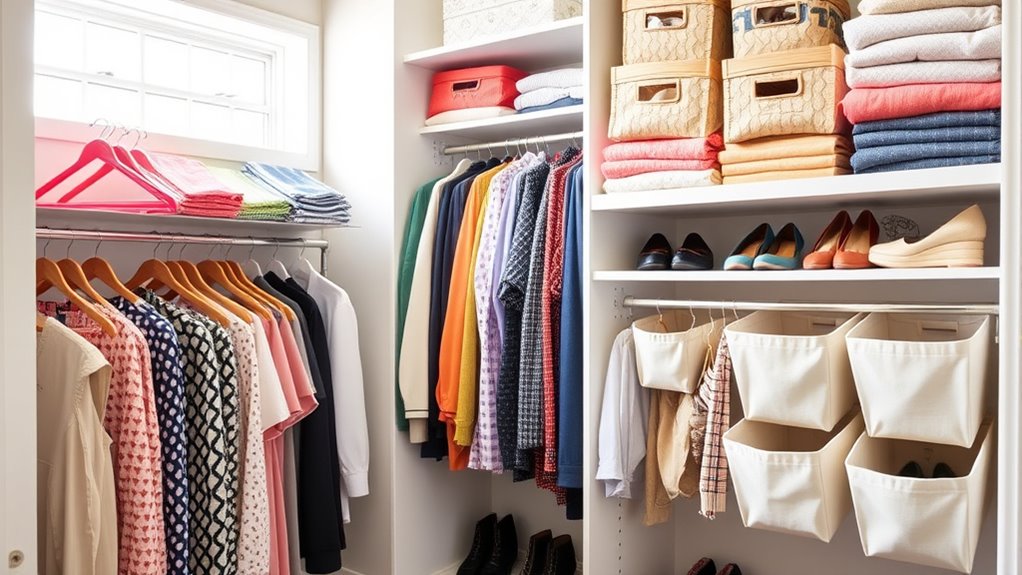
You can make the most of your closet space by adding vertical storage options like wall-mounted shelves or hanging organizers. Repurposing household items, such as baskets or crates, offers affordable storage solutions. Installing adjustable shelves allows you to customize your space and fit your needs without spending much.
Use Vertical Storage Solutions
Maximizing your closet space often means thinking vertically. You can create more room by adding DIY vertical storage solutions. Install inexpensive wall-mounted shelves to hold shoes, handbags, or folded clothes. Use hanging organizers for scarves, accessories, or small items. Stacking crates or boxes vertically can store seasonal clothing or shoes without taking up floor space. Reaching higher can be easy with a sturdy step stool or small ladder. Vertical storage not only saves space but also keeps everything accessible.
| Solution | Benefits |
|---|---|
| Wall-mounted shelves | Maximize wall space, easy access |
| Hanging organizers | Clear, compact storage |
| Stacking crates/boxes | Utilize vertical space efficiently |
| Over-the-door racks | Extra storage without clutter |
| Ladder or step stool | Reach higher shelves comfortably |
Repurpose Household Items
Repurposing household items is an effective and budget-friendly way to maximize your closet space. You can transform everyday objects into smart storage solutions. For example, try these ideas:
- Use tall glass jars or vases to store scarves, belts, or jewelry, keeping them visible and tangle-free.
- Repurpose shoe boxes as drawer organizers for smaller items like socks or accessories.
- Turn an old ladder into a unique clothing rack or towel holder, adding vertical storage.
- Use hanging shoe organizers on the back of your closet door for extra pockets of storage.
These DIY solutions help you make the most of what you already have, reducing clutter and saving money while keeping your closet organized.
Install Adjustable Shelves
Installing adjustable shelves is a simple and effective way to customize your closet space. These shelves let you modify heights easily, accommodating different clothing items and accessories. To start, measure your closet’s width and decide how many shelves you want. Purchase inexpensive, adjustable shelving units from a hardware store or repurpose existing materials. Mount the brackets at desired heights using a level to ensure even placement. Then, place the shelves on the brackets. This DIY solution maximizes vertical space and can be customized over time as your storage needs change. Adjustable shelves are versatile, cost-effective, and easy to install, making them ideal for creating a tidy, organized closet without breaking the bank.
Invest in Multi-Functional Storage Items
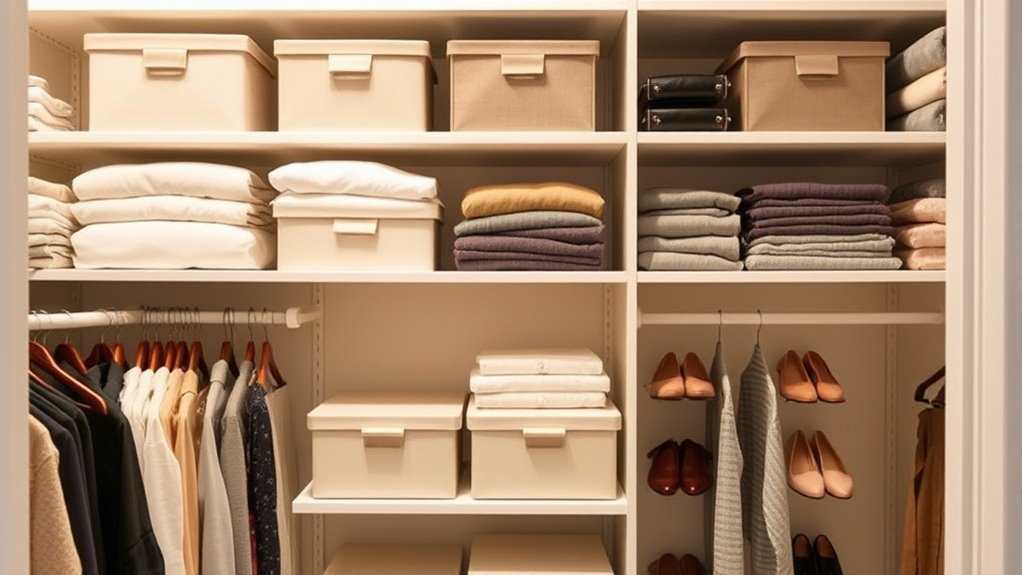
Investing in multi-functional storage items is a smart way to make the most of your closet space without overspending. These versatile pieces help you maximize organization while saving money. For example:
- Storage ottomans provide seating and hidden space for shoes or accessories.
- Over-the-door organizers free up shelf space for small items like scarves or jewelry.
- Stackable bins allow you to categorize and store seasonal clothes neatly.
- Hanging closet rods with multiple levels increase hanging space for shirts and pants.
These items serve dual purposes, reducing clutter and improving accessibility. By choosing multi-functional storage solutions, you can optimize your closet’s capacity without buying separate furniture or storage units. This approach keeps your space tidy, functional, and budget-friendly.
Organize by Category and Frequency of Use
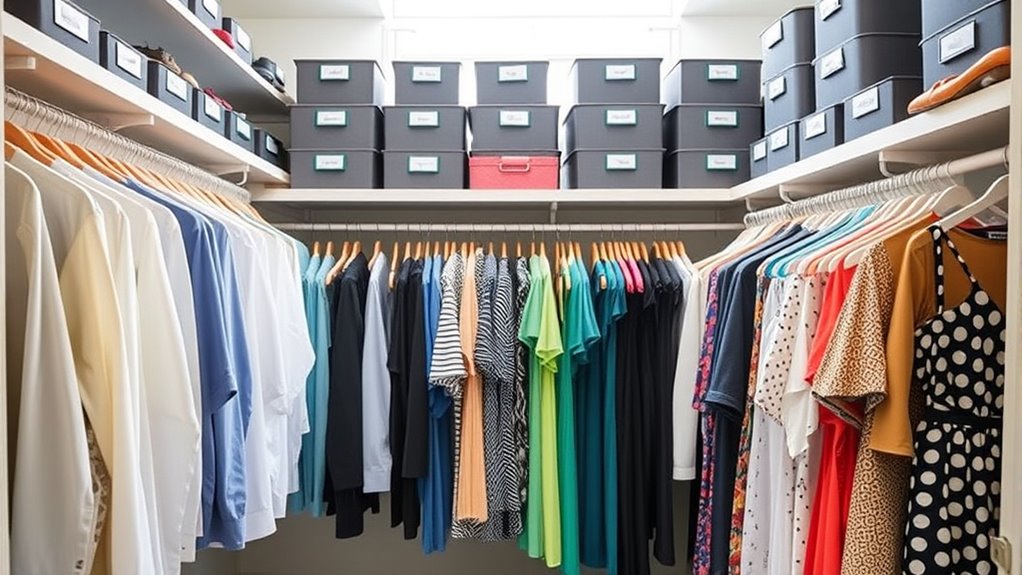
Start by grouping similar items so everything’s easy to find. Focus on your most-worn pieces first, so they’re accessible and quick to grab. Don’t forget to rotate seasonal clothing, keeping your closet organized and up-to-date year-round.
Group Similar Items Together
Have you ever noticed how much easier it is to find what you need when your clothes are grouped logically? To streamline your closet, group similar items together. This makes it simple to locate specific pieces quickly. Start by sorting your clothes into categories like shirts, pants, dresses, and accessories. Then, arrange each category by how often you wear them. For example:
- Frequently worn items at the front or top
- Seasonal pieces in the middle
- Less-used items towards the back
- Special occasion or rarely-worn pieces in a separate section
This method minimizes clutter and saves time. Keeping similar items together also helps prevent mixing up different types of clothing, making your closet more organized and efficient.
Prioritize Frequently Worn Pieces
To keep your closet organized and easily accessible, prioritize placing your most frequently worn items within easy reach. This means arranging your daily essentials—like your favorite jeans, t-shirts, and work outfits—at the front or at eye level. By doing so, you save time searching through less-used pieces, making your routine smoother. Group similar items together, such as all casual wear or workwear, so you can quickly grab what you need. Less-used items can be moved to less accessible spots or stored away. Regularly reassess which pieces you wear most often and adjust your organization accordingly. This approach guarantees your closet remains functional, saving you time and effort each day while keeping your space tidy and efficient.
Rotate Seasonal Clothing
After organizing your most-worn pieces, it’s time to incorporate seasonal clothing into your system. Rotating your wardrobe helps keep clutter down and makes finding what you need easier. Start by gathering off-season items and storing them elsewhere, like under-bed bins or in a separate closet section. Then, bring out current-season pieces and place them at the front for easy access. To stay organized, consider these steps:
- Sort clothes by season and type.
- Store off-season clothes in labeled containers.
- Keep frequently used items at eye level.
- Rotate items monthly to maintain freshness and accessibility.
This method guarantees your closet remains manageable, saving space and time when dressing. Regular rotation also prevents seasonal clothes from becoming forgotten or neglected.
Use Budget-Friendly Labels and Bins

Looking for an easy way to organize your closet without breaking the bank? Using budget-friendly labels and bins is a smart choice. You don’t need fancy storage solutions—simple plastic bins or baskets work well. Label each bin clearly with words or icons to identify contents quickly. You can make labels using free online templates or even write on masking tape with a permanent marker. Stack bins neatly on shelves or tuck them into corners to maximize space. Clear bins let you see what’s inside at a glance, saving you time. Repurpose containers from around your home, like old jars or boxes, to cut costs. This straightforward approach keeps your closet tidy, accessible, and budget-friendly.
Maintain Your Organized Closet Routine
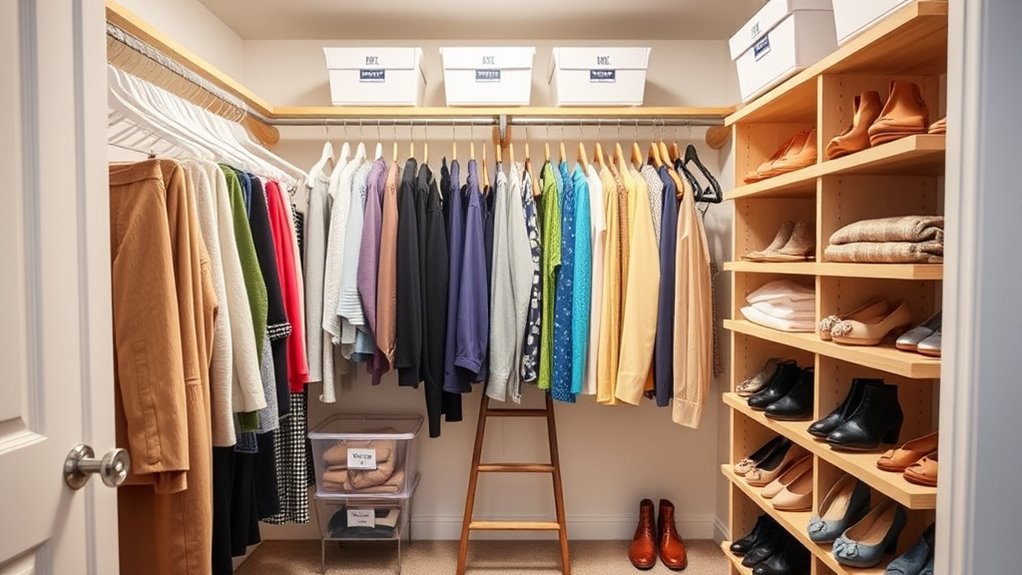
Keeping your closet organized requires more than just setting up storage solutions; it depends on a consistent routine. To keep everything in order, follow these steps:
- Schedule regular tidying sessions—set a weekly reminder to tidy and reassess your closet.
- Declutter seasonally—remove items you no longer wear or need at least four times a year.
- Return items to their designated spots after each use to maintain organization.
- Review your system periodically—adjust storage or labels if you notice clutter creeping in.
Sticking to these habits makes organization effortless. Small, consistent efforts prevent clutter from piling up and ensure your closet stays functional and tidy without extra expense.
Frequently Asked Questions
How Often Should I Reassess and Declutter My Closet?
You should reassess and declutter your closet every three to six months. Regular check-ins help you identify items you no longer wear or need, making space for new pieces and keeping your closet organized. If your wardrobe changes frequently or you notice clutter piling up sooner, consider decluttering more often. Staying consistent guarantees your closet stays functional, tidy, and reflects your current style and needs.
What Are Some Inexpensive DIY Storage Ideas I Haven’t Considered?
You can try using DIY ideas like repurposing tin cans as jewelry holders, stacking cardboard boxes for shoes, or hanging a tension rod for scarves and belts. You might also create under-shelf baskets from wire or fabric, or repurpose old spice racks for small accessories. These inexpensive solutions help maximize space and keep your closet tidy without spending much, making organization both fun and affordable.
How Can I Prevent Clutter From Accumulating Again?
Think of your closet as a garden—you need to tend to it regularly. To prevent clutter from returning, commit to weekly refreshes, sorting items and removing what you no longer need. Use labeled bins or baskets to keep things tidy, and put away items immediately after use. Setting these habits guarantees your space stays organized, like a well-maintained garden, and prevents chaos from taking root again.
Are There Specific Organizational Methods Suited for Small Closets?
Yes, for small closets, use vertical space with stackable bins and hanging organizers to maximize storage. Install hooks or pegboards for accessories, and opt for slim, multi-purpose furniture like slim dressers or over-the-door racks. Keep items visible by using clear containers, and prioritize hanging items over folded ones. By focusing on compact, efficient solutions, you’ll make the most of limited space without clutter.
What Are the Best Low-Cost Materials for Labeling and Binning?
Did you know that using simple, inexpensive materials can boost your closet organization by 30%? For labeling, try printable labels on regular paper or adhesive labels from office supply stores—they’re affordable and easy to customize. Bins made from repurposed cardboard, plastic containers, or fabric baskets are budget-friendly options that keep everything tidy. These materials are practical, customizable, and won’t break the bank, making your closet both organized and cost-effective.
Conclusion
Think of your closet as a garden—you’re the gardener tending to it daily. With a little effort, you can keep it lush, organizedd and thriving without breaking the bank. Regularly assess, declutter, and tweak your system to suit your evolving needs. When you nurture your space, it blossoms into a smooth, stress-free sanctuary. So, roll up your sleeves and cultivate your closet—your organized oasis awaits!