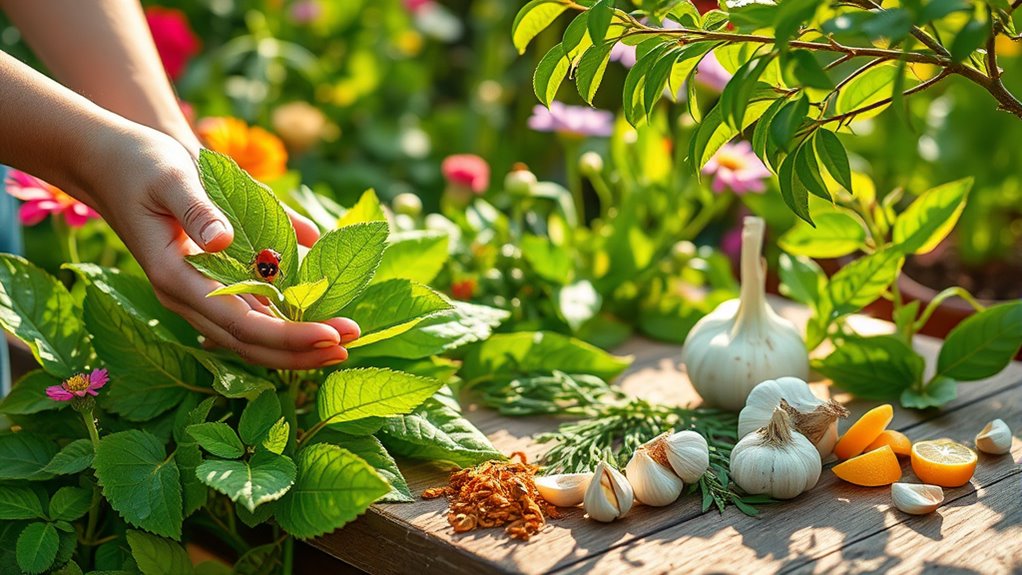

To safely control pests in your home and garden, use natural methods like wiping surfaces, sealing entry points, and spraying vinegar water along ant trails. Plant herbs like basil, mint, and marigolds near entryways to repel insects, and make homemade sprays with garlic, peppermint oil, or neem oil to target pests. Attract beneficial insects such as ladybugs and lacewings to naturally reduce pest populations. Continue exploring these eco-friendly strategies to create a healthier, pest-free environment.
Key Takeaways
- Use vinegar-water mixtures and diatomaceous earth to create non-toxic barriers around your home.
- Plant herbs like basil, mint, and rosemary near entry points to naturally repel pests.
- Apply homemade sprays, such as garlic water or peppermint oil, to deter insects safely.
- Attract beneficial insects like ladybugs and lacewings through companion planting for natural pest control.
- Regularly inspect plants and use targeted organic solutions like neem oil to maintain a pest-free garden.
Top picks for "natural pest control"
Open Amazon search results for this keyword.
As an affiliate, we earn on qualifying purchases.
Natural Ways to Keep Ants Away
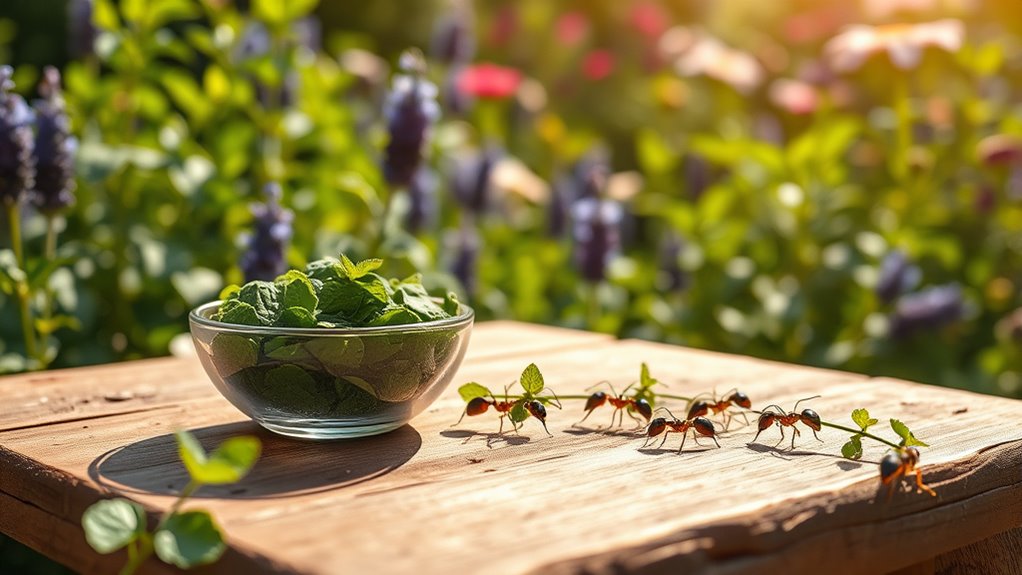
Ants can be persistent pests, but you can keep them at bay using natural methods. Start by wiping down surfaces and cleaning up crumbs to eliminate their food sources. Seal cracks and entry points around windows, doors, and foundations to prevent ants from sneaking inside. Vinegar is a simple, effective barrier—mix equal parts vinegar and water and spray it along ant trails and entry points. Diatomaceous earth is another natural deterrent; sprinkle it around your home’s perimeter. Additionally, maintaining a tidy yard removes debris and piles that attract ants. These methods work together to disrupt their foraging and discourage them from settling in your space. With consistency, you can markedly reduce ant activity without resorting to chemicals.
Using Herbs and Plants as Pest Repellents
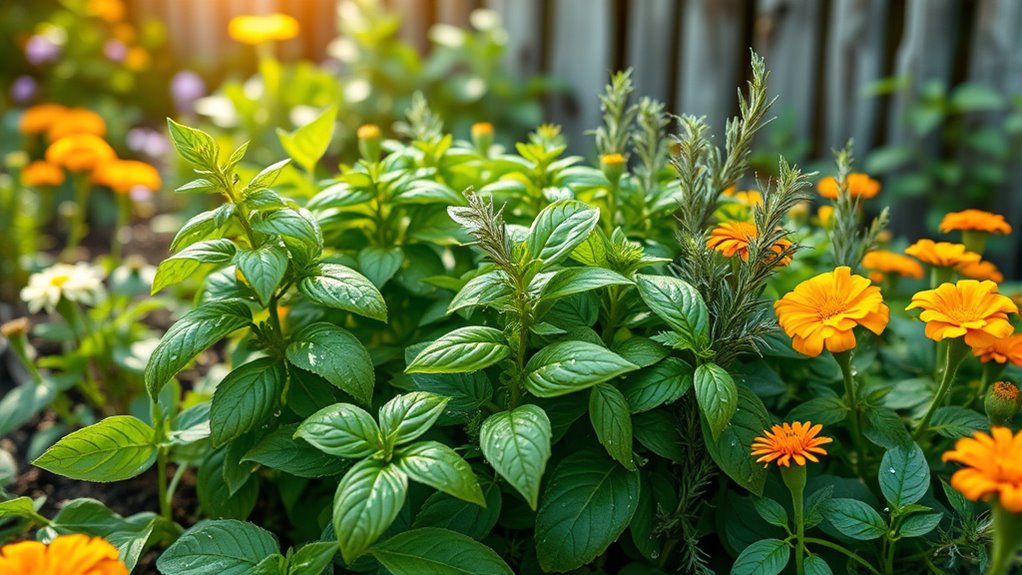
Many herbs and plants naturally repel pests, making them a smart addition to your pest control strategy. You can plant these around your home or garden to deter unwanted insects. For example, basil keeps mosquitoes away, while marigolds repel aphids and nematodes. Mint can ward off ants and fleas, and rosemary deters beetles and mosquitoes. To maximize their effectiveness, place these plants at entry points and near affected areas. Here’s a quick reference:
| Herb/Plant | Pest Deterrent | Notes |
|---|---|---|
| Basil | Mosquitoes | Plant near patios |
| Marigolds | Aphids, Nematodes | Plant around vegetables |
| Mint | Ants, Fleas | Use in pots to control spreading |
| Rosemary | Mosquitoes, Beetles | Grow near windows |
Using herbs and plants as repellents offers a natural, eco-friendly way to protect your home. Implementing these natural methods can reduce the need for chemical pesticides and create a healthier environment for your family and garden.
Homemade Solutions for Insect Control
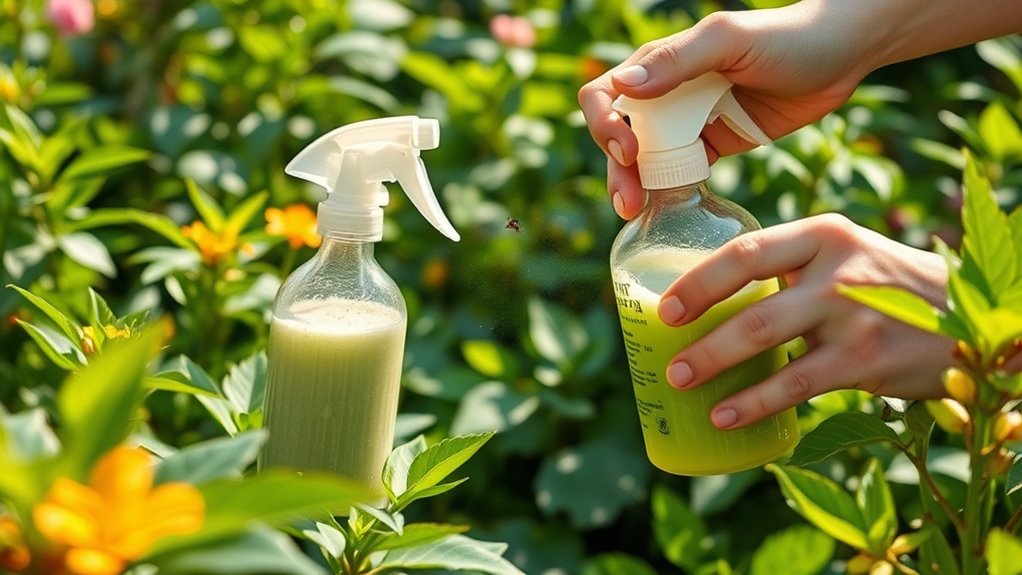
Building on the idea of natural pest repellents, creating homemade solutions offers an affordable and effective way to keep insects at bay. You can craft simple remedies using common ingredients. For example:
- Mix garlic and water to create a potent spray that repels mosquitoes and aphids.
- Combine dish soap with water for a quick solution against soft-bodied insects like spider mites.
- Use neem oil diluted in water to deter a variety of pests, including caterpillars.
- Make a peppermint oil spray by mixing a few drops with water, which helps ward off ants and beetles.
These solutions are easy to prepare, safe for your family and pets, and environmentally friendly. Regular application can considerably reduce pest problems without harmful chemicals.
Beneficial Insects and Companion Planting
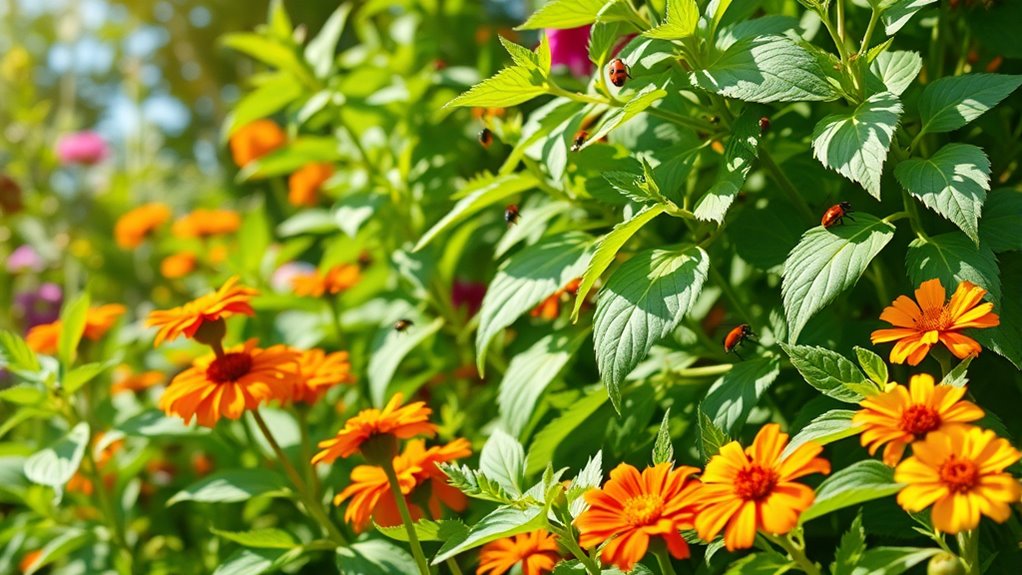
Beneficial insects play a crucial role in natural pest control by preying on harmful pests, reducing the need for chemical interventions. By attracting ladybugs, lacewings, and parasitic wasps, you support a balanced ecosystem in your garden. Companion planting further enhances this process; certain plants repel pests or attract beneficial insects. For example, planting marigolds near vegetables deters nematodes, while dill attracts predatory insects. Use the table below to understand some common beneficial insects and companion plants: beneficial insects and plants | Beneficial Insect | Companion Plant | |———————–|————————–| | Ladybugs | Carrots, dill | | Lacewings | Nasturtiums | | Parasitic Wasps | Fennel | | Ground Beetles | Spinach, lettuce | Together, these natural allies create a resilient, pest-resistant garden.
Safe Practices for Garden Pest Management
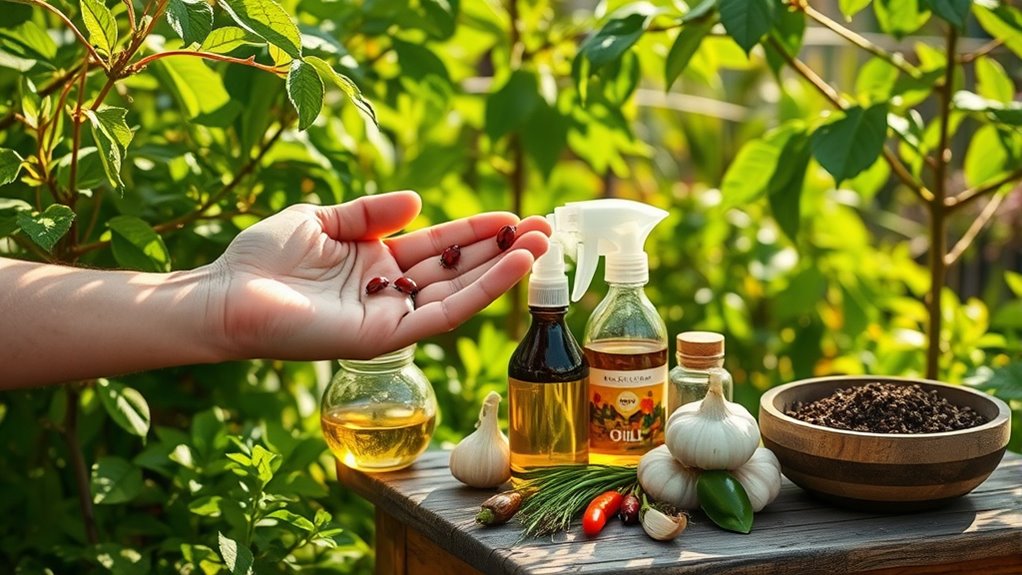
Practicing safe pest management in your garden is essential to protect both your plants and the environment. To do this effectively, consider these key practices:
- Identify pests correctly before applying any remedies.
- Use targeted, organic solutions like neem oil or insecticidal soap.
- Apply treatments during early morning or late evening to minimize harm to beneficial insects.
- Regularly inspect your plants to catch infestations early.
- Incorporate safe application practices to ensure treatments are effective while protecting beneficial insects and the environment.
Frequently Asked Questions
Are Natural Pest Remedies Effective Long-Term?
Yes, natural pest remedies can be effective long-term if you apply them consistently and target the specific pests you’re dealing with. You’ll want to combine methods like introducing beneficial insects, using natural repellents, and maintaining a clean environment. While they might take longer to show results compared to chemical solutions, you’ll reduce your reliance on harmful chemicals, making your home and garden safer and more sustainable over time.
Can Natural Methods Harm Beneficial Insects?
Natural methods can harm beneficial insects if misused, like applying broad-spectrum neem oil during pollinator activity. Imagine a gardener using a natural remedy without considering timing; bees and butterflies might be affected. To avoid this, target pests precisely and apply treatments when beneficial insects are least active. This ensures you protect helpful pollinators while controlling pests naturally, maintaining a healthy garden ecosystem.
How Often Should Natural Pest Controls Be Applied?
You should apply natural pest controls as needed, typically every 7 to 14 days, depending on pest activity. Monitor your plants and home regularly for signs of pests, and reapply when you notice an increase. Avoid overusing treatments to prevent harming beneficial insects or causing resistance. Consistent, targeted applications help keep pests at bay while maintaining a healthy environment for your garden and home.
Are Natural Solutions Safe for Pets and Children?
Think of natural solutions as gentle guardians in your home and garden—they’re safe for pets and children when used correctly. You’ll want to follow instructions carefully, avoiding over-application. Many natural remedies, like neem oil or soap solutions, act like friendly neighbors—harmless and effective. Always check labels and test small areas first to guarantee everyone stays safe. With mindful use, your space remains a haven, free of harmful chemicals.
Can Natural Pest Control Methods Be Used Indoors?
Yes, you can definitely use natural pest control methods indoors. These remedies include essential oils like peppermint or eucalyptus, diatomaceous earth, and homemade sprays with vinegar or soap. You just need to follow instructions carefully to guarantee safety. Always test a small area first, especially around pets and children. Proper application and natural ingredients make these solutions effective and safer alternatives to chemical pesticides inside your home.
Conclusion
By embracing these natural pest control methods, you create a lush, vibrant garden teeming with life. Imagine fragrant herbs wafting through the air, beneficial insects quietly tending your plants, and homemade solutions gently safeguarding your space—all without harsh chemicals. As you nurture this harmonious environment, your home and garden become a sanctuary of safety and sustainability, where healthy plants thrive under the tender watch of nature’s own remedies.