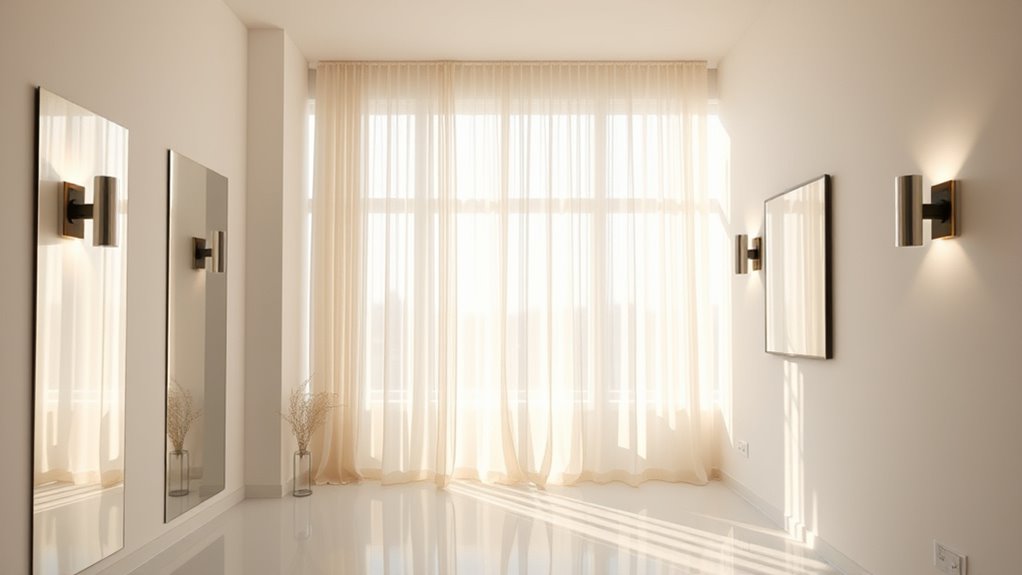

To make your small room look bigger, focus on layered ambient lighting with multiple sources like sconces, recessed lights, or LED strips to create an even glow. Use mirrors and reflective surfaces to bounce light and add depth, and choose light-colored walls with matte or glossy finishes for maximum brightness. Keep your space clutter-free and incorporate dimmers to adjust lighting as needed. For more tips, discover how these tricks can transform your room into a brighter, more spacious retreat.
Key Takeaways
- Use multiple warm, diffuse light sources like wall sconces or LED strip lights to evenly illuminate the room.
- Incorporate large mirrors or reflective surfaces opposite light sources to bounce light and create depth.
- Opt for light-colored walls with matte or high-gloss finishes to reflect more light and enhance spaciousness.
- Avoid cluttered lighting setups; choose a few well-placed fixtures with dimmers for flexibility and balanced brightness.
- Combine ambient lighting with strategic placement of reflective surfaces for maximum brightness and visual expansion.
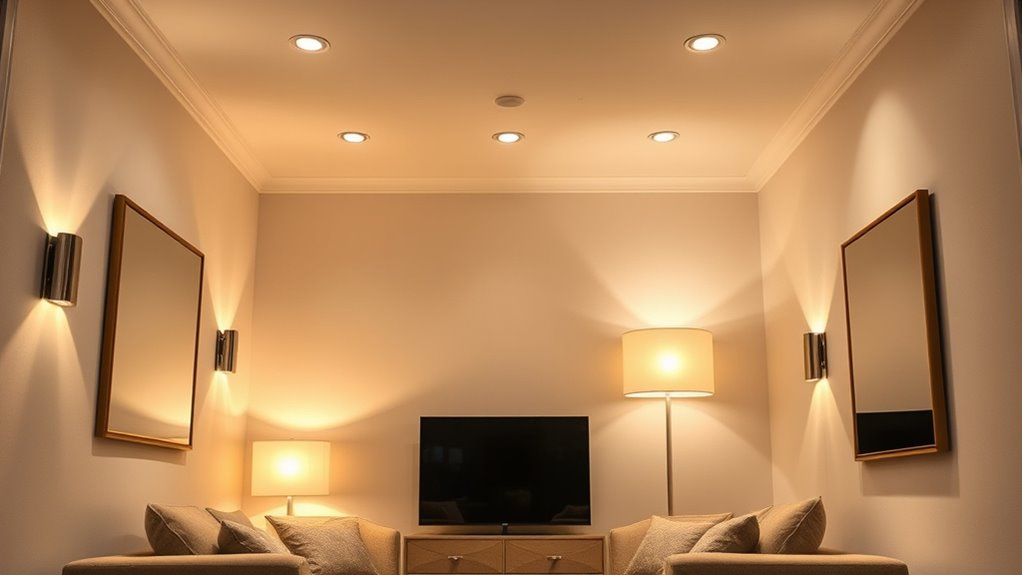
If you want to make a small room feel more spacious, lighting is your best tool. Proper lighting can instantly open up a space, making it appear larger and more inviting. One of the most effective techniques is to use ambient lighting. This type of lighting provides a soft, overall glow that eliminates harsh shadows and evenly illuminates the room. Instead of relying solely on a single ceiling fixture, consider adding multiple light sources like wall sconces, recessed lights, or LED strip lights. These options help distribute light evenly across the space, reducing dark corners that can make a room feel cramped. When you choose ambient lighting, aim for warm, diffuse light that mimics natural daylight, which tends to make spaces feel open and airy.
Using ambient lighting with warm, diffuse sources can instantly make small rooms feel larger and more inviting.
Another powerful trick is to incorporate reflective surfaces into your room design. Mirrors, glossy tiles, glass furniture, or metallic accents bounce light around the room, amplifying the effect of your lighting. When you place a large mirror opposite a window or light source, it reflects daylight and artificial light, creating an illusion of depth and space. This reflection not only brightens the room but also visually doubles the size of the space. Be strategic about where you position reflective surfaces; placing a mirror near a light source enhances the light’s reach and makes your small room feel more expansive.
You should also consider the color and finish of your walls and furniture. Light-colored walls reflect more light, which complements your ambient lighting and helps bounce light throughout the room. Matte finishes minimize glare, creating a softer, more spacious feel, while high-gloss surfaces reflect more light and add a sense of openness. Combining reflective surfaces with well-placed ambient lighting creates a balance that maximizes brightness and depth. Additionally, understanding lighting placement and how it affects the perception of space can dramatically improve your room’s openness.
Finally, avoid cluttering your space with too many small lamps or overly bright fixtures that can cause visual chaos. Instead, opt for a few well-placed lighting elements that work together to evenly distribute light. Use dimmers where possible, so you can adjust the brightness depending on the mood or time of day. This flexibility allows you to maintain a sense of openness without overwhelming the space with excessive light. When you implement these lighting tricks—focusing on ambient lighting and reflective surfaces—you’ll find your small room feels noticeably larger, more inviting, and comfortable.
Frequently Asked Questions
Can Natural Light Improve the Perception of Space?
Yes, natural light can substantially improve the perception of space in your room. You should use light window treatments to maximize sunlight and choose outdoor lighting that complements your indoor lighting setup. Open curtains or blinds during the day and consider adding mirrors to reflect the sunlight. These tricks make your space feel larger, brighter, and more inviting without feeling cramped.
Which Color Temperature Makes a Room Appear Larger?
A cooler color temperature, like daylight (around 5000K-6500K), makes a room appear larger because it enhances space perception through color psychology. Some might worry it feels cold, but combining light layering with neutral tones creates a welcoming, spacious vibe. By using this temperature, you amplify brightness and openness, making the room seem bigger without sacrificing coziness. Light layering ensures the space feels balanced and inviting.
How Should I Position Mirrors With Lighting for Best Effect?
You should position mirrors where they catch the best lighting angles to maximize brightness and depth. Place mirrors opposite windows or light fixtures to reflect natural or artificial light effectively, creating an illusion of space. Avoid placing mirrors in areas with poor lighting, as they won’t enhance the room’s openness. Proper mirror placement and strategic lighting angles work together to make your small room feel larger and more inviting.
Are Dimmable Lights Better for Small Rooms?
Dimmable lights are definitely better for small rooms because they give you lighting flexibility. With dimmable options, you can adjust the brightness to create the illusion of more space or a cozy vibe whenever you want. This control helps you highlight certain areas or soften the overall ambiance, making your small room feel larger and more inviting. Plus, you can switch effortlessly between bright and subtle lighting as needed.
What Types of Lighting Fixtures Save Space and Add Brightness?
You should opt for space-saving lighting fixtures like wall sconces and pendant lights. Wall sconces mount directly on the wall, freeing up surface space and providing ample illumination. Pendant lights hang from the ceiling, adding brightness without taking up floor or table space. Both options create an open feel and maximize light in small rooms, making them look larger and more inviting. Choose sleek, minimal designs to enhance the effect.
Conclusion
By using these lighting tricks, you can transform your small room into a brighter, more spacious haven. Think of lighting as the brush that paints the illusion of size, making your space feel larger than it really is. With strategic placement and the right fixtures, you’ll create an airy atmosphere that invites comfort and openness. Remember, good lighting is like a guiding star, illuminating your room’s potential and making it feel endless.