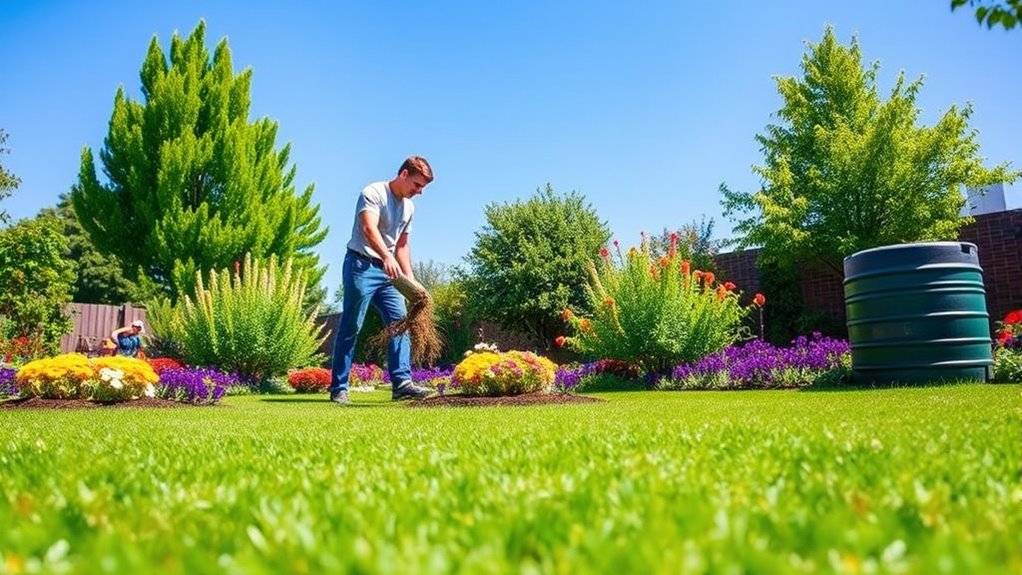

To keep your grass green without harsh chemicals, focus on organic fertilization using compost and manure, which release nutrients slowly and improve soil health. Maintain a healthy, dense lawn through proper mowing, watering deeply but infrequently, and aerating the soil. Introduce beneficial insects like ladybugs to naturally control pests and avoid chemical pesticides. Employing these eco-friendly strategies supports a vibrant, safe yard—continue to explore more sustainable tips for a lush, chemical-free lawn.
Key Takeaways
- Use organic fertilizers like compost or manure for steady, natural nutrient release and improved soil health.
- Maintain a healthy, dense lawn through proper mowing, watering, and aeration to naturally resist pests.
- Introduce beneficial insects such as ladybugs and nematodes to control pests without chemicals.
- Apply eco-friendly pest control methods like neem oil or insecticidal soaps at early pest signs.
- Avoid synthetic chemicals to protect pollinators, pets, and children, promoting a safer, environmentally friendly yard.

Are you ready to transform your yard into a lush, green oasis? Achieving a healthy lawn doesn’t mean you have to rely on harsh chemicals or synthetic fertilizers. Instead, you can embrace natural methods that support your grass’s growth while keeping your environment safe. Organic fertilization is a fantastic place to start. It involves using natural amendments like compost, manure, or organic blends that enrich the soil with essential nutrients. These options release nutrients slowly, ensuring your grass receives a steady supply of what it needs without overwhelming it or causing run-off pollution. Plus, organic fertilization improves soil structure over time, promoting better root development and resilience. When you choose organic methods, you’re also reducing the risk of chemical buildup that can harm beneficial insects, pets, and children who play on your lawn.
Alongside nourishing your grass, pest prevention is essential for maintaining a vibrant, healthy yard. Many pests, such as grubs, chinch bugs, or armyworms, can quickly damage your lawn if left unchecked. The key is to take proactive steps that discourage pests naturally. Start by maintaining a healthy, dense lawn—thick grass naturally resists pest invasions by making it harder for pests to establish themselves. Regular mowing at the proper height, watering deeply but infrequently, and aerating the soil all help create unfavorable conditions for pests. Additionally, you can introduce beneficial insects like ladybugs or nematodes that prey on common lawn pests, providing an eco-friendly pest control solution. Avoiding chemical pesticides is essential, as they can kill off beneficial insects and disrupt the balance of your yard’s ecosystem. Instead, focus on natural pest prevention strategies, such as applying neem oil or insecticidal soaps when pests first appear, which are less harmful and more targeted.

Purely Organic Products Lawn Food 10-0-2, 15 LB (Covers 3,000 Square Feet)
Promotes Lush Green Turf Grass. Will Not Burn Your Lawn.
As an affiliate, we earn on qualifying purchases.
As an affiliate, we earn on qualifying purchases.
Frequently Asked Questions
How Often Should I Water My Lawn Naturally?
You should water your lawn naturally about once a week, adjusting based on rainfall and weather conditions. Use rainwater harvesting to collect natural water, reducing reliance on tap water. Drought-resistant grass varieties need less frequent watering, so monitor your lawn’s appearance and soil moisture. During dry spells, supplement with rainwater to keep your grass healthy, green, and resilient without overwatering or using harsh chemicals.
What Are Eco-Friendly Alternatives to Chemical Fertilizers?
You can replace chemical fertilizers with composting techniques and organic soil amendments that nurture your lawn naturally. Imagine rich, dark compost blending into the soil like a nourishing potion, boosting growth without harsh chemicals. Use kitchen scraps, grass clippings, and leaves to create your compost. Incorporate organic amendments like fish emulsion or seaweed extract, which provide essential nutrients, leaving your grass vibrant and healthy while supporting a sustainable, eco-friendly lawn care routine.
How Can I Control Weeds Without Chemicals?
To control weeds without chemicals, you can focus on native planting, which naturally outcompetes weeds for resources. Regularly pulling weeds manually also helps, especially when the soil is moist. Incorporate composting methods to enrich your soil, encouraging healthy grass growth that resists weeds. Mulching around plants suppresses weeds effectively. These eco-friendly strategies promote a lush, weed-free lawn while supporting a healthy ecosystem.
What Natural Methods Prevent Lawn Pests?
Think of your lawn as a balanced ecosystem, where natural pest control thrives. You can prevent pests by encouraging beneficial insects like ladybugs and lacewings, which act as your lawn’s natural defenders. Companion planting, such as planting marigolds or herbs, can also repel pests. These methods work together, creating a thriving environment where pests are kept at bay without chemicals, keeping your lawn healthy and vibrant.
How Do I Improve Soil Health Organically?
You can improve your soil health organically by starting with soil testing methods to identify nutrient gaps. Then, incorporate composting techniques like adding well-rotted compost or organic matter to boost fertility and structure. Regularly aerate your soil to enhance aeration and microbial activity. Using organic fertilizers and mulching also enriches the soil naturally. These steps will help create a healthy environment for your grass without harsh chemicals.

BioLogic's Scanmask Steinernema Feltiae (Sf) Beneficial Nematodes for Natural Insect Pest Control, 5 Million Size
NATURAL PEST CONTROL: Kills over 230 different pests. Safe for people, pets, plants and beneficials!
As an affiliate, we earn on qualifying purchases.
As an affiliate, we earn on qualifying purchases.
Conclusion
By nurturing your lawn with natural practices, you’re planting seeds of health that blossom into a vibrant, green tapestry. Think of your yard as a living canvas—each eco-friendly choice adding brushstrokes of life and color. With patience and care, you’ll watch your grass flourish like a lush, emerald forest, all without the harsh chemicals. Keep tending gently, and your yard will become a thriving, beautiful oasis you can be proud of.

RTS Home Accents 50-Gallon Rain Barrel with Brass Spigot, Flat Back Rain Water Collection Barrel, Walnut Color
50-Gallon Capacity: Provides ample storage for harvested rainwater, ideal for watering gardens, lawns, and plants.
As an affiliate, we earn on qualifying purchases.
As an affiliate, we earn on qualifying purchases.

B00FY4YXHS
As an affiliate, we earn on qualifying purchases.
As an affiliate, we earn on qualifying purchases.