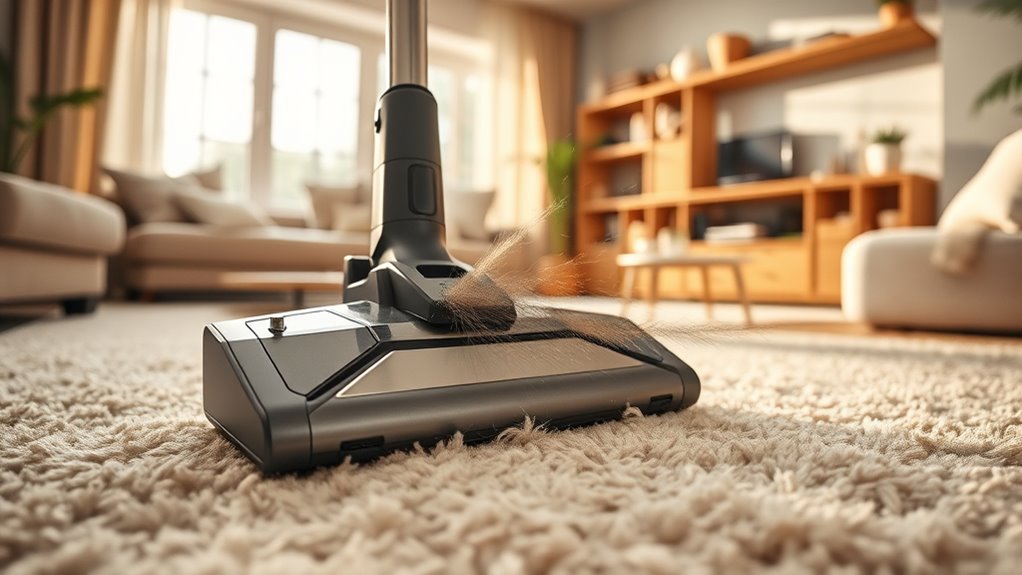

To keep pet hair under control, choose a vacuum with strong suction and specialized attachments like motorized brush heads, and use gentle, chemical-free cleaners. Regularly groom your pets to reduce shedding, and wash upholstery and bedding often. Use lint rollers or damp gloves for quick spot cleans, and protect furniture with slipcovers or pet-friendly fabrics. Improve air quality with HEPA filters and air purifiers, and discover more tips to maintain a fur-free home below.
Key Takeaways
- Regularly groom pets with appropriate tools to reduce loose fur before it sheds around the house.
- Use high-quality, allergen-reducing vacuums with specialized attachments for thorough cleaning.
- Cover furniture with slipcovers or pet-friendly fabrics that resist pet hair and are easy to wash.
- Incorporate air purifiers with HEPA filters to trap airborne pet dander and hair particles.
- Quickly remove pet hair from surfaces using lint rollers, damp gloves, or sticky tape for instant clean-up.
Choosing the Right Vacuum for Pet Hair

When selecting a vacuum for pet hair, you need to prioritize models with strong suction and specialized attachments. Powerful suction ensures you can pull stubborn fur from carpets, upholstery, and hard floors efficiently. Look for vacuums designed specifically for pet hair, as they typically include tools like motorized brush heads, crevice tools, and upholstery cleaners that target fur in tight spots. Lightweight models make maneuvering easier, especially when cleaning stairs or high surfaces. Consider cyclonic or bagless designs for easy maintenance and consistent performance. A vacuum with allergen-reducing filters, such as HEPA filters, helps trap pet dander and improve indoor air quality. Choosing the right vacuum means investing in a device that handles fur quickly and effectively, making your cleaning routine less frustrating.
Regular Grooming for a Hair-Free Home
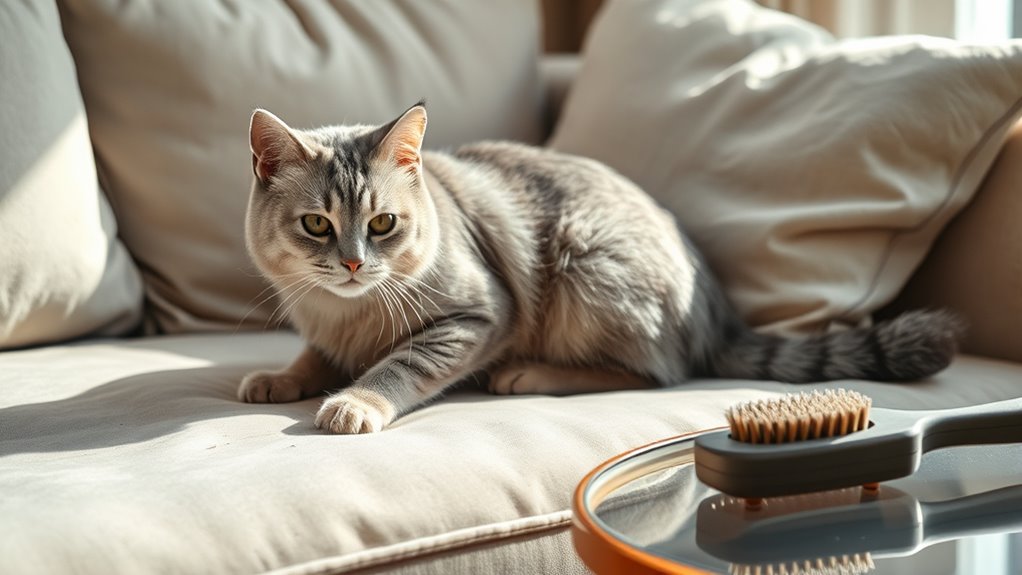
Regular grooming is one of the most effective ways to minimize pet hair around your home. By brushing your pet regularly, you remove loose fur before it sheds onto furniture and floors. Use a brush suited to your pet’s coat type, whether it’s a slicker for long-haired breeds or a de-shedding tool for short-haired ones. Bathe your pet as needed to reduce loose hair and keep their coat clean. Routine grooming also helps you spot skin issues or parasites early. Consistency is key; daily or weekly grooming sessions can markedly cut down on shedding. Not only does this keep your pet comfortable and healthy, but it also reduces the amount of fur that ends up around your house.
Effective Use of Lint Rollers and Sticky Tape

After grooming, small tools like lint rollers and sticky tape become your best allies for quick cleanups. They’re perfect for removing pet hair from clothes, furniture, and car seats. To get the most out of them, press firmly and roll or stick repeatedly over the area. For stubborn hair, pause and lift the roller or tape to trap more hair in one go. Keep a lint roller handy in your closet or car for instant results. Here’s a quick comparison:
| Tool | Best Use | Tips |
|---|---|---|
| Lint roller | Clothes, upholstery | Use multiple sheets |
| Sticky tape | Small surfaces, tricky corners | Press firmly and lift off |
| Reusable roller | Large furniture, carpets | Clean with water when full |
With these tips, pet hair won’t stand a chance!
Maintaining Your Upholstery and Bedding

To keep your upholstery and bedding clean, you should wash them regularly to remove pet hair and dirt. Protective covers can make cleanup easier and prevent pet hair from settling into fabrics. Choosing pet-friendly fabrics also helps minimize hair buildup and simplifies maintenance.
Regular Washing Practices
Keeping your upholstery and bedding clean is essential for controlling pet hair and maintaining a fresh home. Regular washing removes loose hairs, dust, and allergens, preventing buildup. Use a gentle cycle with warm water and a pet-friendly detergent to thoroughly clean fabrics. To optimize results, consider adding a cup of white vinegar to break down hair and odors. Wash bedding weekly and cushions monthly. For extra effectiveness, follow these guidelines:
| Item | Frequency | Special Tips |
|---|---|---|
| Upholstery | Monthly | Use upholstery-safe cleaning |
| Bed Linens | Weekly | Wash in hot water |
| Pet Blankets | Weekly or biweekly | Shake outside before washing |
Using Protective Covers
Protective covers are an effective way to guard your upholstery and bedding against pet hair, dirt, and allergens. By investing in waterproof and machine-washable slipcovers or mattress protectors, you create a barrier that’s easy to clean. These covers prevent pet hair from embedding deep into fabrics, reducing the need for frequent vacuuming or scrubbing. When hair does accumulate, you can simply remove and toss the covers in the wash, saving time and effort. Make sure to choose covers that fit snugly and are durable enough to withstand regular laundering. This simple step not only keeps your furniture and bedding cleaner but also prolongs their lifespan. Using protective covers is a proactive way to maintain a fur-free home and keep pet-related messes at bay.
Pet-Friendly Fabric Choices
Choosing the right fabrics for your upholstery and bedding can considerably reduce pet hair buildup and make cleaning easier. Opt for tightly woven materials like leather, microfiber, or faux suede, which resist hair from embedding deep into fibers. These fabrics are less likely to trap pet dander and are easier to wipe clean with a damp cloth or vacuum. Avoid plush or shaggy textiles, as their textured surfaces trap more fur and dirt. When selecting bedding, consider washable covers made from smooth, durable fabrics that won’t cling to pet hair. Regularly laundering your furniture covers and bedding helps keep pet hair at bay and maintains a cleaner, fresher home environment. Making mindful fabric choices is a simple yet effective way to manage pet fur daily.
Creating a Pet-Friendly Cleaning Routine
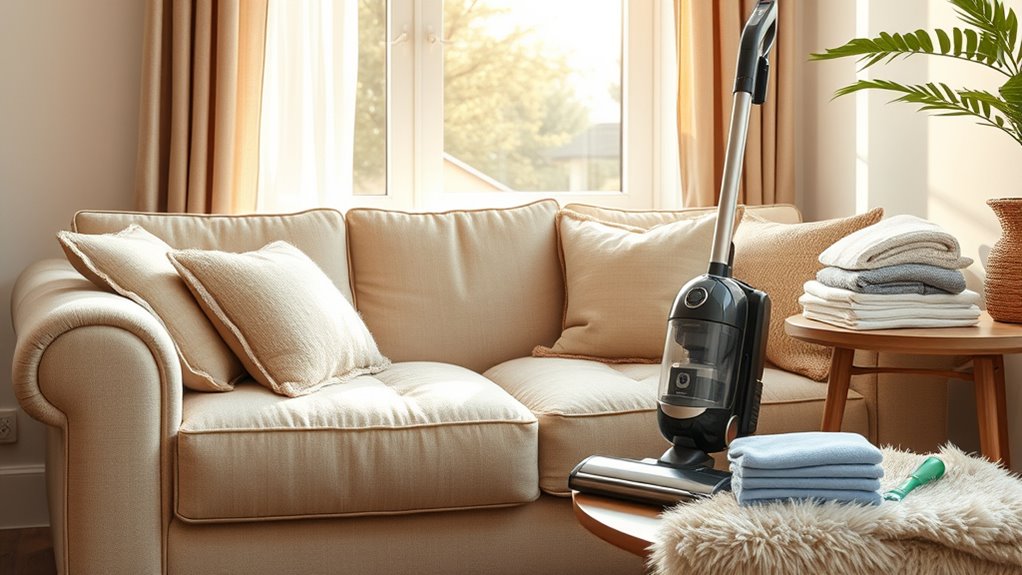
To keep pet hair under control, start with regular grooming to reduce shedding. Use effective vacuuming techniques that target pet hair in hard-to-reach areas, and choose cleaning products that are safe for your pets. Establishing this routine helps keep your home cleaner and your pets happier.
Regular Grooming Practices
Establishing a regular grooming routine is essential for keeping pet hair under control and maintaining a clean home. Brushing your pet several times a week helps reduce loose fur that would otherwise shed everywhere. Use the appropriate tools, like slicker brushes or de-shedding combs, to remove hair effectively without irritating your pet’s skin. Bathing your pet regularly also minimizes shedding and keeps their coat healthy. Be sure to choose gentle, pet-safe shampoos. Additionally, trimming your pet’s fur prevents excessive shedding and matting. Consistency is key—by sticking to a routine, you decrease the amount of hair that ends up on your furniture and floors. Incorporate these grooming practices into your weekly schedule to keep pet hair manageable and your home cleaner.
Effective Vacuuming Techniques
Maintaining a clean home requires more than just regular grooming; effective vacuuming is key to picking up pet hair that inevitably ends up on floors and furniture. To maximize results, use a vacuum with strong suction and a brush roller designed for pet hair. Move slowly over carpets and rugs to loosen hair, and make multiple passes for thorough cleaning. Don’t forget to vacuum under furniture, along edges, and in corners, where hair tends to accumulate. Use attachments like the upholstery tool on furniture and drapes to remove stubborn hair. Empty the vacuum bin or replace the bag frequently to maintain suction power. Regular, targeted vacuuming reduces pet hair buildup and keeps your home fresher and fur-free.
Choosing Pet-Friendly Products
Choosing pet-friendly cleaning products is essential for keeping your home safe and healthy for both your pets and family. Look for products labeled non-toxic, biodegradable, and free from harsh chemicals like ammonia, bleach, and synthetic fragrances. These can irritate your pet’s skin or be toxic if ingested. Opt for natural ingredients such as vinegar, baking soda, and essential oils, which effectively clean without risking your pet’s health. Using eco-friendly paper towels and microfiber cloths helps trap pet hair and dander more efficiently while avoiding chemical residues. Regularly check labels and avoid products with known allergens or irritants. By choosing the right cleaning supplies, you create a safer environment, reduce allergic reactions, and keep fur and pet hair under control more effectively.
Using Air Purifiers and HEPA Filters
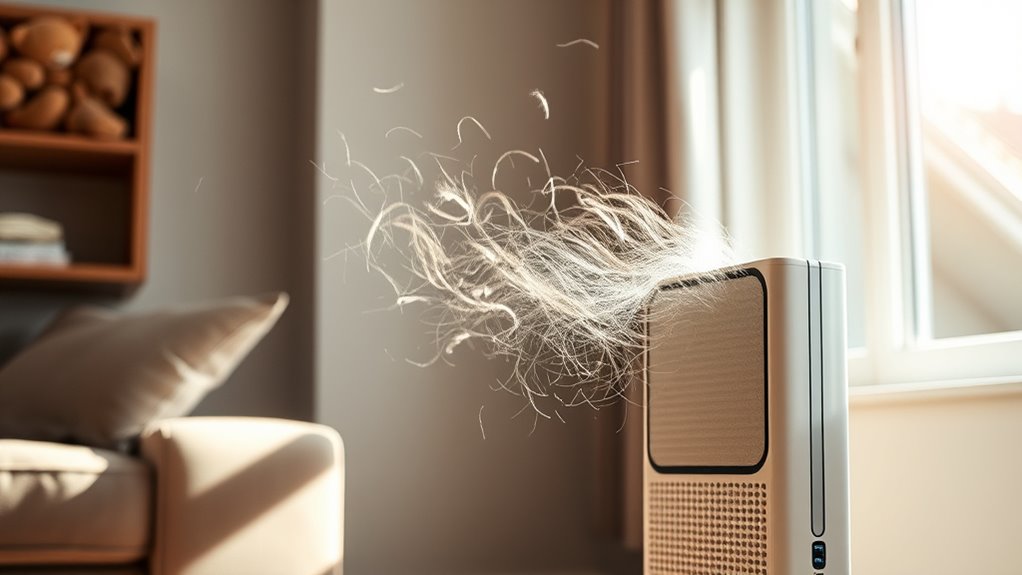
Air purifiers equipped with HEPA filters are highly effective at reducing pet hair and dander in your home. They trap tiny airborne particles, preventing them from settling on furniture and floors. When you run an air purifier consistently, you’ll notice less pet hair circulating in the air and fewer allergy symptoms. Place the purifier in common areas where your pets spend the most time, and ensure it’s rated for the room size. Regularly replace or clean the HEPA filter to maintain peak performance. This simple step helps improve air quality, making your home more comfortable and fur-free. While it won’t eliminate all pet hair, using an air purifier considerably reduces airborne allergens and keeps your environment cleaner.
Implementing Protective Covers and Slipcovers
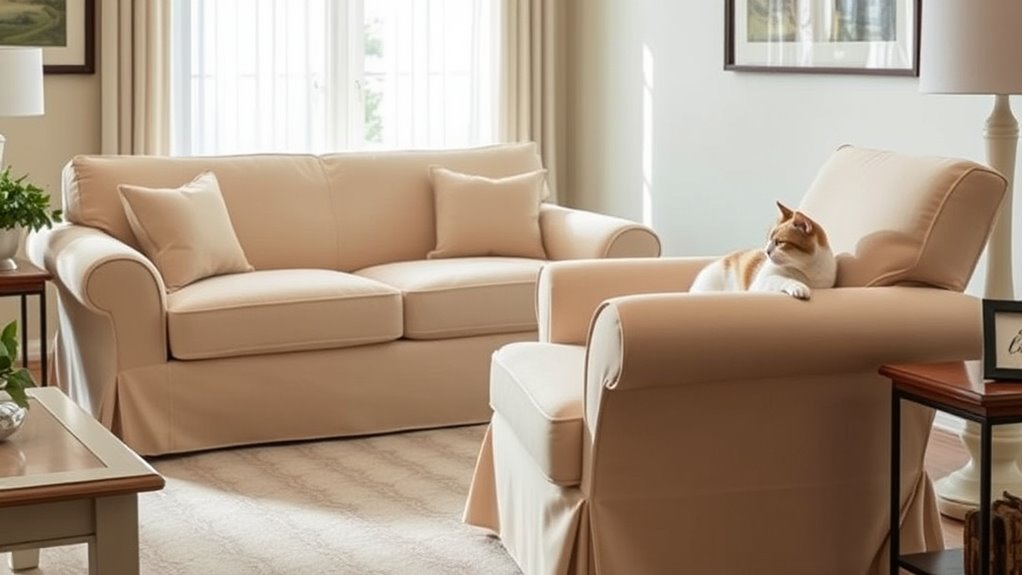
Have you ever wondered how to protect your furniture from pet hair? Implementing protective covers and slipcovers makes a huge difference. They act as a barrier, preventing hair from settling into fabric and making cleanup easier. Choose machine-washable options for quick maintenance. Opt for waterproof covers if your pet tends to drool or have accidents. Use fitted slipcovers to keep them snug and avoid slipping off. Consider textured or brushed fabrics that trap hair better than smooth surfaces. Adding a throw blanket or quilt over frequently used furniture provides extra protection and comfort. These covers not only shield your furniture but also give your space a refreshed look, all while simplifying hair removal. Keep your home fur-free with practical, easy-to-maintain slipcovers.
Tips for Quick Spot Cleaning and Hair Removal

When pet hair suddenly appears on your furniture or clothing, quick action can make all the difference. Grab a lint roller or a damp rubber glove to remove hair efficiently. For fabric surfaces, gently rub in circular motions to lift pet hair without spreading it. Keep a handheld vacuum nearby for fast cleanups on upholstery and carpets. If hair stubbornly clings, use tape or a sticky lint roller for instant removal. To prevent static cling, lightly spray surfaces with water or a fabric softener solution. Here’s a quick reference:
| Tool | Best Use |
|---|---|
| Rubber glove | Lifting pet hair from upholstery |
| Lint roller | Removing hair from clothing |
| Small vacuum | Quick cleanup on furniture |
| Tape/sticky roller | Tackling stubborn hair |
Stay prepared for those unexpected pet hair messes!
Frequently Asked Questions
How Often Should I Vacuum to Control Pet Hair Effectively?
You should vacuum at least twice a week to control pet hair effectively. If you have a lot of shedding or pets that shed heavily, consider vacuuming every other day. Use a vacuum with a strong brush roller or pet-hair attachment to pick up hair from carpets, upholstery, and hard floors. Regular vacuuming prevents hair buildup and keeps your home cleaner and fur-free.
Can Certain Fabrics Trap More Pet Hair Than Others?
Yes, certain fabrics trap more pet hair than others. Smooth, non-porous materials like leather or vinyl resist pet hair better, making cleanup easier. Conversely, plush, fuzzy, or textured fabrics like microfiber, velvet, or shaggy rugs tend to hold onto hair, which can be tough to remove. To keep your home fur-free, choose furniture with sleek surfaces and use appropriate cleaning tools regularly.
Are There Natural Remedies to Reduce Shedding?
Yes, you can reduce shedding naturally. Regularly brushing your pet helps remove loose hair before it falls around your home. Feeding them a diet rich in omega-3 fatty acids promotes healthier, less shed-prone fur. You can also add fish oil supplements or coconut oil to their food, which may reduce shedding. Ensuring your pet stays hydrated and stress-free also helps maintain a healthy coat, reducing overall hair loss.
How Do I Remove Pet Hair From Car Seats?
It’s like finding a needle in a haystack, but removing pet hair from car seats is simple. Use a rubber glove and run it over the upholstery to gather hair, then wipe with a damp cloth. For stubborn hair, try a lint roller or a pet hair removal brush. Vacuum thoroughly afterward. Regular maintenance keeps your car fur-free and makes cleanup quicker, saving you time and frustration.
What Are the Best Tools for Cleaning Pet Hair From Carpets?
You should use a rubber broom or a rubber brush for carpets; their static charge grabs pet hair effectively. A handheld vacuum with a brush attachment also works well for quick cleanups. Lint rollers or adhesive tape can pick up stubborn hair in corners. For deeper cleaning, try a pet hair removal tool designed for carpets, which lifts hair from fibers without damaging them. These tools make pet hair removal efficient and hassle-free.
Conclusion
With a little effort, your home can become a cozy sanctuary free of pet hair. Imagine running your hand over a sofa that’s smooth and fur-free, or walking barefoot on carpets that feel soft and clean. By choosing the right tools, sticking to a routine, and staying proactive, you’ll create a space where pet hair no longer drifts like unwanted clouds. Soon, your home will welcome both you and your furry friends with fresh, hair-free comfort.