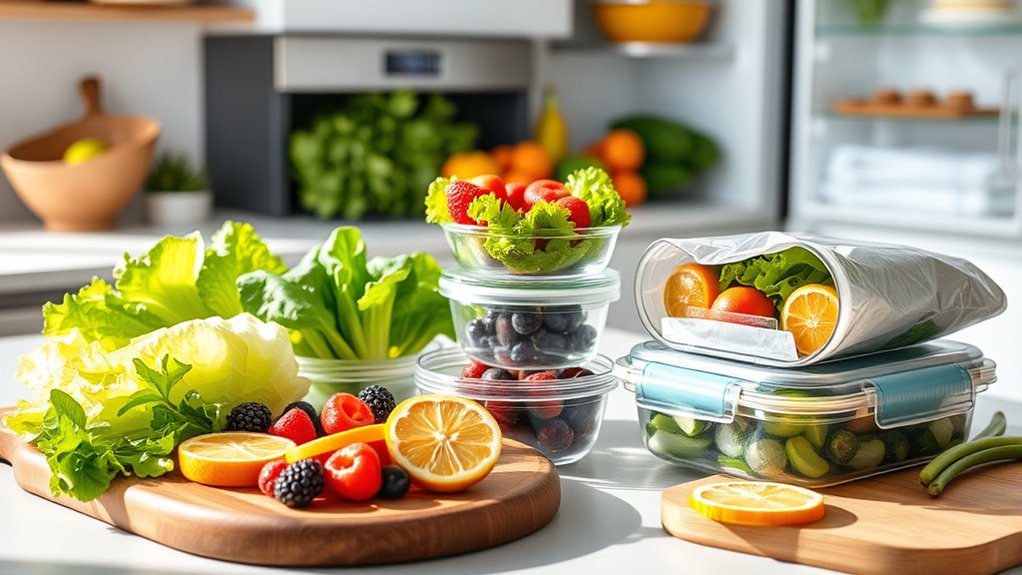

To stop wasting food, start by storing produce properly in breathable containers and keeping dairy in airtight ones. Use airtight containers for leftovers, and always set your fridge below 40°F to keep food fresh longer. Practice the “First In, First Out” rule to prioritize older items. Freeze perishables promptly, and utilize natural preservatives like lemon juice and vinegar. Keep your pantry organized, and discover more tips to extend your groceries’ freshness and reduce waste.
Key Takeaways
- Store produce properly in perforated bags, damp paper towels, or breathable containers to maintain freshness and prevent spoilage.
- Keep your fridge at or below 40°F and avoid temperature fluctuations to slow bacterial growth.
- Use airtight containers, label with dates, and organize items using the “First In, First Out” rule to reduce waste.
- Freeze perishables promptly in airtight, properly wrapped portions to extend shelf life.
- Regularly check for expired or spoiled food, and clean storage areas to prevent mold and bacteria buildup.

Airtight Food Storage Containers with Lids, Vtopmart 24 pcs Plastic Kitchen and Pantry Organization Canisters for Cereal, Dry Food, Flour and Sugar, BPA Free, Includes 24 Labels,Black
Help Organize Your Kitchen and Pantry— Imagine every time walking to your kitchen or pantry, found everything is…
As an affiliate, we earn on qualifying purchases.
As an affiliate, we earn on qualifying purchases.
Master the Art of Proper Produce Storage

To prevent produce from spoiling prematurely, you need to understand how to store it properly. First, keep fruits and vegetables separate because many fruits emit ethylene gas, which speeds up ripening and spoilage of nearby produce. Store leafy greens in a perforated bag or container with a damp paper towel to maintain humidity. Root vegetables like carrots and potatoes should be kept in a cool, dark, well-ventilated place, away from onions. Berries are delicate; wash them just before eating and store them in a breathable container to prevent mold. Apples last longer in the crisper drawer, ideally in a plastic bag with small holes. Proper storage extends freshness, reduces waste, and saves money by keeping produce edible longer.

MAQIHAN 6 Pack Reusable Produce Bags Cotton Mesh Produce Bags Mesh Storage Produce Bags Reusable Durable Double Stitched With Drawstring Produce Bag For Vegetables,Fruit & Grocery Shopping (2L,2M,2S)
Perfect For Holding Fruits And Vegetables: This set of reusable produce bags is often used when going to…
As an affiliate, we earn on qualifying purchases.
As an affiliate, we earn on qualifying purchases.
Keep Dairy Items Fresh With the Right Techniques
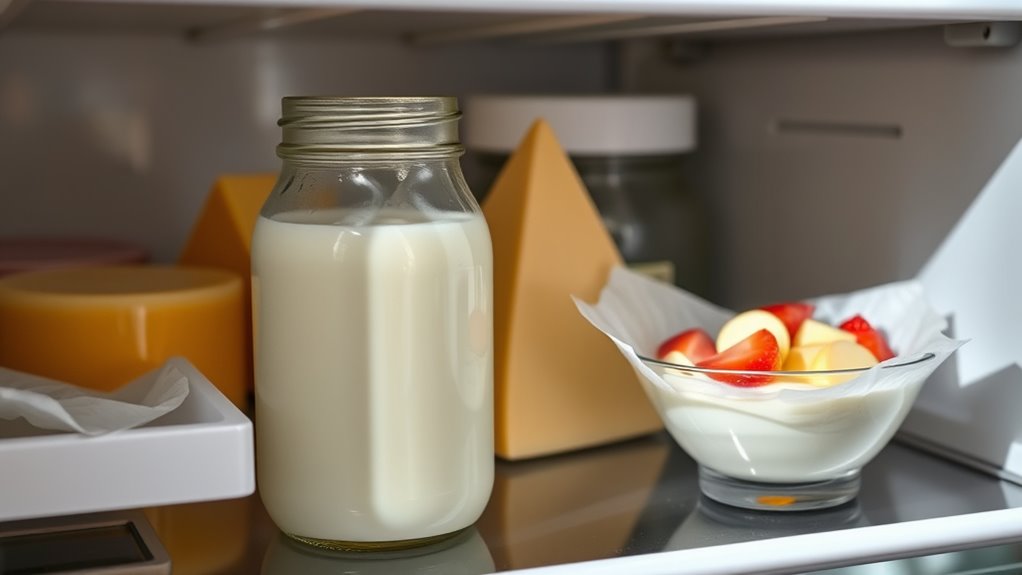
To keep your dairy fresh longer, make sure your fridge is set to the right temperature, ideally below 40°F. Use airtight containers or proper packaging to prevent spoilage and maintain quality. Small tips like sealing milk cartons tightly and storing cheese properly can make a big difference in extending freshness.
Proper Storage Temperatures
Maintaining the correct storage temperature is essential for keeping dairy items fresh and preventing spoilage. Your refrigerator should be set between 35°F and 40°F (1.7°C – 4.4°C) to slow bacterial growth. Use a thermometer to verify accuracy, as temperature fluctuations can shorten dairy shelf life. Avoid placing dairy products near the fridge door, where temperature varies more frequently. Instead, store them on the middle or lower shelves, which stay cooler. Keep dairy items tightly sealed or in their original containers to prevent exposure to air and odors. If you notice any signs of spoilage, like sour smell or discoloration, discard them immediately. Proper temperature control minimizes waste and keeps your dairy fresh longer, saving you money and reducing food waste.
Sealing and Packaging Tips
Proper sealing and packaging are key to keeping dairy products fresh longer. Always make sure containers are airtight before storing in the fridge to prevent exposure to air and contaminants. Use resealable bags or plastic wrap tightly wrapped around cheese, yogurt, or milk cartons. Consider transferring liquids into airtight containers to avoid spills and maintain freshness. When storing cheese, wrap it in parchment paper or wax paper first, then seal it with plastic wrap to prevent mold and drying out. For milk and cream, ensure the cap is tightly closed after each use. Proper packaging slows down spoilage, reduces odor absorption, and prevents bacteria growth. By sealing dairy items correctly, you extend their shelf life and minimize waste, saving you money and reducing food waste.

2 Pack Refrigerator Thermometer, 30-30°C/20-80°F, Classic Fridge Thermometer Large Dial with Red Indicator Thermometer for Freezer Refrigerator Cooler
Convenient and practical: Our refrigerator thermometer is suitable for traditional refrigerators, freezers, insulated boxes, etc. It has a…
As an affiliate, we earn on qualifying purchases.
As an affiliate, we earn on qualifying purchases.
Use Airtight Containers to Extend the Life of Leftovers

Using airtight containers is one of the easiest ways to keep your leftovers fresh longer. They prevent air from reaching your food, slowing down spoilage and odors. Imagine this: a neat stack of containers in your fridge, each sealed tightly, ready to store your meals. To maximize freshness, consider these tips:
Keep leftovers fresh longer with airtight containers that lock in moisture and prevent odors.
- Use containers with tight-fitting lids to lock in moisture and prevent spills.
- Choose clear containers so you can quickly see what’s inside without opening them.
- Label containers with dates to track how long leftovers have been stored.
- Fill containers close to the top to minimize air space, reducing oxidation.

Dwbligt 32 oz Reusable Glass Milk Bottles with Silicone Dispenser Cap, 2 Pack Glass Jars with Airtight Screw Lid, Leak Proof Juice Bottles with Scale Mark Breastmilk Storage Container for Fridge
With a silicone milk dispenser cap: Our 32 oz glass milk bottle with a silicone milk dispenser lid,…
As an affiliate, we earn on qualifying purchases.
As an affiliate, we earn on qualifying purchases.
Store Items at the Correct Temperature for Maximum Freshness
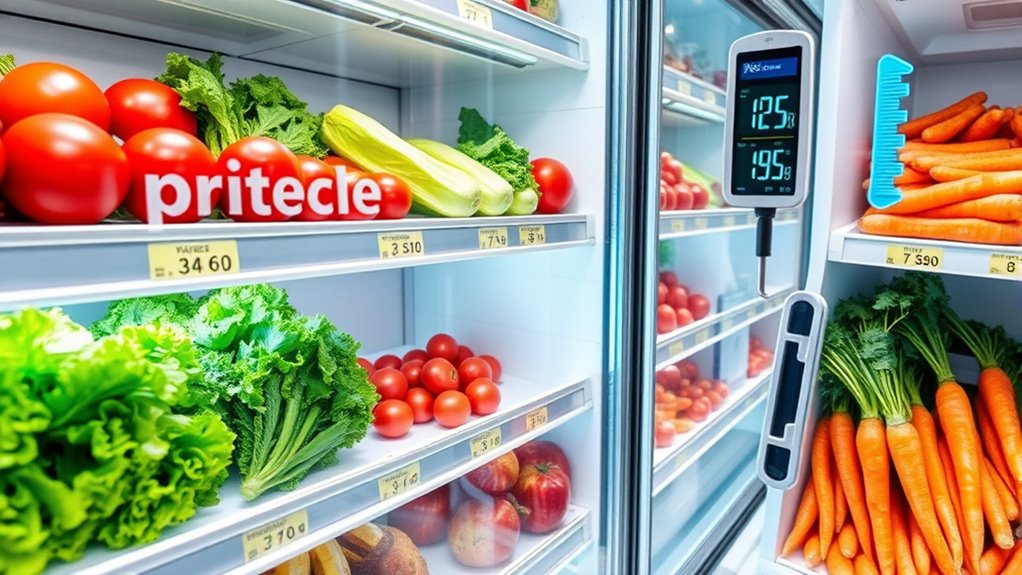
Keeping your fridge at the right temperature is key to maintaining food freshness. Use a proper thermometer to monitor the cold, and avoid fluctuations that can spoil items faster. By staying consistent, you’ll extend the life of your groceries and reduce waste.
Keep Fridge Cold
To prevent your food from spoiling quickly, it’s essential to set your fridge to the right temperature. Keep it at or below 40°F (4°C) to slow bacterial growth. When your fridge is cold enough, produce stays crisp, dairy remains fresh, and leftovers last longer. Imagine opening your fridge to see:
- Fresh, vibrant greens tucked in the crisper drawer
- Chilled bottles of milk and juice, ready to pour
- Steady, cool shelves supporting containers of cooked meals
- Frosty, well-preserved fruits in the produce bin
These visuals help reinforce the importance of proper temperature control. Maintaining the correct fridge temperature is a simple yet effective step to extend the life of your groceries and reduce waste.
Use Proper Thermometers
Proper thermometers are crucial for ensuring your food stays at the right temperature, preventing spoilage and foodborne illnesses. Use a reliable fridge thermometer to regularly check your appliance’s temperature, keeping it between 35°F and 38°F. For freezers, aim for 0°F or lower. When storing leftovers or perishable items, use a digital thermometer to verify their internal temperature. This helps you avoid keeping food in the danger zone (40°F–140°F), where bacteria grow rapidly. Consistently monitoring temperatures ensures your groceries stay fresh longer and reduces waste. Don’t rely on the fridge’s built-in thermometer alone; check it periodically for accuracy. Proper temperature control is a simple but essential step in preserving food quality and safety in your kitchen.
Avoid Temperature Fluctuations
Temperature fluctuations can quickly spoil your food and lead to unnecessary waste. When your refrigerator’s temperature rises or drops unexpectedly, perishable items like dairy, meats, and produce are at risk. To keep your groceries fresh longer, maintain a steady temperature by:
- Setting your fridge between 35-40°F (1.7-4.4°C) and avoiding door openings during busy times.
- Keeping the freezer at 0°F (-18°C) and not overloading it to allow proper airflow.
- Using a thermometer inside your fridge and freezer to monitor levels regularly.
- Avoiding placing hot foods directly into the fridge, which can cause temperature spikes.
Practice the “First In, First Out” Rule
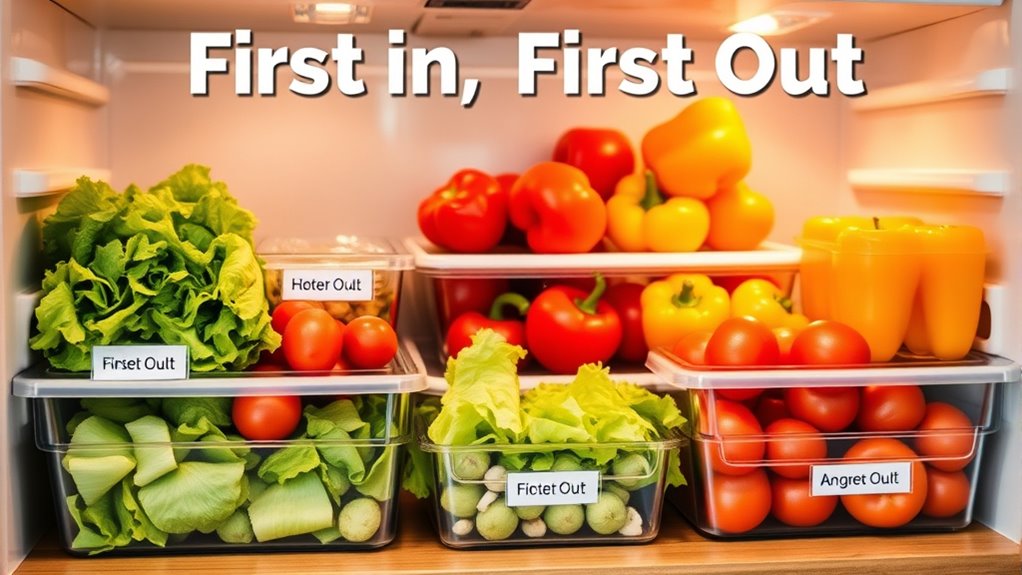
Using the “First In, First Out” (FIFO) rule means organizing your food so that older items are used before newer ones. This helps prevent spoilage and reduces waste. When grocery shopping, place fresh products behind older ones, ensuring you use the older items first. Regularly check your fridge and pantry to rotate stock. To visualize, here’s an example of good organization:
| Item | Purchase Date | Location in Fridge/Carton |
|---|---|---|
| Milk | Jan 1 | Front of fridge |
| Carrots | Jan 3 | Top shelf |
| Yogurt | Jan 2 | Front of fridge |
| Apples | Jan 4 | Crisper drawer |
| Bread | Jan 1 | Bread box |
This system minimizes waste and keeps your groceries fresh longer.
Use Natural Preservatives and Freezing Tips

To extend the freshness of your food without relying solely on packaging or preservatives, turn to natural methods and freezing techniques. Natural preservatives like lemon juice, vinegar, honey, and salt can slow spoilage and inhibit bacteria growth. For example, add lemon juice to cut fruits or vinegar to pickled vegetables to boost shelf life. Freezing is also a powerful tool; it halts bacteria and enzyme activity, preserving food longer. To do this effectively, consider these steps:
Enhance food longevity naturally with lemon, vinegar, honey, salt, and proper freezing techniques.
- Wrap produce tightly in plastic wrap or freezer bags.
- Label items with dates to track freshness.
- Use airtight containers to prevent freezer burn.
- Freeze in portions to avoid thawing and refreezing.
These strategies help keep your groceries fresh and reduce waste.
Regularly Check and Organize Your Pantry and Refrigerator

Regularly checking and organizing your pantry and refrigerator helps you spot expired or spoiled items before they become a problem. When you routinely scan through your food, you can toss out anything past its prime, preventing spoilage from spreading. Keep similar items together so you know what you have at a glance, reducing buying duplicates or unnecessary purchases. Use clear containers or labels to easily identify contents and expiry dates. Make it a habit to clean shelves and drawers to prevent mold and bacteria buildup. This organization not only saves space but also helps you plan meals more efficiently, reducing waste. Staying on top of your food inventory minimizes the chance of forgotten food going bad, ensuring everything stays fresh longer and saving you money.
Frequently Asked Questions
How Can I Tell if Produce Is Still Good to Eat?
You can tell if produce is still good by checking its appearance, smell, and texture. Look for vibrant colors and firm textures; avoid mushy, discolored, or wrinkled items. Smell your produce—if it smells sour or off, discard it. Gently feel it: fresh produce should feel firm and crisp. When in doubt, trust your senses, and remember, when produce shows mold or sliminess, it’s time to toss it out.
What Are the Best Ways to Prevent Dairy Spoilage?
Imagine you buy a gallon of milk, but forget to close the lid tightly. To prevent dairy spoilage, always reseal containers promptly after use and store them at the back of the fridge where it’s coldest. Keep dairy products in their original packaging or airtight containers, and avoid leaving them out at room temperature. These simple steps help slow bacterial growth, ensuring your dairy stays fresh longer.
How Long Can Leftovers Safely Stay in the Fridge?
Leftovers can stay safe in your fridge for 3 to 4 days. To keep them fresh, store leftovers in airtight containers and make certain your fridge is at or below 40°F (4°C). Label the containers with the date so you know when to eat or discard them. Always reheat leftovers thoroughly before eating, and if they smell or look off, it’s best to toss them out to avoid foodborne illness.
What Temperature Should My Refrigerator Be Set To?
You should set your refrigerator to 37°F (3°C) to keep food fresh and safe. This temperature slows bacterial growth without freezing your groceries. Use a refrigerator thermometer to monitor the temperature regularly, especially during hot weather or after loading in groceries. Maintaining this setting helps prevent spoilage, reduces waste, and keeps your food safe for longer. Remember, consistent temperature control is key to effective food preservation.
How Often Should I Clean My Fridge and Pantry?
You should clean your fridge and pantry at least once a month, or even more often if you love keeping your space spotless! Regular cleaning prevents mold, keeps bugs away, and stops spoiled food from turning your kitchen into a disaster zone. Make it a habit—wipe down shelves, toss expired items, and wipe spills. Your food will stay fresher, and your kitchen will stay more inviting and less chaotic!
Conclusion
By mastering these simple storage secrets, you’ll turn your kitchen into a fortress against spoilage. Each tip acts like a brushstroke in a masterpiece, ensuring your groceries stay vibrant and fresh longer. Think of your pantry and fridge as a well-tuned orchestra, where proper organization and care keep everything harmonizing perfectly. With a little attention and these expert techniques, you’ll transform food waste into a thing of the past, leaving your wallet and planet grateful.