
To naturally keep bugs out of your home without harsh chemicals, start by sealing all entry points with caulk, weatherstripping, or screens. Keep your space clean by avoiding food debris and storing food in airtight containers. Use natural repellents like herbs, essential oils, and pest-resistant plants near doorways and windows. Maintain your yard by removing debris, trimming plants, and eliminating standing water. Supporting these steps with homemade traps and physical barriers helps create an environment that bugs avoid—learn more to make your home even less inviting.
Key Takeaways
- Seal entry points with caulk, weatherstripping, and repair screens to block pests from entering your home.
- Keep your home and yard clean by removing food debris, sealing trash, and trimming vegetation to eliminate attractants.
- Use natural repellents like herbs, essential oils, and pest-resistant plants around windows and doorways.
- Set homemade traps with ingredients like sugar, borax, or apple cider vinegar to target specific pests safely.
- Regularly inspect and maintain your home’s exterior and interior to prevent pest entry and reduce hiding spots.
Seal Entry Points to Block Unwanted Guests

Since pests often enter through small gaps and cracks, sealing these entry points is one of the most effective ways to keep bugs out. Walk around your home and inspect areas where wires, pipes, and vents enter the walls. Use caulk or weatherstripping to seal gaps around windows and door frames. Don’t forget to check behind appliances, baseboards, and along the foundation. Fill cracks in the concrete or brick with mortar or sealant to prevent easy access. Pay special attention to places where screens or weatherstripping are damaged. By closing these entry points, you create a barrier that bugs can’t easily penetrate, reducing the likelihood of infestations and making your home less inviting for pests. This simple step is essential for natural pest prevention.
Use Natural Repellents Like Herbs and Essential Oils

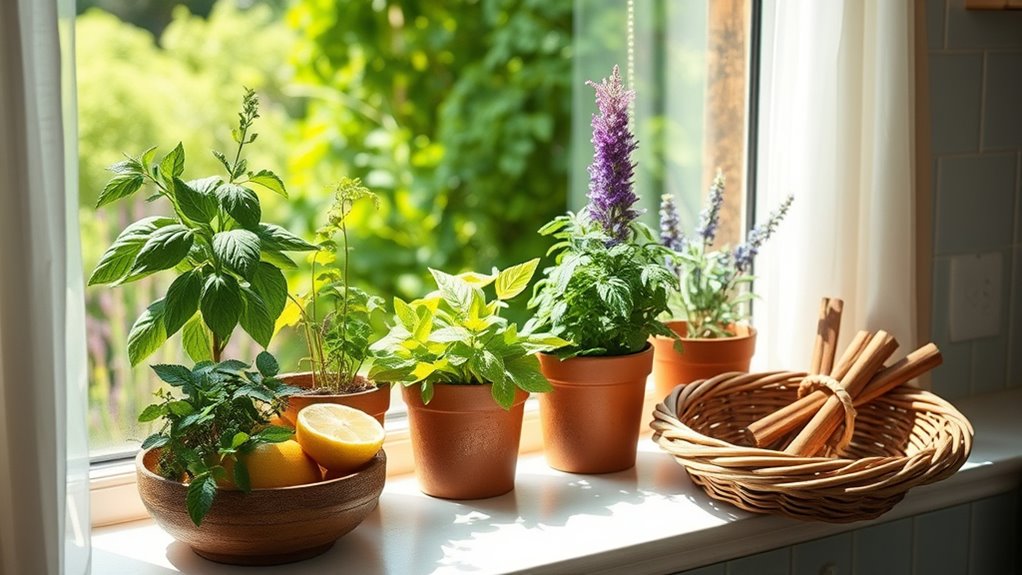
After sealing entry points, the next step is to use natural repellents like herbs and essential oils to keep bugs at bay. You can place dried herbs such as basil, mint, or lavender near windows and doorways or use essential oils like citronella, eucalyptus, and tea tree in diffusers or spray bottles. These natural options emit scents that bugs find unpleasant, deterring their presence. To help you choose, here’s a quick comparison:
| Herb/Essential Oil | Effective Against | Usage Tips |
|---|---|---|
| Basil | Flies, mosquitoes | Plant near entrances or in pots |
| Citronella | Mosquitoes | Use in candles or diffusers |
| Lavender | Moths, flies | Place sachets or oil in cabinets |
| Eucalyptus | Mosquitoes, flies | Diffuse or dilute for sprays |
Using these natural repellents is a safe, chemical-free way to keep bugs outside.
Keep Your Home Clean and Free of Food Debris

Keeping your home clean and free of food debris is one of the most effective ways to prevent bugs from settling inside. Regularly sweep, vacuum, and wipe down countertops to remove crumbs and spills that attract insects. Store food in airtight containers, and don’t leave dishes or leftovers out for long periods. Clear away crumbs from tables and floors daily, especially in the kitchen and dining areas. Take out the trash regularly and ensure bins are sealed tightly. Clean under appliances and furniture to eliminate hidden crumbs and food particles. By maintaining a tidy environment, you remove the food sources bugs seek, making your home less inviting and naturally reducing their presence. Consistent cleanliness is key to keeping pests at bay without chemicals.
Maintain Proper Yard and Garden Practices

Keeping your yard well-maintained helps prevent bugs from entering your home. Regularly trim plants and avoid overgrown areas that attract pests. Also, eliminate standing water to stop mosquitoes and other insects from breeding nearby.
Natural Yard Maintenance
Maintaining a healthy yard and garden is essential for naturally deterring pests from invading your home. Keep your lawn well-trimmed and remove debris like fallen leaves, dead branches, and clutter that can shelter insects. Use native plants that attract beneficial insects and repel pests, reducing the need for chemical controls. Compost responsibly and avoid over-fertilizing, which can attract bugs like ants and flies. Incorporate mulch carefully, ensuring it isn’t piled too thickly, as it can provide hiding spots for pests. Regularly inspect your garden for signs of pests or disease and address issues early. By practicing proper yard maintenance, you create an environment less inviting to pests, helping keep your home bug-free naturally.
Eliminate Standing Water
Have you noticed how standing water in your yard can attract a variety of pests, from mosquitoes to flies? Eliminating these water sources is vital for pest control. Regularly empty or remove items that collect water, such as buckets, trash cans, and plant saucers. Keep gutters clean and guarantee downspouts direct water away from your home. Fill in low spots in your yard to prevent puddles from forming after rain. If you have birdbaths or pet bowls, change the water frequently to avoid creating breeding sites. By maintaining proper yard and garden practices, you reduce the places pests can breed, helping keep your home bug-free naturally. These simple steps make your outdoor space less inviting to pests, supporting a healthier, bug-resistant home environment.
Employ Homemade Traps and Deterrents

Creating homemade traps and deterrents can be an effective way to reduce bug populations without resorting to chemicals. For ants, mix equal parts sugar and borax, place small amounts on paper or in bottle caps near entry points. The sugar attracts them, and the borax kills the colony. For fruit flies, set a trap with apple cider vinegar and a few drops of dish soap in a jar; cover the top with plastic wrap pierced with tiny holes. Flies enter, attracted by the vinegar, and can’t escape. For mosquitoes, hang a mixture of water and citronella oil around your home to repel them. These simple homemade solutions target pests directly, are inexpensive, and avoid harsh chemicals, making your home safer and bug-free naturally.
Install Physical Barriers Such as Screens and Door Sweeps
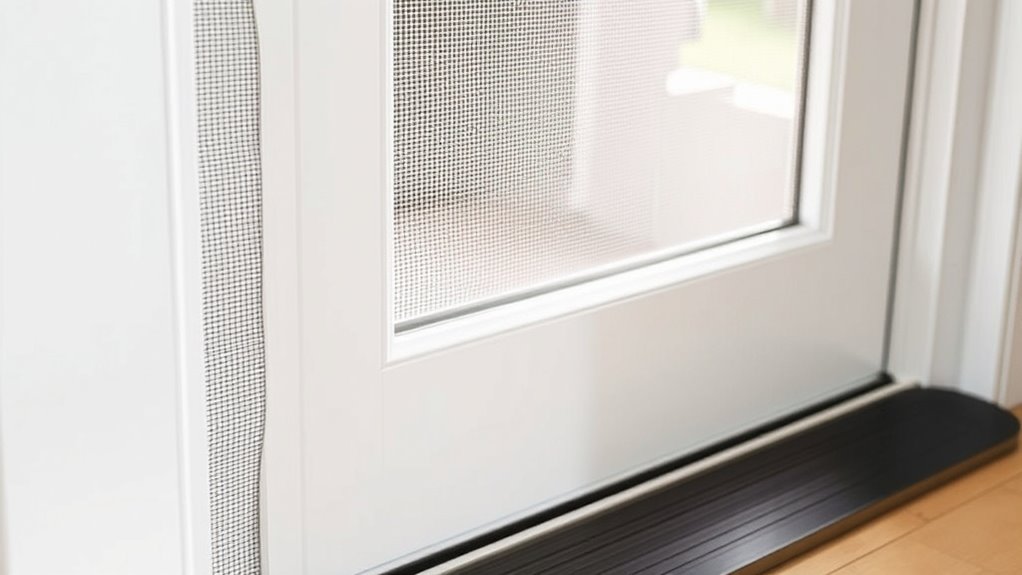
Installing physical barriers like screens and door sweeps offers a straightforward way to keep bugs outside before they even reach your home. To maximize effectiveness, consider these options:
- Attach fine mesh screens to all windows and vents to prevent tiny insects from slipping inside.
- Install door sweeps on exterior doors to seal gaps at the bottom, blocking crawling bugs.
- Use weatherstripping around door and window frames to close any small openings.
- Repair or replace torn or loose screens promptly to maintain a tight barrier.
These simple steps create a physical barrier that reduces bug entry points, keeping your home cleaner and pest-free without the need for chemicals. Regular maintenance ensures your barriers stay effective over time.
Incorporate Plants That Naturally Deter Bugs
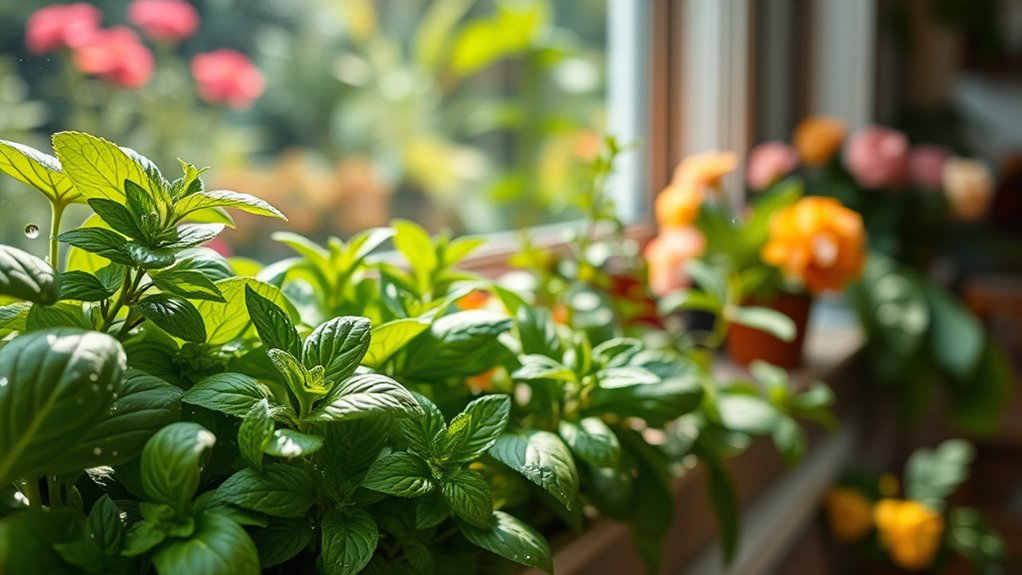
Choosing plants like citronella, basil, or lavender can help repel bugs naturally. You should plant these around entry points and outdoor seating areas for maximum effect. Strategic placement guarantees you create a bug-free zone without relying on chemicals.
Plant Choices for Repelling Insects
Many plants naturally repel insects, making them a smart addition to your home or garden for bug prevention. These plants emit scents that insects find unpleasant, helping keep pests away. Consider adding:
- Lavender – Its fragrant aroma deters mosquitoes and moths, and it adds beauty to your garden.
- Citronella – Known for its strong citrus scent, citronella effectively repels mosquitoes and flies.
- Basil – Besides culinary uses, basil releases a smell that repels flies and mosquitoes.
- Peppermint – Its sharp scent keeps ants, spiders, and mosquitoes at bay, making it a versatile natural repellent.
Plantting these around your home creates a natural barrier against pests without harsh chemicals.
Strategic Placement of Plants
Have you considered how the strategic placement of insect-repelling plants can maximize their effectiveness? Position these plants near entry points like doors, windows, and vents to create a natural barrier that keeps bugs outside. Place them along walkways or garden borders to deter pests from wandering into your yard and home. Indoor placement is also key; put plants like citronella or basil on windowsills or near entrances to repel insects before they come inside. Keep in mind that sunlight, airflow, and proximity to standing water influence how well these plants work. By thoughtfully positioning your pest-repellent plants, you enhance their ability to naturally ward off bugs, reducing the need for chemical solutions and creating a more inviting, bug-free environment.
Regularly Inspect and Maintain Your Home’s Exterior

Regularly inspecting and maintaining your home’s exterior is essential for preventing bugs from entering. By staying vigilant, you catch potential entry points early and keep your home sealed against pests. Here are four key steps to help you stay on top of maintenance:
- Check for cracks in walls, foundations, and window frames, sealing any gaps with weatherproof caulk.
- Clear gutters and drains to prevent standing water, which attracts insects.
- Trim back trees, shrubs, and weeds that touch your home, avoiding easy access for bugs.
- Remove debris, fallen leaves, or clutter around your exterior to eliminate hiding spots.
Consistent upkeep creates a less inviting environment for pests and helps keep your home bug-free naturally.
Frequently Asked Questions
Are There Any Natural Methods to Prevent Bugs From Entering Windows?
Yes, you can prevent bugs from entering your windows naturally. Start by sealing any gaps or cracks around window frames with weatherstripping or caulk. Hang window screens to block insects effectively. Use natural repellents like citronella candles or essential oils such as peppermint, eucalyptus, or lavender nearby. Keep your outdoor area tidy, remove standing water, and prune plants away from windows to reduce bug entry points.
How Can I Identify Which Bugs Are Invading My Home Naturally?
Irony aside, identifying invading bugs naturally starts with keen observation. Look for telltale signs like shed skins, droppings, or damage on plants and fabrics. Keep a small notebook or take photos to document their appearance—size, color, shape. Research common pests in your area or compare them to online images. Recognizing their unique traits helps you choose targeted, eco-friendly solutions and keeps your home bug-free without harsh chemicals.
Can Certain Household Items Naturally Repel Bugs Without Risking Damage?
Yes, certain household items can naturally repel bugs without causing damage. For example, peppermint oil, when diluted and sprayed around entry points, deters spiders and ants. Vinegar acts as a natural repellent for fruit flies and mosquitoes. Bay leaves, cedar chips, and lemon peels also help keep pests at bay. You just need to place or spray these items in strategic spots to effectively protect your home naturally.
What Are the Safest Natural Remedies for Bug Infestations During Pregnancy?
During pregnancy, you can use natural remedies like essential oils such as citronella, lavender, or peppermint, which repel bugs safely. Keep your home well-ventilated, seal cracks, and use screens on windows and doors. Plant bug-repelling herbs like basil or mint around your home. Regularly clean and remove standing water to eliminate breeding sites. These methods are safe for both you and your baby while effectively reducing bug presence.
How Often Should Natural Repellents Be Reapplied for Effective Prevention?
You should reapply natural repellents every two to four hours for best protection. Did you know that pests can become accustomed to repellents over time? To stay effective, reapply more frequently if you notice bugs returning or after activities like cooking or cleaning. Regular reapplication guarantees your home stays bug-free without harsh chemicals, giving you peace of mind and a safer environment for everyone.
Conclusion
By sealing entry points and using natural repellents, you can keep bugs out without harsh chemicals. Regularly maintaining your home and yard also plays a vital role; did you know that over 80% of pest entry occurs through gaps and cracks? Staying proactive with these simple techniques not only protects your home naturally but also promotes a healthier living environment. With consistent effort, you can enjoy a bug-free space without relying on toxic substances.