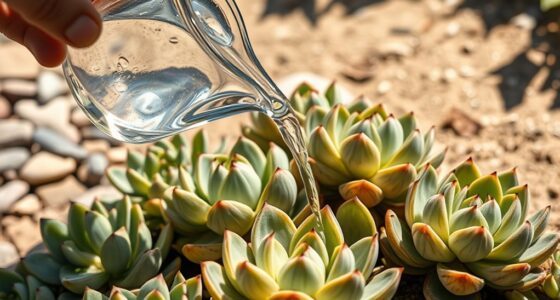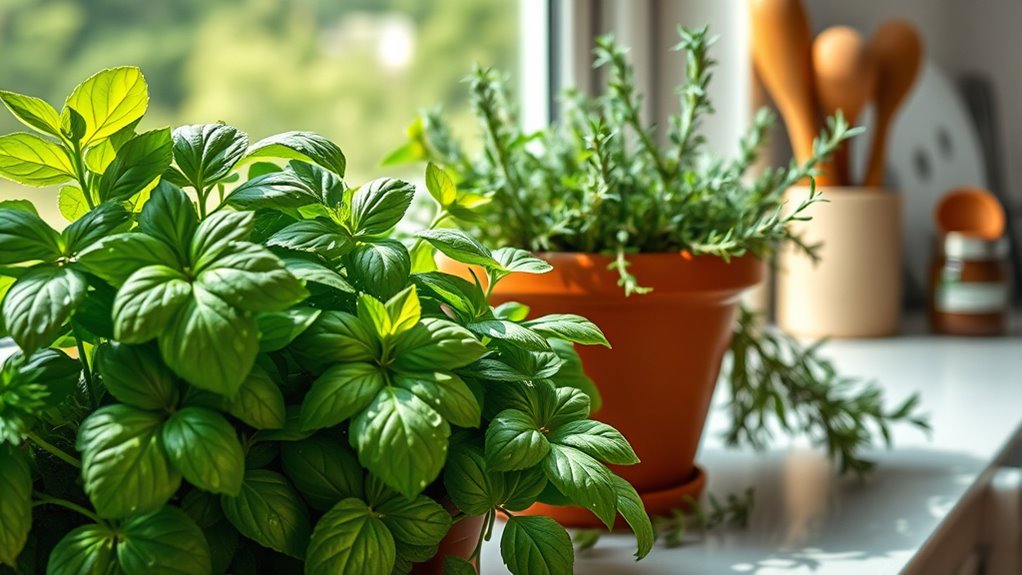

To grow herbs indoors successfully, choose herbs that fit your space and light, like mint, parsley, or oregano. Use containers with drainage and quality soil, and place them near south-facing windows or under grow lights for ample light. Water when the topsoil feels dry, and maintain moderate humidity. Regular pruning, fertilizing, and early problem detection help keep herbs healthy. Keep exploring more tips to cultivate a thriving kitchen garden year-round.
Key Takeaways
- Choose herbs suited for low light and small spaces, like mint, parsley, and oregano.
- Use containers with drainage holes and well-draining soil for healthy root development.
- Provide 12-16 hours of natural or artificial light daily, positioning grow lights 2-4 inches above plants.
- Water only when the top inch of soil is dry, and keep humidity around 40-60% for optimal growth.
- Regularly prune, harvest, and monitor for pests or diseases to maintain healthy, productive herbs.

Indoor Herb Garden Kit – 10 Non-GMO Herb Seeds with Soil, Pots & Moisture Meter – Easy Windowsill Gardening Starter Set – Unique Gift for Gardeners, Home Chefs & Families
Complete Herb Growing Kit – Includes 10 popular non-GMO herbs (Basil, Parsley, Cilantro, Chives, Thyme, Oregano, Dill, Sage,…
As an affiliate, we earn on qualifying purchases.
As an affiliate, we earn on qualifying purchases.
Choosing the Right Herbs for Indoor Growth
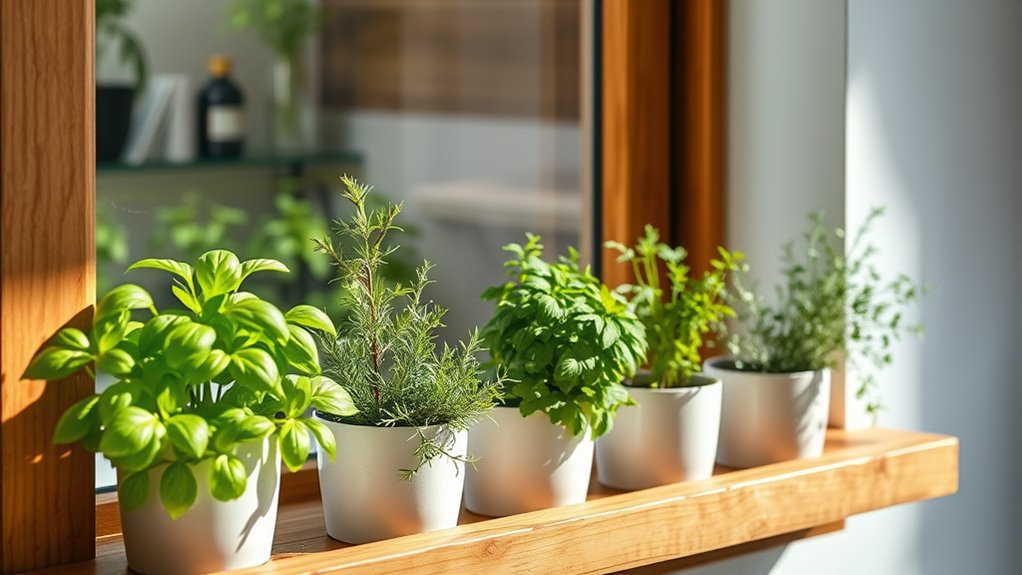
When selecting herbs for indoor growth, it’s important to choose varieties that thrive in confined spaces and lower light conditions. Some herbs, like basil and cilantro, need plenty of sunlight, so they might struggle indoors unless you have a bright south-facing window. Instead, consider herbs like mint, parsley, chives, or oregano, which adapt well to limited light and small containers. These herbs are usually more forgiving and grow efficiently in indoor environments. Think about your cooking habits too—choose herbs you’ll actually use regularly. Also, pick varieties with compact growth habits to avoid overcrowding your space. To ensure successful cultivation, understanding plant adaptability can help you select the best herbs for your specific indoor conditions. By selecting the right herbs, you’ll ensure a healthier, more productive indoor garden with minimal fuss.

LBW Desk Grow Light, Full Spectrum Plant Light for Indoor Plants, Grow Lamps with 4/8/12H Timer, 10"-26" Height Adjustable, 6 Brightness Levels
214 Full Spectrum LEDS: This grow light features 214 high-performance LED beads, this innovative plant light provides a…
As an affiliate, we earn on qualifying purchases.
As an affiliate, we earn on qualifying purchases.
Selecting the Ideal Containers and Soil

Choosing the right containers and soil is crucial for healthy indoor herb growth. Opt for containers with drainage holes to prevent waterlogging, which can cause root rot. Materials like terracotta, ceramic, or plastic work well; just make sure they’re appropriately sized for your herbs’ mature roots. When selecting soil, use a high-quality, well-draining potting mix designed for herbs or vegetables. Avoid garden soil, as it’s too heavy and may contain pests or diseases. Incorporate organic matter like compost or perlite to improve aeration and moisture retention. Proper containers and soil create a stable environment for your herbs to thrive, promoting healthy roots and lush foliage. Regularly check moisture levels and repot when herbs outgrow their containers to keep your indoor garden flourishing.
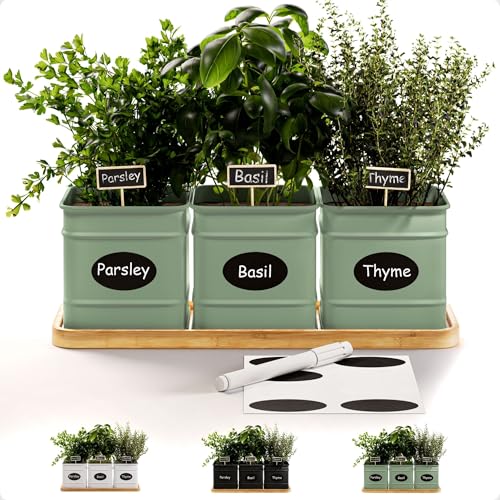
Herb Planter Indoor – 3 Iron Herb Pots with Drainage Holes, Varnished Bamboo Tray, Customizable Labels & Marker Pen – Indoor Herb Garden Planter – 3 Pots for Herbs – Inside Spice Garden – Basil Pot
HERB PLANTER INDOOR – Create your own indoor herb garden for your windowsill or counter. These spacious square…
As an affiliate, we earn on qualifying purchases.
As an affiliate, we earn on qualifying purchases.
Providing Adequate Light for Healthy Growth
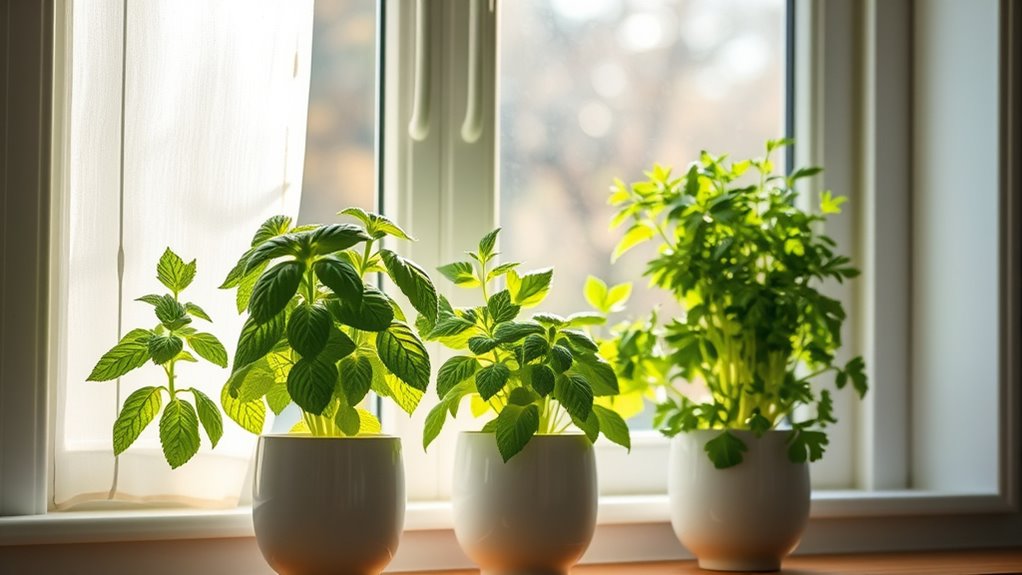
Providing enough light is essential for your indoor herbs to grow strong and healthy. Without sufficient light, they may become leggy, weak, or fail to produce flavorful leaves. To optimize light exposure, consider these tips:
- Place herbs near south-facing windows for maximum sunlight.
- Use grow lights if natural light is limited, keeping them on for 12-16 hours daily.
- Ensure light sources are positioned 2-4 inches above the plants to prevent stretching.
- Rotate containers weekly to promote even growth and prevent leaning toward the light.
- Understanding light intensity and spectrum can help you select the best lighting setup for thriving herbs.
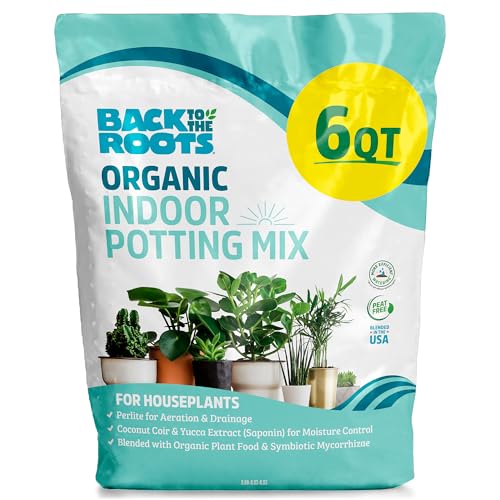
Back to the Roots 100% Organic Indoor Potting Mix (6 Quart), Promotes Healthy Houseplant Growth, Made in The USA
Includes 6qt of Back to the Roots Indoor Potting Mix. Our Potting Mix contains organic yucca extract that…
As an affiliate, we earn on qualifying purchases.
As an affiliate, we earn on qualifying purchases.
Watering and Humidity Tips for Indoor Herbs
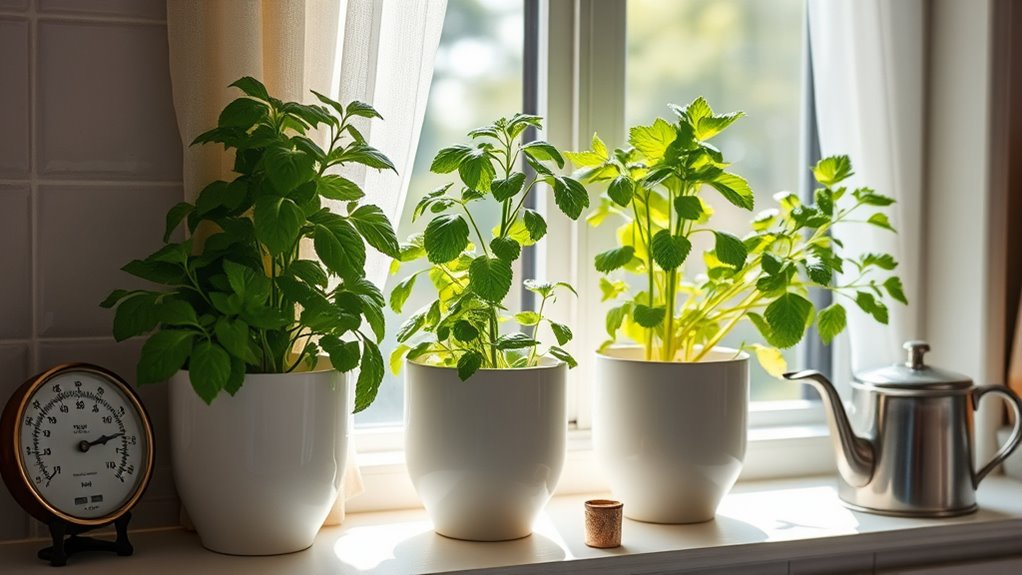
Maintaining proper watering and humidity levels is essential for healthy indoor herbs, as both factors directly influence their growth and flavor. Overwatering can cause root rot, so water only when the top inch of soil feels dry. Use a watering can with a narrow spout to target the soil directly, avoiding excess moisture on leaves. Humidity is equally important; herbs generally prefer around 40-60% humidity. To boost humidity, place a tray of water near your plants or use a humidifier. Avoid drafts and sudden temperature changes, which can stress herbs and impair growth. Consistent watering and moderate humidity create an ideal environment, helping your herbs develop strong roots and vibrant leaves, ultimately enhancing their flavor and overall health. Free Floating backyard transformation ideas, such as adding a small outdoor seating area or incorporating landscaping, can also create a more comfortable and inviting space for your indoor herbs to thrive.
Fertilizing Your Indoor Herb Garden
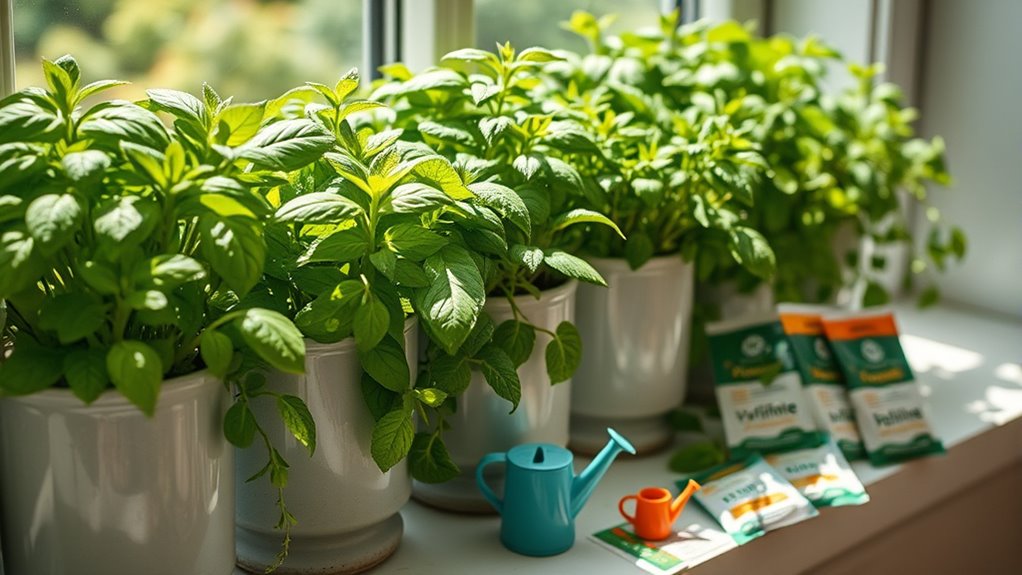
Fertilizing your indoor herb garden is essential for promoting healthy growth and vibrant flavors. Proper fertilization guarantees your herbs receive necessary nutrients that might be lacking in potting mixes. Here’s how to do it effectively:
Feeding your indoor herbs ensures vibrant growth and rich flavors indoors.
- Choose a balanced, water-soluble fertilizer with equal parts nitrogen, phosphorus, and potassium.
- Feed your herbs every 2-4 weeks during active growth, adjusting frequency based on plant needs.
- Dilute the fertilizer to half the recommended strength to prevent overfeeding.
- Use organic options like compost tea or fish emulsion for a natural nutrient boost.
- Be aware of vetted affiliate disclosures to ensure transparency when supporting your gardening supplies.
Always monitor your herbs for signs of nutrient deficiencies or excesses, and adjust feeding accordingly. Proper fertilization keeps your herbs healthy, flavorful, and thriving indoors.
Managing Pests and Diseases Indoors
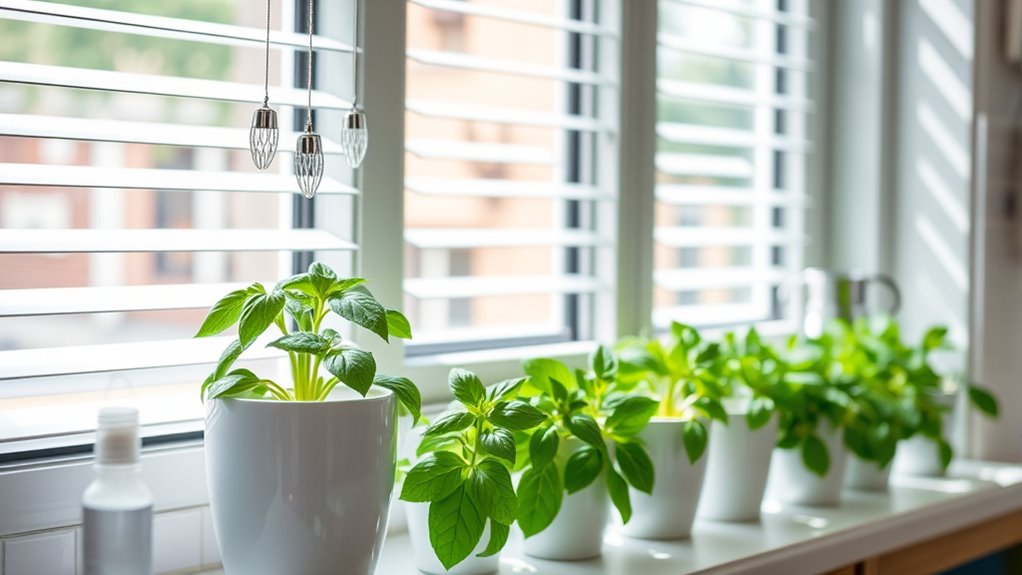
After ensuring your herbs are well-fed and healthy, it’s important to stay vigilant for pests and diseases that can threaten their growth. Regularly inspect your plants for signs like discolored leaves, holes, or sticky residue. If you spot pests such as aphids, spider mites, or whiteflies, remove them gently with a stream of water or use insecticidal soap. For diseases like mold or root rot, improve air circulation and avoid overwatering. Keep your herbs clean by wiping leaves and removing any fallen debris. Quarantine new plants before introducing them to your garden. Monitoring consistently helps catch issues early, preventing infestations or infections from spreading. Taking prompt action ensures your indoor herb garden remains healthy, vibrant, and productive. Additionally, understanding plant health can help you better identify and address potential problems before they become severe.
Pruning and Harvesting for Longevity

To keep your herbs healthy and productive, you need to master proper pruning techniques and harvest at the right times. Regular maintenance guarantees they stay vigorous and last longer. Pay attention to these practices to maximize your indoor herb garden’s longevity. Incorporating smart appliances and connected systems can further optimize your herb care routines.
Proper Pruning Techniques
Pruning your herbs correctly is essential for promoting healthy growth and extending their lifespan indoors. Proper techniques encourage bushier, more productive plants and prevent them from becoming leggy. To prune effectively:
- Use clean, sharp scissors or pruning shears to avoid damaging your herbs.
- Cut just above a leaf pair or node to stimulate new growth.
- Remove dead or yellowing leaves promptly to prevent disease.
- Pinch back the tips of stems regularly to encourage branching and fuller foliage.
- Incorporating energy-efficient tools can also support sustainable gardening practices and reduce your environmental impact.
Avoid over-pruning, which can stress plants, and always remove stems at an angle to prevent water from pooling on cuts. Consistent, precise pruning keeps your herbs vibrant and productive for longer.
Optimal Harvest Timing
Ever wonder when the best time is to harvest your herbs for maximum flavor and longevity? The ideal moment is just before the plant flowers, when leaves are lush and full of essential oils. For most herbs, this means harvesting in the morning after dew has dried but before the heat of midday. Use sharp scissors or pruning shears to snip leaves or stems, leaving enough growth for continued health. Regular harvesting encourages new growth and keeps herbs productive longer. Avoid taking more than one-third of the plant at a time to prevent stress. Timing your harvest correctly guarantees your herbs develop rich flavors and stay healthy for future use. Remember, the fresher the herb at harvest, the better the taste and aroma in your dishes. Proper plant maintenance also plays a crucial role in ensuring your herbs remain vibrant and flavorful throughout the season.
Regular Maintenance Practices
Regular maintenance, including consistent pruning and harvesting, is essential for keeping your indoor herbs healthy and productive over time. Proper care encourages new growth, prevents disease, and extends the lifespan of your plants. To do this effectively:
- Trim back leggy stems regularly to promote bushier growth.
- Harvest leaves before they become overly mature for the best flavor.
- Remove dead or yellowing foliage promptly to prevent disease.
- Use clean scissors or shears to avoid spreading infections.
- Regularly checking your plants’ health and vitality helps catch potential issues early and maintain a thriving kitchen garden.
Creating the Perfect Indoor Environment
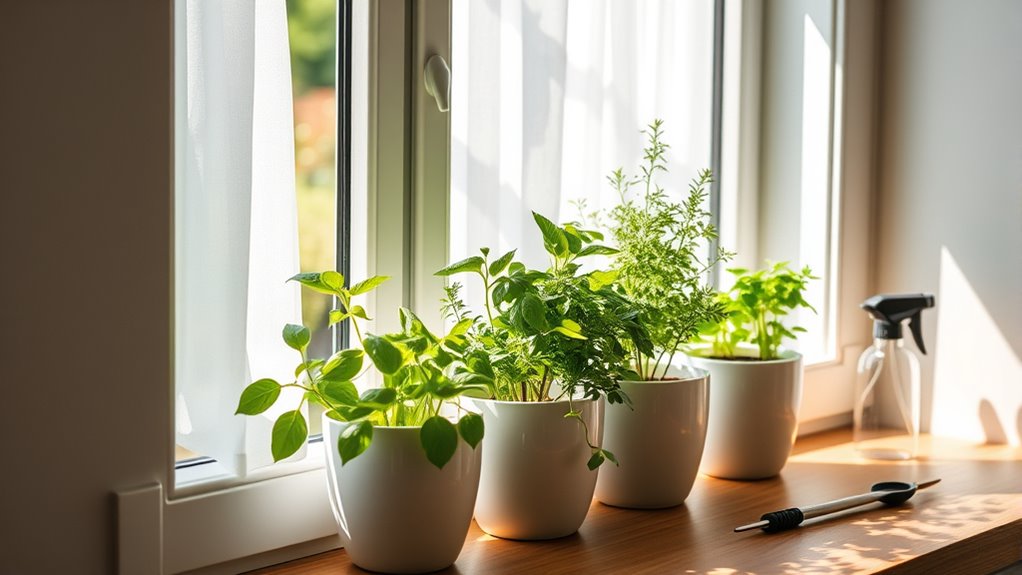
Creating the perfect indoor environment is essential for healthy herb growth. You want your herbs to thrive, so focus on key factors like light, temperature, and humidity. Place your herbs near a south-facing window for maximum sunlight, or use grow lights if natural light is limited. Maintain a steady temperature between 65-75°F and avoid drafts. Humidity levels should stay moderate; too dry or too damp can hinder growth. Imagine this setup: safe installation practices and how to avoid common hazards.
| Light Source | Humidity Level |
|---|---|
| Bright, direct sunlight | Slightly humid, 40-60% |
| Grow lights for shade | Moderate moisture levels |
| Well-ventilated space | Avoid overly dry air |
| Consistent temperature | Keep away from cold drafts |
Creating this environment helps your herbs flourish indoors.
Troubleshooting Common Growing Issues
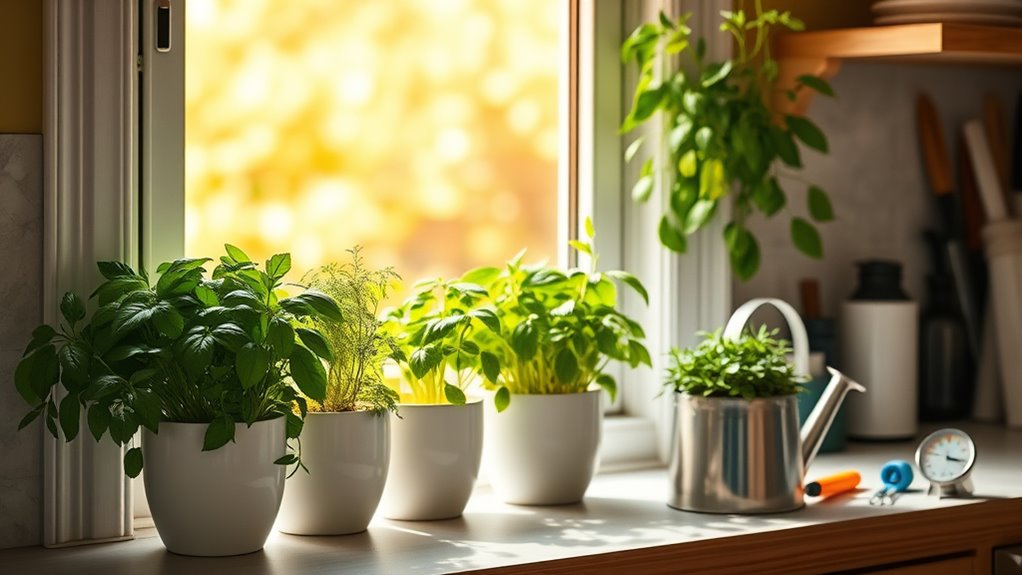
If your herbs aren’t thriving, you might be facing overwatering, pests, or nutrient shortages. Recognizing symptoms like yellowing leaves or pest damage helps identify the problem quickly. By understanding these signs, you can take targeted steps to keep your herbs healthy and productive.
Overwatering Symptoms
Overwatering is a common mistake that can quickly harm your indoor herbs. When plants receive too much water, their roots can suffocate and rot, leading to yellowing leaves and wilting. To identify overwatering, watch for these signs:
- Yellowing leaves that feel soft and limp.
- Wilting despite moist soil.
- Mold or fungus developing on the soil surface.
- Slow-draining or waterlogged soil that stays wet for days.
If you notice these symptoms, reduce watering frequency and ensure your pots have proper drainage. Let the soil dry out slightly between waterings, and avoid letting excess water sit in the saucer. Proper watering helps your herbs stay healthy and prevents root rot.
Pest Identification Tips
Pests can quickly become a problem for your indoor herbs, often showing signs before you realize there’s an issue. Look closely for tiny insects like aphids, spider mites, or whiteflies on the leaves and stems. Check for sticky residue or webbing, which can indicate spider mite activity. Examine the undersides of leaves, as pests often hide there. Discoloration, holes, or curled leaves also signal pest presence. Use a magnifying glass if needed to spot small bugs. Regularly inspecting your herbs allows you to catch problems early. If you notice pests, isolate affected plants to prevent spreading. Identifying pests early helps you choose the right treatment, whether it’s a gentle insecticidal soap or manual removal, ensuring your herbs stay healthy and productive.
Nutrient Deficiency Signs
Nutrient deficiencies can manifest in subtle ways that affect your herbs’ growth and overall health. Recognizing these signs early helps you correct issues before they worsen. Here are common deficiency signs to watch for:
- Yellowing leaves – Often indicates nitrogen deficiency, leading to pale or yellow leaves, especially in older foliage.
- Stunted growth – A lack of phosphorus can cause slow or halted growth, and leaves may appear dark or dull.
- Leaf curl or browning edges – Potassium deficiency may cause leaf edges to curl, brown, or develop spots.
- Poor root development – Iron deficiency results in new leaves turning yellow while veins stay green, impacting overall nutrient uptake.
Regularly monitor your herbs, and adjust fertilization to prevent deficiencies and promote healthy growth.
Incorporating Your Herbs Into Daily Cooking
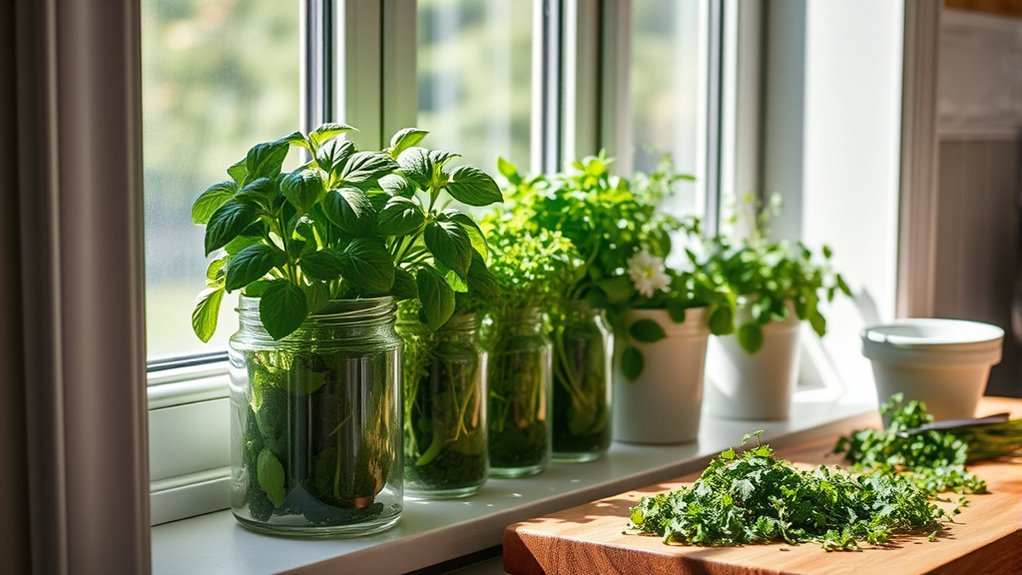
Incorporating your homegrown herbs into daily cooking adds fresh, vibrant flavors to your meals and makes gardening more rewarding. Keep herbs nearby, so you can snip what you need right before adding them to dishes. Fresh basil brightens pasta or salads, while mint elevates drinks and desserts. Use chives to garnish soups or omelets, and thyme for roasting vegetables or meats. Experiment with herbs in simple recipes to fully enjoy their aroma and taste. Remember to harvest regularly—this encourages new growth and keeps your herbs healthy. Incorporate herbs at different stages of cooking for maximum flavor. Over time, you’ll develop a keen sense of which herbs complement specific dishes, transforming everyday meals into flavorful, garden-fresh creations.
Frequently Asked Questions
How Do I Prevent My Herbs From Becoming Leggy Indoors?
To prevent your herbs from becoming leggy indoors, make sure they get plenty of direct sunlight—aim for at least 6 hours daily. Rotate your pots regularly to guarantee even light exposure. Keep your herbs well-watered but not overwatered, and prune them regularly to encourage bushier growth. Using grow lights can supplement natural sunlight, especially during darker months. With proper care, your herbs will stay healthy and compact.
What Are Natural Ways to Deter Indoor Pests Without Chemicals?
You can naturally deter indoor pests by introducing beneficial insects like ladybugs and lacewings, which prey on common pests. Keep your herbs healthy by maintaining proper air circulation and avoiding overwatering, as pests thrive in damp conditions. Use neem oil or insecticidal soap as gentle, chemical-free solutions when needed. Regularly inspect your plants for early signs of pests, and wipe leaves with a damp cloth to remove eggs and bugs.
How Can I Extend the Lifespan of My Herbs After Harvest?
To extend your herbs’ lifespan after harvest, you should store them properly. Wrap herbs like parsley and cilantro in a damp paper towel and place them in a plastic bag in the fridge. For basil, keep stems in water at room temperature, like cut flowers. Regularly trim and use your herbs to keep them fresh longer. Proper storage and prompt use help preserve their flavor and significance.
Are There Specific Herbs That Thrive Better in Low Humidity Environments?
You’ll find that mint, for example, thrives better in low humidity environments. Imagine a small apartment with dry air, where mint grows lush and vibrant without mold or mildew issues. In such conditions, mint’s robust leaves and vigorous growth are maintained, unlike basil or cilantro, which prefer more humid air. Keep your space dry, and your mint will flourish, giving you fresh leaves for months.
How Do I Troubleshoot Root Rot in Indoor Herb Containers?
If you notice your herbs wilting, have yellowing leaves, or see black, mushy roots, you’re likely dealing with root rot. Remove the herbs from their containers and gently rinse off the soil. Cut away any affected roots with sterilized scissors. Repot in well-draining soil and reduce watering frequency. Confirm your containers have drainage holes, and only water when the top inch of soil feels dry.
Conclusion
Think of your indoor herb garden as a flourishing symphony—you’re the conductor guiding each note. With the right choices and care, your herbs will thrive, filling your kitchen with fresh flavors and vibrant life. Keep nurturing them, troubleshoot when needed, and enjoy the beautiful harmony of your growing culinary orchestra. Before long, your cozy space will burst with fragrant, homegrown herbs, turning everyday cooking into a delightful masterpiece.