

The one in, one out method works by helping you maintain an organized space through consistent, small choices—you add an item only if you remove one. It promotes mindful consumption, prevents clutter, and keeps your home tidy without overwhelming effort. While it offers many benefits, challenges like emotional attachments or inconsistent effort can arise. If you keep practicing, you’ll discover how this simple hack can transform your space and habits—more details await below.
Key Takeaways
- The “One In, One Out” method effectively prevents clutter buildup by balancing new items with removal.
- It promotes mindful consumption, reducing impulse buying and encouraging intentional decluttering.
- Consistent application can maintain an organized, tidy space over time, making it a sustainable decluttering strategy.
- It works best for households with clear routines and discipline, especially in smaller or minimalist homes.
- While not a quick fix, this approach fosters ongoing organization and helps sustain long-term clutter control.
How the One In, One Out Method Works

The One In, One Out method works by ensuring that every new item you bring into your space is balanced with the removal of an existing one. When you purchase or acquire something new, you immediately find an item to donate, sell, or discard. This keeps clutter from building up and maintains a sense of order. You don’t need to eliminate everything at once; instead, focus on making small, consistent choices. It’s simple to implement—just make it a rule to remove something whenever you add something new. Over time, this habit encourages mindful consumption and prevents accumulation. The key is discipline and awareness, turning decluttering into an ongoing process rather than a one-time event.
Benefits of Adopting This Decluttering Strategy
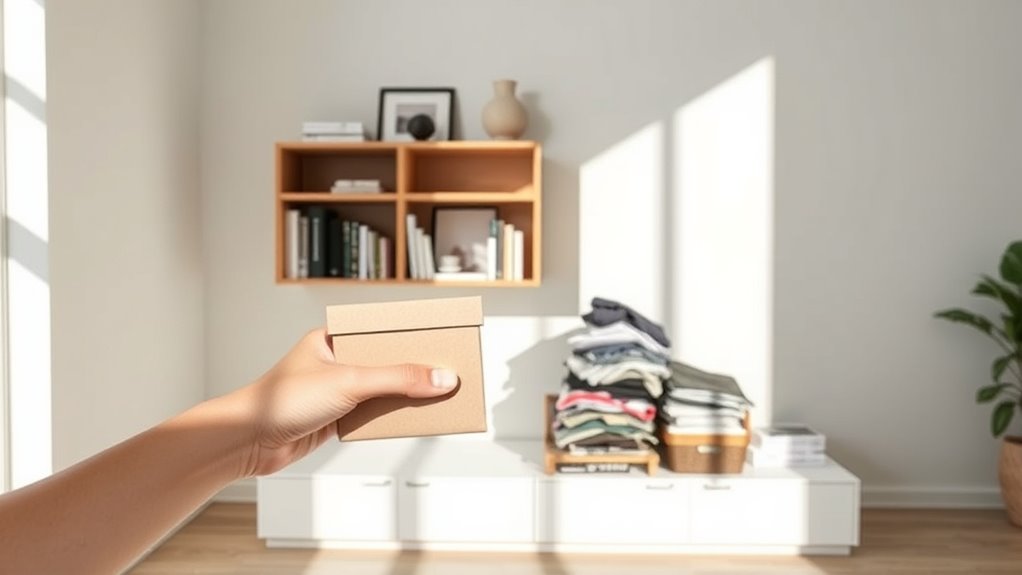
By adopting this decluttering strategy, you’ll find decision-making becomes quicker and less stressful. It helps you keep your space clean and organized, so clutter doesn’t pile up again. Plus, it encourages you to think more carefully about what you bring into your home, promoting mindful consumption.
Simplifies Decision-Making
When you adopt a decluttering strategy focused on simplifying your space, decision-making becomes much easier. With fewer belongings around, you spend less time choosing what to keep and what to discard. This clarity reduces mental clutter, helping you focus on what truly matters. Instead of weighing options or feeling overwhelmed by clutter, you develop a clear sense of priority. The one-in, one-out rule creates a simple routine that keeps your space consistently organized, eliminating the need for frequent decision-making about where items belong. Over time, this habit builds confidence in your choices and streamlines daily routines. Ultimately, simplifying your environment makes decision-making more efficient, freeing up mental energy for more important or enjoyable activities.
Maintains Clutter-Free Space
Adopting a decluttering strategy centered on simplicity helps you maintain a consistently clutter-free space. When you follow the one-in, one-out rule, your environment stays organized without frequent effort. This approach reduces the buildup of unnecessary items, making it easier to find what you need. You’ll notice your space feels more open and inviting, which boosts your mood and productivity. Plus, maintaining this habit prevents clutter from sneaking back in. It encourages discipline and mindfulness about what you keep. Over time, your home becomes a reflection of your intentional choices. Staying consistent means less time spent tidying, more time enjoying your space, and fewer stressors related to clutter. Ultimately, this strategy helps you create a calm, functional environment you can sustain effortlessly.
- Keeps clutter from accumulating
- Promotes a tidy, organized space
- Saves time on cleaning and tidying
- Reduces stress and overwhelm
- Reinforces mindful consumption
Encourages Mindful Consumption
Encouraging mindful consumption becomes a natural outcome when you follow a simple decluttering strategy focused on one-in, one-out. This approach makes you more aware of your purchasing habits, prompting you to contemplate whether new items are truly necessary before bringing them home. As a result, you develop a more intentional mindset, reducing impulse buys and unnecessary clutter. This shift benefits your budget and helps you focus on quality over quantity. To visualize this, consider the following table:
| Before Strategy | After Strategy |
|---|---|
| Purchase items impulsively | Pause and evaluate necessity |
| Accumulate clutter quickly | Make thoughtful buying decisions |
| Feel overwhelmed by possessions | Experience clarity and control |
| Waste money on unnecessary items | Save for meaningful experiences |
| Struggle to maintain space | Enjoy a calmer, organized environment |
Common Challenges and Pitfalls

You might feel overwhelmed or guilty about letting go of certain items, which can slow down your progress. Inconsistent effort can also make it hard to maintain your decluttering gains over time. Recognizing these pitfalls helps you stay focused and committed to your decluttering goals.
Overwhelm and Guilt
Many people feel overwhelmed by the sheer amount of clutter and guilty about the time they think they should spend decluttering. This can make starting feel impossible and lead to procrastination. The guilt often stems from feeling like you’re falling behind or not doing enough. To manage these feelings, try breaking tasks into small, manageable steps instead of aiming for perfection. Remind yourself that even a few minutes make a difference. Recognize that setbacks are normal and avoid self-criticism. Celebrate small wins to build momentum and confidence. Remember, decluttering is a process, not a race. By acknowledging these feelings without judgment, you can reduce overwhelm and guilt, making the journey more sustainable and less stressful.
Inconsistent Application
Inconsistent application of decluttering routines often stems from fluctuating motivation or unclear priorities. When your enthusiasm wanes or you’re unsure which items matter most, sticking to the “one in, one out” rule becomes challenging. You might start strong but lose momentum when daily routines distract you or when you’re faced with emotional attachments to certain belongings. Without a clear plan or consistent reminder, it’s easy to slip back into old habits. This inconsistency hampers progress and can make decluttering feel like an endless task. To avoid this pitfall, set specific goals, establish regular check-ins, and remind yourself of the benefits. Staying disciplined and making decluttering part of your routine helps guarantee you apply the method consistently, leading to lasting results.
Does It Promote Sustainable Organization?

Does this decluttering hack truly support sustainable organization? The answer depends on how consistently you apply it. Using the one-in, one-out rule can help maintain a clutter-free space over time, but only if you stick to it. It encourages mindful consumption and prevents accumulation, fostering long-term habits. However, sustainability also depends on your mindset and commitment. If you’re quick to replace items without reassessment, the system might falter. It’s essential to:
- Regularly evaluate whether items are still needed
- Avoid impulsive purchases
- Recycle or donate unwanted items
- Create a routine for decluttering
- Maintain awareness of your belongings
This approach can promote sustainability, but only if you remain disciplined and intentional with your belongings.
Tips for Implementing One In, One Out Successfully

Wondering how to make the one-in, one-out rule work smoothly? Start by setting clear guidelines for what qualifies as replaceable items. Keep a dedicated box for items to discard or donate, so you’re ready when new things arrive. Consistency is key: every time you bring in something new, choose something to remove immediately. To stay organized, create a simple system for tracking what goes in and out. Here’s a quick reference:
| Item Type | Inbound Item | Outbound Item |
|---|---|---|
| Clothing | New shirt | Old jeans |
| Books | New novel | Old magazine |
| Kitchen | New utensil | Expired spices |
| Decor | New picture | Broken frame |
| Gadgets | New device | Old charger |
Stick to this routine, and decluttering becomes second nature.
Real-Life Examples and Success Stories

Many people have transformed their cluttered spaces into organized havens by applying the one-in, one-out rule consistently. They share inspiring stories of how small changes made a big difference. For example, one person cleared their closet by donating an item every time they bought new clothes. Another kept their kitchen counter clutter-free by removing an appliance or utensil with each new addition. Some found success by setting weekly goals, like decluttering one drawer at a time, which kept them motivated. Others reported feeling less stressed and more in control of their space. Finally, a busy parent managed to keep their child’s toy collection manageable by rotating out toys regularly. These stories prove that, with commitment, the one-in, one-out rule can truly transform your environment.
Comparing One In, One Out to Other Decluttering Techniques
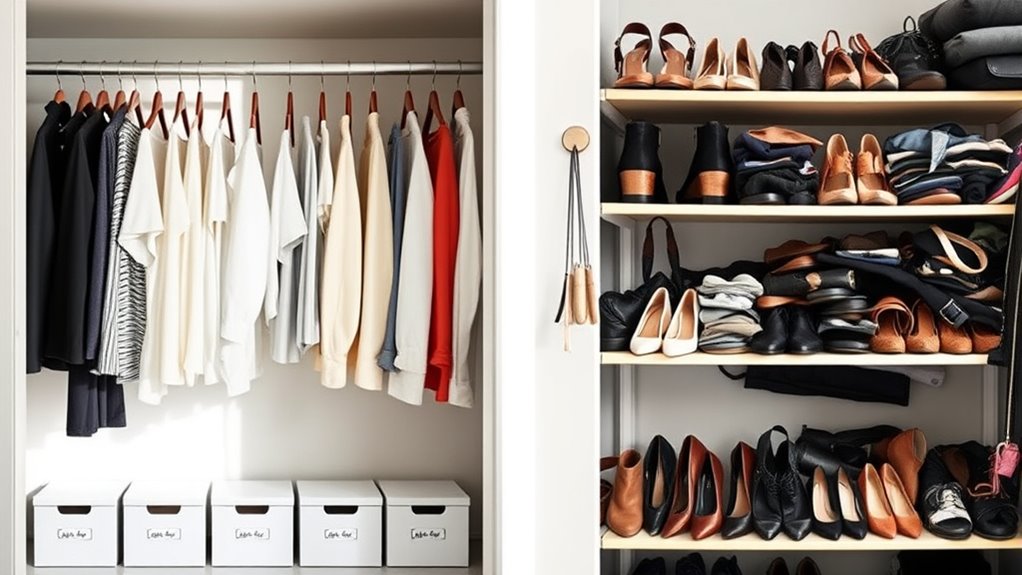
While the one-in, one-out rule offers a straightforward and sustainable approach to decluttering, it’s just one of many techniques you can use. Unlike the “pile method,” where you set aside items to handle later, one-in, one-out encourages immediate decision-making, preventing clutter from accumulating. Compared to the “monthly purge,” which involves scheduled decluttering sessions, this rule promotes ongoing maintenance. It’s less time-consuming than deep cleaning projects and helps build habits that keep clutter in check. However, while it’s effective for managing small collections or everyday clutter, it might not be enough for significant decluttering needs. Each technique has its strengths, but one-in, one-out shines in its simplicity and ease of integrating into daily routines.
Is This Hack Suitable for Every Home?

Is the one-in, one-out decluttering hack suitable for every home? Not necessarily. This method works best if you have a clear system for managing possessions and enough discipline. It’s ideal for those who want to maintain a minimalist approach or prevent clutter from building up. However, homes with larger families or those who rely on specific items might find it challenging to stick to this rule consistently. Consider your lifestyle, storage space, and emotional attachment to belongings before adopting it.
- If you tend to impulse buy or have sentimental items, the hack may require extra effort.
- Larger households might find it harder to keep up with the one-in, one-out rule.
- Homes with limited storage could benefit more from this approach.
- It’s great for maintaining ongoing organization, not quick fixes.
- Adaptations might be necessary to fit your unique needs.
Frequently Asked Questions
Can the One In, One Out Method Work for Digital Decluttering?
Yes, the one in, one out method can work for digital decluttering. When you add a new file, delete or archive an old one to keep your digital space manageable. This habit prevents accumulation of unnecessary data and keeps your files organized. You stay mindful of what you truly need, making it easier to find important documents and reducing digital clutter, ultimately boosting your productivity and peace of mind.
How Long Does It Typically Take to See Results?
Think of decluttering as watering a plant—you’ll see growth gradually. Usually, you’ll notice results within a few weeks if you stick to the one in, one out rule. As you consistently remove items, your space clears up, and digital clutter decreases. It’s a steady process, and patience pays off. Keep at it, and soon your digital and physical spaces will feel lighter, more organized, and easier to manage.
Is This Strategy Effective for Large Households?
Yes, the one-in, one-out strategy can work well for large households. It encourages everyone to be mindful about new items and prevents clutter from piling up. However, it requires consistent effort and cooperation from all family members. You’ll need clear rules and regular reminders to stay on track. When everyone commits, this method helps maintain a cleaner, more organized home even with many people.
What Items Are Best to Prioritize for Removal?
You should prioritize removing items that no longer serve a purpose or bring you joy, such as outdated clothes, broken electronics, or unused kitchen gadgets. Focus on items that clutter your space and cause stress. By targeting these, you create more room and simplify your environment. Regularly reassess what you own, and implement the one-in, one-out rule to maintain a clutter-free home effectively.
How Do I Stay Motivated With Ongoing Decluttering?
To stay motivated with ongoing decluttering, set small, achievable goals to celebrate progress regularly. Keep reminding yourself of the benefits, like more space and less stress. Create a cleaning schedule that fits your routine, and reward yourself for completing tasks. Visualize the end result often; it keeps you focused. Enlisting a friend for accountability also helps, making the process feel less overwhelming and more rewarding.
Conclusion
Imagine your home as a garden; every new plant needs space to thrive. The one in, one out method is like pruning—removing the old to make room for the new. By consistently trimming excess, you maintain a balanced, healthy space. Embrace this approach as your gardener’s tool, and watch your home flourish. With patience and care, you’ll cultivate a clutter-free sanctuary that grows more vibrant with each mindful choice.