
Did you know you can clean almost everything with a lemon? From freshening your garbage disposal and deodorizing your fridge to shining glassware and removing rust stains, lemons are surprisingly versatile. They cut through soap scum, brighten whites, and even restore the shine to dull kitchen tools. Their natural acidity makes them a powerful, eco-friendly cleaning agent. Want to discover more surprising uses? Keep going to uncover all the lemon secrets for a sparkling, fresh home.
Key Takeaways
- Lemons effectively remove rust spots and mineral deposits from household surfaces.
- Lemon juice deodorizes and freshens garbage disposals, refrigerators, and trash cans naturally.
- They restore shine to dull silverware, kitchen tools, and glassware without harsh chemicals.
- Lemons clean and brighten white laundry and remove stains with their natural bleaching power.
- The acidity helps break down grease, grime, and buildup on fixtures, tiles, and bathroom surfaces.
Freshen Up Your Garbage Disposal

To keep your garbage disposal smelling fresh and functioning efficiently, start by cutting a lemon into small wedges. Drop the wedges into the disposal and turn it on with cold water running. The natural citrus oils help eliminate odors and break down grease buildup. The acidity of the lemon cuts through lingering smells, leaving your sink smelling clean and fresh. Let the disposal run for about 30 seconds to ensure the lemon juice and pulp spread evenly. For a deeper clean, you can also freeze lemon slices in ice cube trays and grind them periodically to remove stubborn odors. This simple method not only freshens your disposal but also helps maintain its efficiency, saving you from unpleasant smells and costly repairs.
Shine Your Glassware and Mirrors

After freshening your garbage disposal, it’s time to bring the same brightening touch to your glassware and mirrors. Cut a lemon in half and squeeze the juice onto a soft cloth or sponge. Use it to gently clean your glass surfaces, then rinse with warm water. The natural acids cut through fingerprints, smudges, and water spots, leaving a streak-free shine. For mirrors, apply lemon juice directly or mix it with a little water, then wipe with a clean cloth. Buff the glass or mirror until it gleams. The lemon’s natural oils also add a subtle shine, making your surfaces look crystal clear. This simple, chemical-free method is affordable, eco-friendly, and works wonders for sparkling glassware and mirrors without harsh cleaners.
Remove Water Stains From Faucets and Tiles
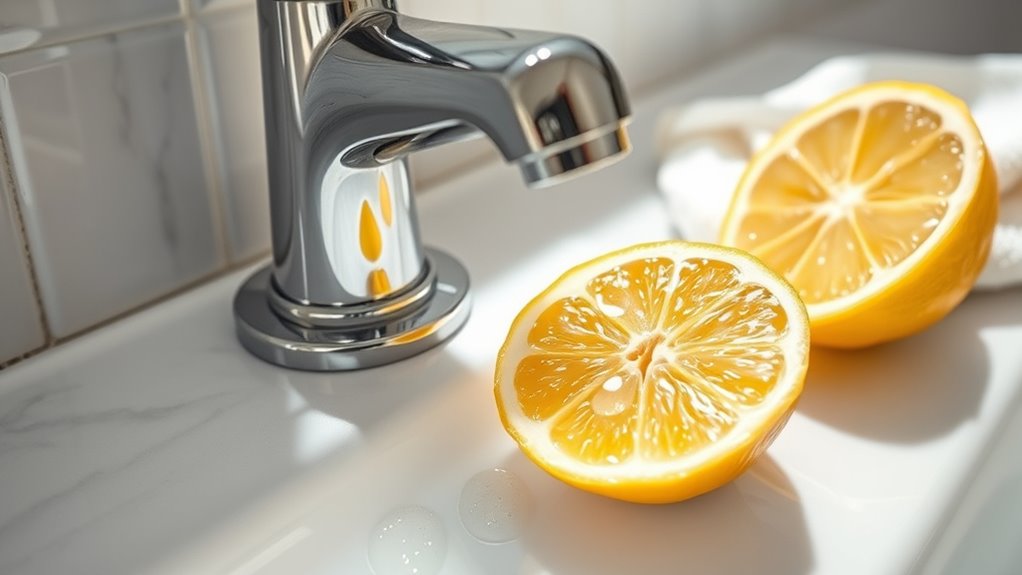
Lemon juice is a natural, effective way to lift water stains from faucets and tiles. Applying it directly helps break down mineral deposits, leaving surfaces cleaner and brighter. To prevent future stains, consider regular maintenance and wiping down surfaces after use.
Lemon Juice Effectiveness
Ever wonder how to banish water stains from your faucets and tiles? Lemon juice’s effectiveness lies in its natural acidity, which breaks down mineral deposits. Simply apply fresh lemon juice directly to stained areas, or mix it with baking soda for added scrubbing power. The citrus acts quickly to dissolve stubborn residue, leaving surfaces gleaming.
| Application Method | Duration | Effectiveness |
|---|---|---|
| Direct Lemon Juice | 10 minutes | High |
| Lemon & Baking Soda | 5 minutes | Very High |
| Lemon Rind | 30 minutes | Moderate |
| Lemon Spray | 15 minutes | Good |
| Repeated Treatment | As needed | Best Results |
With consistent use, lemon juice proves a powerful, natural cleaner for water stains, sparing you harsh chemicals.
Application and Prevention
To effectively remove water stains from faucets and tiles, apply fresh lemon juice directly to the affected areas and let it sit for about 10 minutes. Use a soft cloth or sponge to scrub gently, then rinse with warm water. For prevention, regularly wipe down surfaces after use to prevent mineral buildup. Consider applying a thin layer of lemon oil or juice periodically to keep stains at bay. To avoid future water spots, dry surfaces with a microfiber cloth after cleaning or showering. Incorporate lemon-based cleaning into your routine to maintain a stain-free appearance. Consistent use of lemon’s natural acidity helps break down mineral deposits and keeps your fixtures gleaming. With these simple steps, you’ll keep your faucets and tiles looking fresh and stain-free effortlessly.
Brighten Your White Laundry

Lemons are a natural way to brighten your white laundry without harsh chemicals. They work as a powerful whitening agent and help prevent fabric yellowing over time. Using lemon juice in your wash can keep your whites looking fresh and vibrant.
Subheading 1: Natural Whitening Power
When it comes to brightening your white laundry, lemons offer a natural and effective solution. The citric acid in lemons helps break down stains and removes dullness, making whites look fresh and vibrant. To use, add half a cup of lemon juice to your washing machine along with your regular detergent. For extra whitening power, soak your whites in a mixture of lemon juice and water for about 30 minutes before washing. This natural method not only brightens but also deodorizes your laundry, leaving it smelling fresh. Lemon’s natural acids gently lift stains without harsh chemicals, making it a safer choice for delicate fabrics. Incorporate lemon into your laundry routine and enjoy brighter, cleaner whites without relying on artificial whiteners.
Subheading 2: Prevents Fabric Yellowing
Using lemons regularly can effectively prevent your white fabrics from yellowing over time. The natural acids in lemons help break down residue and minerals that cause discoloration, keeping your whites bright. To use this trick, add half a cup of fresh lemon juice to your laundry along with your usual detergent. You can also soak whites in a mixture of lemon juice and water for 30 minutes before washing. This not only brightens your laundry but also creates a protective barrier against yellowing. Lemons also help remove buildup from hard water and soap scum, which can dull fabric over time. Incorporating lemon into your laundry routine ensures your whites stay crisp, clean, and vibrant longer.
Deodorize Your Refrigerator and Trash Cans
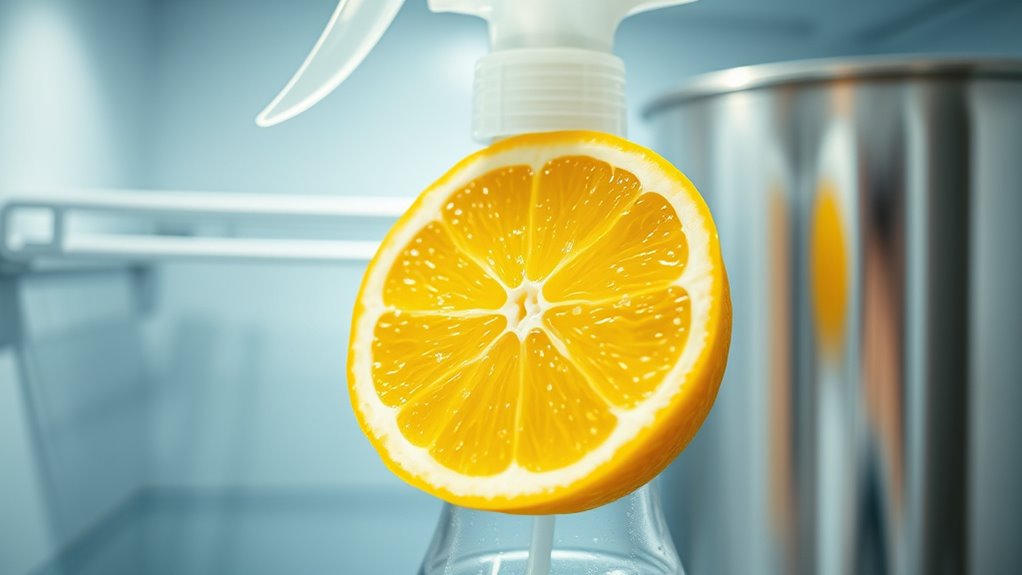
To effectively eliminate odors from your refrigerator and trash cans, you can turn to the natural power of lemons. Simply cut a lemon into wedges and place them in small bowls inside your fridge or trash area. The citrus scent helps neutralize bad smells and leaves a fresh, clean aroma. You can also rub lemon slices along the rubber seals of your fridge doors to break down odor-causing residues. For trash cans, sprinkle some lemon juice at the bottom after cleaning to mask lingering odors. The acidity of lemons cuts through stubborn smells and helps prevent mold growth. Replacing the lemon wedges weekly keeps the scent fresh and ensures your refrigerator and trash cans stay smelling clean without harsh chemicals.
Tackle Soap Scum in the Bathroom
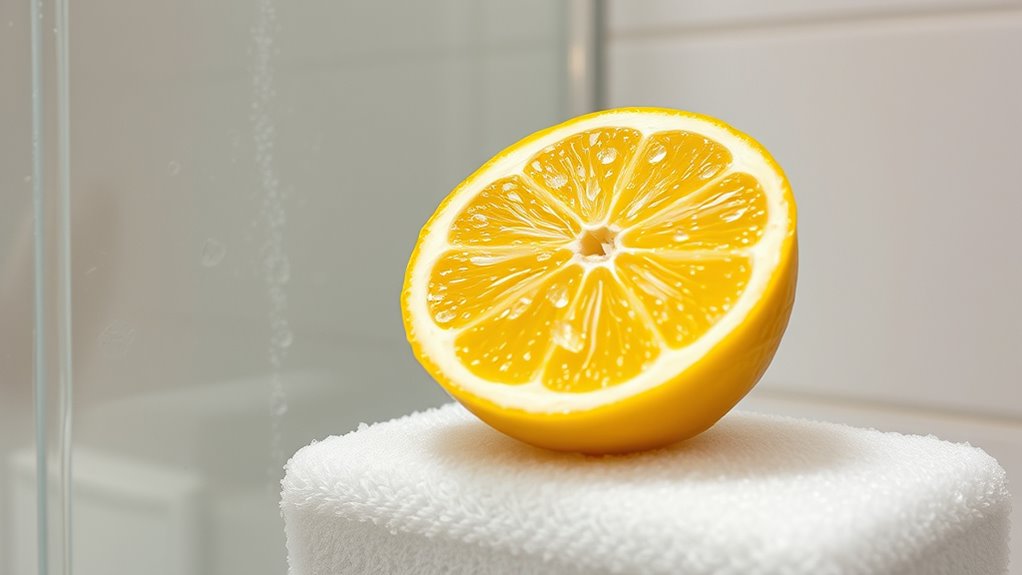
Lemon’s natural acidity isn’t just great for deodorizing; it can also help tackle stubborn soap scum in your bathroom. Cut a lemon in half and squeeze the juice onto soap scum-covered surfaces. Let it sit for a few minutes to loosen the grime. Then, scrub with a sponge or brush for a sparkling clean. For extra power, combine lemon juice with baking soda to form a paste and apply it directly to problem areas. To add a touch of sophistication, consider this comparison:
| Method | Effectiveness |
|---|---|
| Lemon juice alone | Breaks down soap scum gradually |
| Lemon + baking soda paste | Fast, deep cleaning |
This simple approach turns your bathroom cleaning routine into an effective, natural process.
Clean and Polish Wooden Furniture
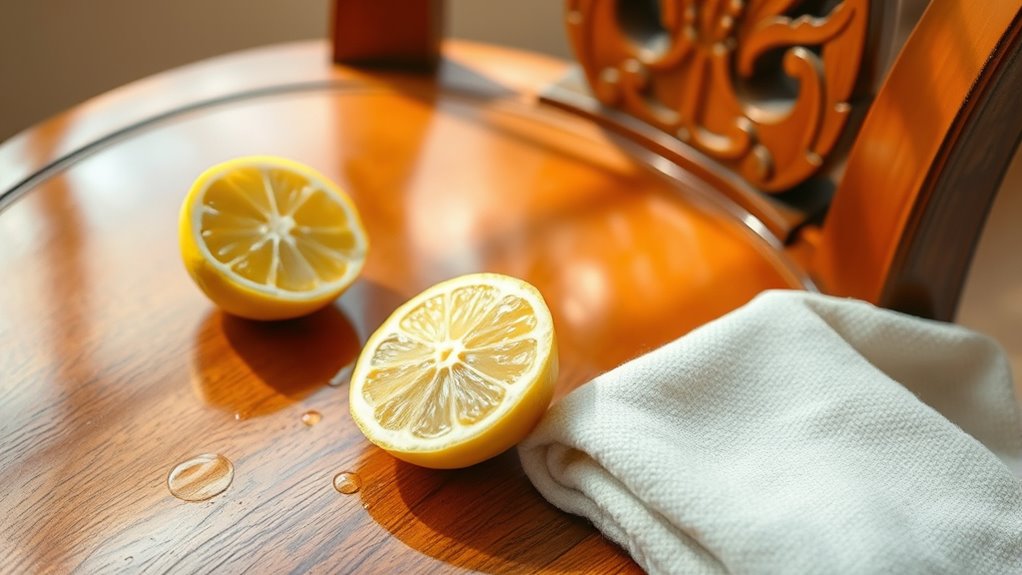
Cleaning and polishing wooden furniture restores its natural beauty and extends its lifespan. To do this with a lemon, start by squeezing fresh lemon juice into a small bowl. Mix it with a little olive oil or beeswax for added shine. Dip a soft cloth into the mixture, then gently wipe the surface of your furniture. The lemon’s natural acids help remove grime and dullness, while the oil nourishes the wood. After applying, use a clean cloth to buff the surface until it gleams. This method not only cleans but also conditions the wood, preventing cracking and drying. Regular use keeps your furniture looking vibrant and well-maintained, all with the natural power of lemon. It’s an easy, eco-friendly way to refresh your wooden pieces.
Eliminate Rust and Hard Water Deposits
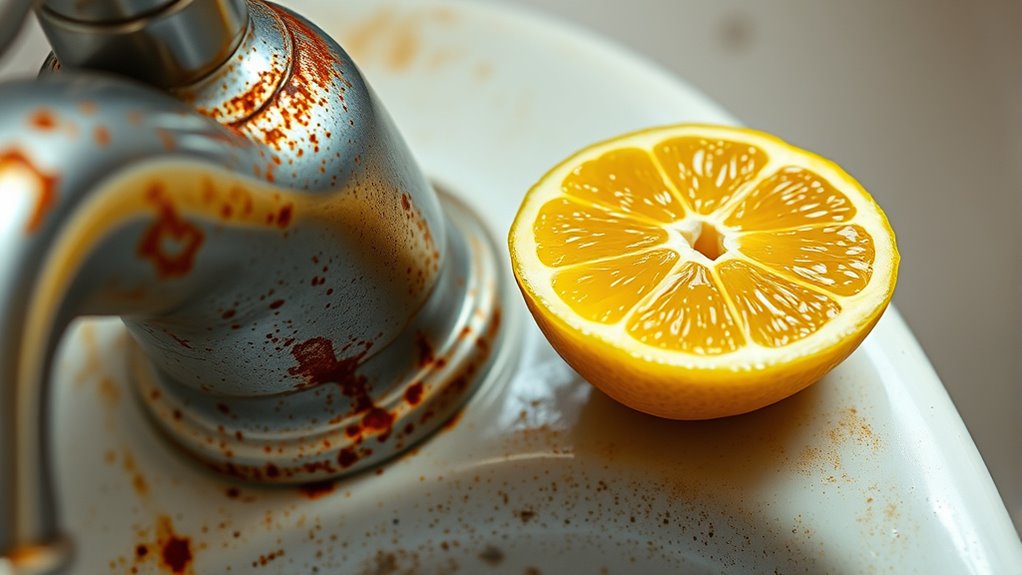
After nourishing and shining your wooden furniture, you might notice rust spots or mineral deposits on metal fixtures and bathroom surfaces. Lemons are surprisingly effective at tackling these issues. The citric acid helps break down rust stains and mineral buildup with ease. Simply squeeze fresh lemon juice onto the affected areas or make a paste with lemon juice and baking soda. Let it sit for a few minutes, then scrub gently with a soft brush or cloth. Rinse thoroughly with water and wipe dry. This natural method not only removes rust and deposits but also leaves surfaces smelling fresh. Regular use prevents buildup and keeps your fixtures looking clean and shiny without harsh chemicals. Lemon’s acidity makes it a versatile, eco-friendly solution for your cleaning needs.
Brighten Your Cutlery and Kitchen Tools

Brightening your cutlery and kitchen tools with lemons is simple and effective. The natural acids in lemons help remove stains, tarnish, and discoloration, restoring your tools’ shine. To start, cut a lemon in half and rub it directly onto your dull or tarnished silverware, knives, or utensils. Let the lemon juice sit for a few minutes to break down grime, then rinse with warm water. For stubborn spots, sprinkle a little baking soda on the lemon and scrub gently. Lemon’s natural bleaching power brightens dull surfaces without harsh chemicals. After cleaning, dry your tools thoroughly to prevent new tarnish. With this easy method, your cutlery and kitchen tools will look brighter, cleaner, and more appealing, all while avoiding toxic cleaners.
Frequently Asked Questions
Can Lemon Juice Remove Stubborn Carpet Stains?
Yes, lemon juice can help eliminate stubborn carpet stains. You should mix lemon juice with a bit of water and apply it directly to the stain. Let it sit for a few minutes, then blot with a clean cloth. The natural acids help break down the stain, while the fresh scent leaves your carpet smelling clean. Just test on a small area first to ensure it doesn’t discolor your carpet.
Is Lemon Effective for Cleaning Pet Odors?
You bet lemon is effective against pet odors. It’s like hitting two birds with one stone—freshening and deodorizing at the same time. Simply mix lemon juice with water and spray it on affected areas, or use the lemon peel directly. Its natural acidity neutralizes smells and leaves a clean, citrus scent. Just remember, test a small spot first to avoid any damage, but overall, lemon’s a handy household hero.
How Long Does Lemon Take to Whiten Yellowed Fabrics?
Lemon can whiten yellowed fabrics in about 30 minutes to an hour. You should mix lemon juice with water and soak the fabric for this period. For stubborn stains, leave it longer or repeat the process. Make sure to check the fabric’s care label beforehand to avoid damage. After soaking, wash the fabric as usual to reveal brighter, whiter results.
Can Lemons Replace Commercial Cleaning Products Entirely?
Lemons can be a handy assistant, but they can’t completely replace commercial cleaning products. Think of lemons as your natural sidekick, great for freshening up surfaces, removing stains, or polishing metal. However, for heavy-duty cleaning, disinfecting, or sanitizing, you’ll need stronger, specialized cleaners. Incorporating lemons into your routine adds a fresh, natural touch, but for full protection, it’s best to keep your trusted commercial products nearby.
Are Lemon Peels Safe for Use Around Children and Pets?
Lemon peels are generally safe around children and pets when used properly, but you should still exercise caution. Keep peels out of reach to prevent choking or accidental ingestion, especially for small children and curious pets. Avoid applying lemon oil directly to skin or around the eyes, and always supervise their interactions with lemon peels. When used thoughtfully, lemon peels can be a natural, safe cleaning option in your home.
Conclusion
With a simple lemon, you can transform your home from dull to dazzling, proving that effective cleaning often comes in small, natural packages. While it brightens your surfaces and freshens your spaces, it also reminds you that true cleanliness is about more than appearances—it’s about nurturing a healthier environment. So next time you reach for that lemon, remember, it’s not just a fruit; it’s your secret weapon for a cleaner, brighter home.