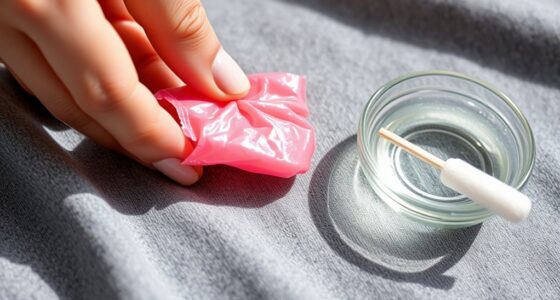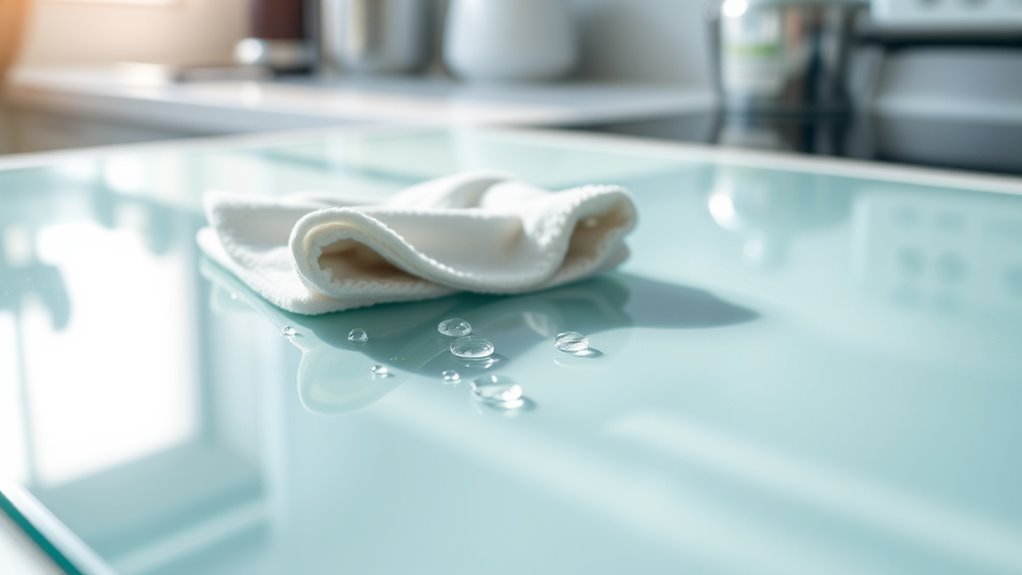

To clean your glass stovetop without scratches, start by letting it cool completely and removing loose debris with a dry cloth. Use a gentle cleaner like vinegar or baking soda, applying it directly to stubborn stains and letting it sit for a few minutes. Use a soft microfiber cloth or non-abrasive sponge to wipe, and carefully use a glass scraper at a 45-degree angle for tough spots. Keep your tips handy for a spotless, scratch-free surface.
Key Takeaways
- Allow the stovetop to cool completely before cleaning to prevent scratches and injury.
- Use a non-abrasive sponge or microfiber cloth to gently wipe away dirt and spills.
- Apply a specialized glass stovetop cleaner or a vinegar-baking soda solution to loosen grime.
- Carefully use a glass scraper at a 45-degree angle for stubborn burnt-on residues without scratching.
- Buff the surface with a dry microfiber cloth to achieve a streak-free, polished finish.
Cleaning a glass stovetop might seem intimidating, but with the right approach, it can be quick and easy. The key is knowing how to target stubborn stains without scratching or damaging the surface. When dealing with stubborn stains, you need to be gentle yet effective. Start by gathering the proper cleaning tools: a soft microfiber cloth, a non-abrasive sponge, a scraper designed for glass surfaces, and a specialized glass stovetop cleaner or a gentle homemade solution like vinegar and baking soda. These tools help you clean thoroughly without risking scratches or cloudiness.
First, allow the stovetop to cool completely before cleaning. Once cooled, remove any loose debris or crumbs with a dry cloth. For stubborn stains, apply a small amount of your chosen cleaner directly onto the surface. If you’re using a commercial cleaner, follow the instructions on the label, but generally, a spray or dab of vinegar and baking soda works well for breaking down grease and burnt-on residue. Let it sit for a few minutes to loosen the grime.
Allow the stovetop to cool completely, then remove debris before applying cleaner to stubborn stains.
Next, use your soft microfiber cloth or non-abrasive sponge to gently wipe the surface. Avoid using steel wool or harsh scrubbers, as these can scratch the glass. For particularly stubborn stains—like burnt sugar or caramel—carefully use a scraper designed for glass stovetops. Hold the tool at a 45-degree angle and gently push against the stain, applying steady pressure to lift it without scratching the surface. Be patient; applying too much force can cause damage.
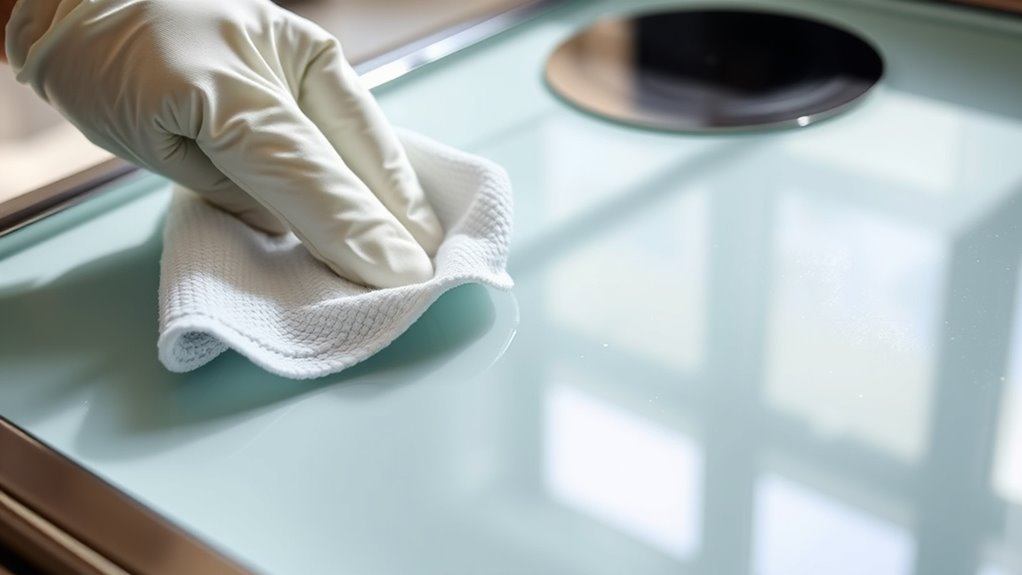
Once the stains are lifted, wipe the entire surface with a damp cloth to remove any residual cleaner or loosened grime. Follow up with a dry microfiber cloth to buff the surface to a shine. If streaks or smudges remain, a second wipe with a clean, damp cloth will help achieve that streak-free finish. Regular maintenance, including proper cleaning techniques, can extend the lifespan of your stovetop and keep it looking new.
By sticking to gentle cleaners and proper tools, you ensure your glass stovetop remains smooth and pristine without scratches. With patience and the right technique, cleaning stubborn stains becomes a straightforward task, leaving your stovetop looking spotless and well-maintained.

Weiman Glass & Ceramic Cooktop, Stove Top & Oven Cleaner Kit – Kitchen Cleaner Cream, 3 Scrubbing Pads & Scraper for Burnt-On Food & Grease, Clean Shine – Safe for Induction, Electric & Gas Cooktops
REVITALIZE WITHOUT SCRATCHING: Non-abrasive cooktop pads help easily remove heavily burned on foods, grease & grime. Our cooktop…
As an affiliate, we earn on qualifying purchases.
As an affiliate, we earn on qualifying purchases.
Frequently Asked Questions
Can I Use Steel Wool on a Glass Stovetop?
You shouldn’t use steel wool on a glass stovetop because steel wool cleaning can easily cause scratches, making your surface look worse. Steel wool is too abrasive for glass, and those scratches can be tough to remove. Instead, opt for a non-abrasive cleaner and a soft cloth to keep your stovetop spotless without risking damage. This gentle approach helps maintain your glass stovetop’s smooth, shiny finish.
How Often Should I Deep Clean My Glass Stovetop?
Think of your stovetop as a garden that needs regular tending. For ideal stovetop maintenance, deep clean it every 1 to 2 months, especially if you cook frequently. This prevents buildup and keeps it shining. Regular wiping after each use also helps maintain its glass surface. By sticking to this cleaning frequency, you’ll guarantee your stovetop stays pristine, efficient, and ready for your next culinary adventure.
Are There Specific Cleaning Products to Avoid?
You should avoid abrasive cleaners and harsh chemical solutions on your glass stovetop, as they can cause scratches or damage the surface. Stick to gentle, non-abrasive cleaning products specifically designed for glass surfaces. Also, steer clear of products containing ammonia or bleach, which can deteriorate the glass. Using the right cleaner helps maintain a smooth, spotless surface without risking scratches or lasting damage.
Can I Use a Scraper to Remove Stubborn Stains?
Yes, you can use a scraper to remove stubborn stains, but prioritize scraper safety. Use a scraper with a flat, non-abrasive edge and gentle pressure to avoid scratches. For stain removal techniques, soften residues with a damp cloth or a specialized cleaner before scraping. Always hold the scraper at a 45-degree angle and work carefully to prevent damage. When in doubt, opt for safer cleaning methods first.
What’s the Best Way to Prevent Future Scratches?
Your glass stovetop is your culinary masterpiece, so protect it like a priceless artifact. To prevent future scratches, apply a protective film or use a scratch-resistant coating. These barriers act like armor, shielding your surface from metal utensils and abrasive cleaners. Always lift cookware instead of dragging it across the surface, and avoid rough scrubbing. With these simple steps, you’ll keep your stovetop pristine and scratch-free for years to come.
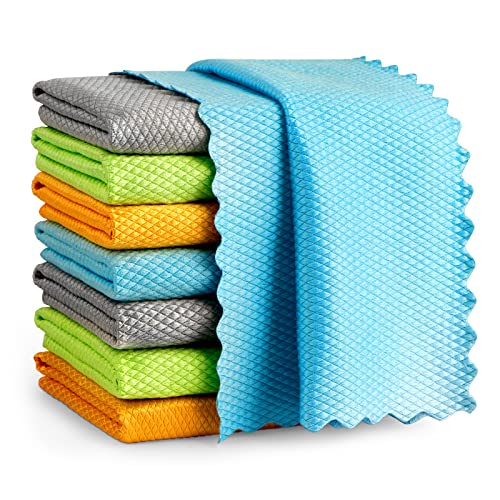
AIDEA Microfiber Glass Cleaning Cloth, 8PK, Premium Microfiber Glass and Window Cleaner, Lint Free Magic Cleaning Cloths for Glass, Windows, Windshields, Mirrors, Stainless Steel, 12"x12"
Lint-Free & Non-Abrasive: AIDEA microfiber cloths are non-abrasive; protect delicate surfaces from scratches; strong anti-lint fiber construction captures…
As an affiliate, we earn on qualifying purchases.
As an affiliate, we earn on qualifying purchases.
Conclusion
Now that you’ve learned how to care for your glass stovetop, you’re all set to keep it shining bright. With gentle touches and the right products, you’ll maintain its elegance without risking any unwanted marks. Think of it as giving your stovetop a tender spa day—restoring its beauty while avoiding any rough treatments. Keep up this routine, and your stove will continue to be a stunning centerpiece in your kitchen, ready to impress every time.

DIYSELF 1 Pack Razor Blade Scraper with 15 Extra Blades, Scraper Tool for Cleaning Window, Paint, Cooktop, Oven, Glass Stove Top Scraper, Razor Scraper with Buit-In Blade Storage
Versatile Cleaning Power: Our razor blade scraper set is your all-in-one solution for effective cleaning. This non-retractable tool,…
As an affiliate, we earn on qualifying purchases.
As an affiliate, we earn on qualifying purchases.

Multi-Purpose Sponges Kitchen by Scrub-it – Non-Scratch Microfiber sponges for Cleaning, Along with Heavy Duty Scrubbing Power – Reusable Dish Sponge for Dishes, Pots and Pans (6 Pack, Small)
CLEAN SMARTER – NOT HARDER: We all know the pain of scrubbing away dirty or burnt food on…
As an affiliate, we earn on qualifying purchases.
As an affiliate, we earn on qualifying purchases.