To clean your AC filter, turn off the system and locate the filter, usually in the return vent or blower compartment. Remove it carefully, then vacuum both sides to pick up loose debris. If it’s a reusable filter, rinse with lukewarm water and let it dry completely before reinstalling. Regular cleaning or replacing keeps your system running efficiently and improves indoor air quality. Keep going to discover more tips on maintaining your AC filter effectively.
Key Takeaways
- Turn off the AC and locate the filter in the return vent or blower compartment before removal.
- Gently vacuum both sides of the reusable filter, then rinse with lukewarm water and let it air dry completely.
- Replace non-reusable filters every 1 to 3 months, or as needed, to maintain optimal airflow and indoor air quality.
- Regular cleaning and replacement prevent dust buildup, reduce system workload, and extend your AC’s lifespan.
- Proper filter maintenance ensures healthier indoor air, reduces energy costs, and keeps your HVAC system operating efficiently.
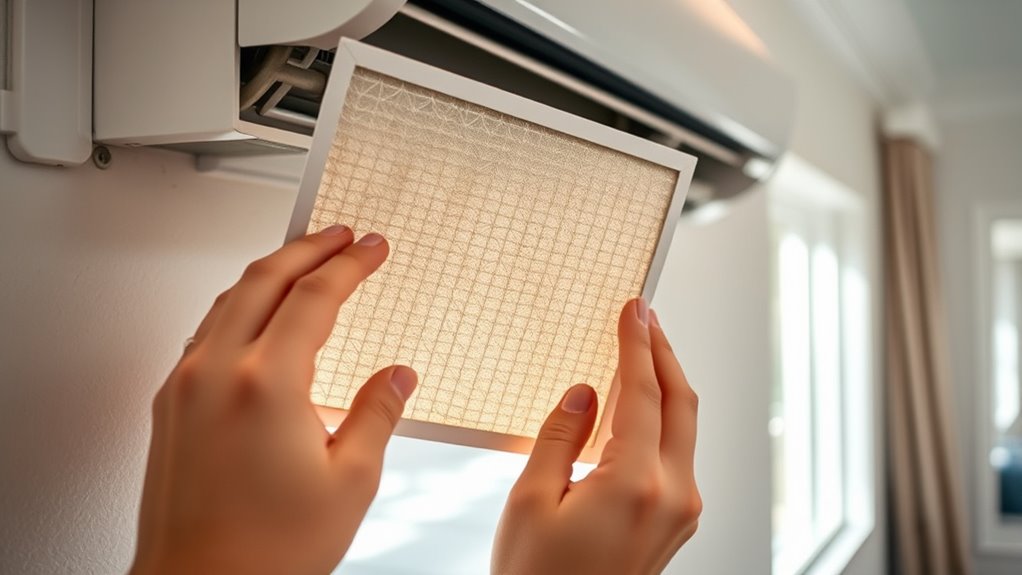
Regularly cleaning your AC filter is essential for maintaining peak airflow and improving your indoor air quality. When you neglect this task, dust, dirt, and debris can accumulate, clogging the filter and restricting airflow. This not only makes your air conditioning system work harder, increasing energy consumption, but also diminishes the quality of air inside your home. Proper air filter maintenance ensures that your system runs efficiently and that the air you breathe remains clean and healthy.
To start, turn off your AC system before removing the filter. This safety step prevents dust from being blown around and makes the cleaning process easier. Once the system is off, locate your filter—usually found in the return vent or blower compartment. Carefully remove it, taking note of its size and type so you can replace or clean it properly. When inspecting the filter, look for visible dirt, dust buildup, or discoloration. If it appears heavily soiled, it’s time to clean or replace it.
Cleaning your air filter is straightforward. If it’s reusable, gently vacuum both sides to remove loose dust and debris. For a more thorough clean, rinse it with lukewarm water, and if necessary, use a mild detergent. Avoid harsh chemicals or high-pressure water, as these can damage the filter. After rinsing, let the filter air dry completely before reinstalling. Never operate your AC with a wet or damp filter, as this can cause mold growth and reduce indoor air quality. Additionally, understanding the importance of filter maintenance can help prolong the lifespan of your HVAC system and improve overall indoor comfort.
If your filter isn’t reusable, it’s best to replace it with a new one that matches the specifications of your system. Regularly changing filters—every one to three months—keeps your AC functioning at its best and maintains good indoor air quality. Weaker or clogged filters can lead to poor air circulation, increased allergens, and potential system damage, all of which compromise the air quality inside your home.
Consistent air filter maintenance isn’t just about keeping your system in top shape; it’s about safeguarding your health. Clean filters trap pollutants, allergens, pet dander, and dust, preventing them from circulating freely in your indoor air. This is especially important if anyone in your household has allergies, asthma, or respiratory issues. By making a habit of inspecting and cleaning or replacing your filters regularly, you ensure that the air you breathe stays fresh and clean, and your HVAC system continues to operate efficiently.
Frequently Asked Questions
How Often Should I Replace My AC Filter Instead of Cleaning It?
You should replace your AC filter instead of cleaning it every 1 to 3 months, depending on your filter type and household conditions. Follow a regular cleaning schedule, but if the filter looks dirty or clogged despite cleaning, it’s time for a replacement. Regular filter replacement guarantees peak airflow, energy efficiency, and indoor air quality, while extending your system’s lifespan. Keep an eye on the filter’s condition for best results.
Can Cleaning My AC Filter Improve Indoor Air Quality?
Cleaning your AC filter can greatly improve indoor air quality, much like a fresh breeze clears fog from a window. When you remove dust and debris, you’re reducing airborne allergens that trigger allergies or asthma. Regular cleaning helps maintain respiratory health by preventing the circulation of pollutants. So, if you notice dust settling or odors, cleaning your filter guarantees cleaner air and a healthier home environment.
What Tools Are Best for Cleaning a Stubborn Filter?
To clean a stubborn filter, grab your vacuum with attachments and a soft brush. Use the vacuum’s brush attachment to gently loosen dust and debris, then switch to the soft brush for a thorough clean without damaging the filter. These tools help remove stubborn dirt effectively, making your filter easier to rinse or soak. Regular use of vacuum attachments and soft brushes guarantees your filter stays clean and your indoor air quality improves.
Are There Filters That Require Special Cleaning Methods?
Yes, some filter types require special cleaning techniques. For example, HEPA filters often need gentle vacuuming or replacement instead of washing, while electrostatic filters may be cleaned with a damp cloth. Always check the manufacturer’s instructions for your specific filter type, as improper cleaning can damage the filter or reduce its effectiveness. Using the right cleaning techniques guarantees your filter stays efficient and prolongs its lifespan.
How Do I Know if My AC Filter Needs Replacing Rather Than Cleaning?
Did you know that most air filters last about 1 to 3 months? If you notice reduced airflow, increased energy bills, or a persistent musty smell, it’s time to substitute your air filter. Signs of a dirty filter include visible dirt and debris or allergy symptoms worsening. If these signs occur before the end of its typical lifespan, replacing it ensures your AC runs efficiently and maintains good indoor air quality.
Conclusion
Cleaning your AC filter is simple, but it makes a big difference. Think of it like giving your system a fresh breath of air—just as good lungs need clean air to work best, your AC needs a clean filter to run efficiently. Regular maintenance keeps your home comfortable, saves energy, and extends your unit’s lifespan. Don’t wait for dust to take over; a quick cleaning now is like hitting the refresh button for your comfort and savings.