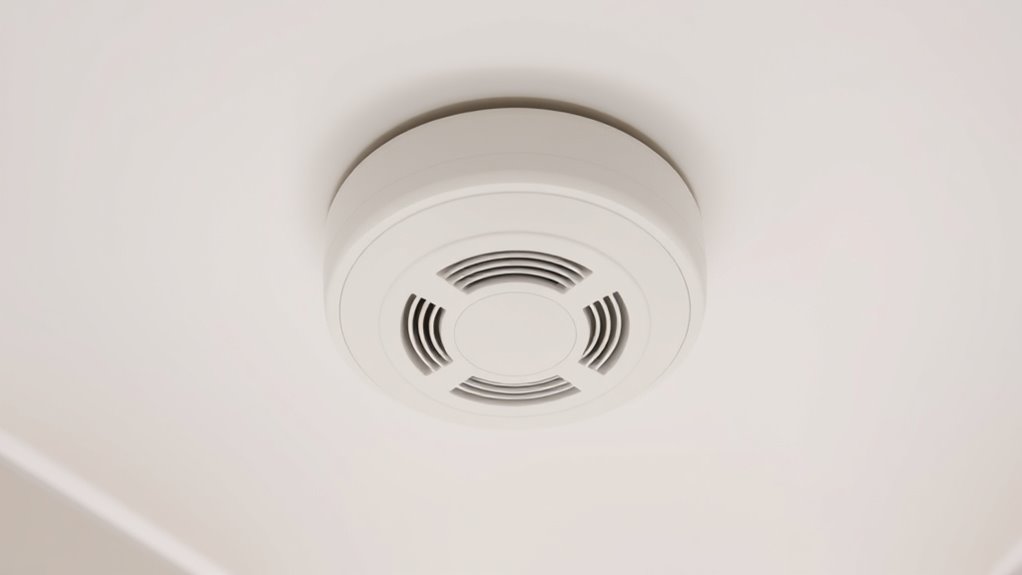

To check your smoke detectors, press and hold the test button until you hear a loud alarm. Do this monthly to make certain they’re working properly. Replace batteries at least once a year or when the low-battery warning sounds. Keep detectors clean by gently vacuuming or dusting them regularly. Remember, detectors over 10 years old should be replaced. Keep your safety routine up to date—more tips ahead will help you stay protected.
Key Takeaways
- Press and hold the test button until the alarm sounds to verify functionality.
- Conduct monthly tests to ensure the detector responds properly.
- Check and replace batteries at least once a year or when low-battery signals appear.
- Clean detectors regularly by vacuuming or wiping to remove dust and debris.
- Confirm the detector is less than 10 years old and replace if it’s older for optimal safety.

Have you ever wondered if your smoke detectors are working properly? It’s a common concern, and the good news is that checking them isn’t complicated. The first step is to guarantee your detectors are functioning correctly by following some simple testing procedures. Before diving into testing, it’s important to check the battery replacement schedule. Many smoke detectors rely on batteries, and if they’re old or dead, the alarm might not go off when needed. Typically, you should replace batteries at least once a year, or more often if your detector has a low-battery warning signal. Some models use 10-year sealed batteries, which don’t require regular replacements, but it’s still essential to confirm the manufacturer’s guidelines.
Once you’ve addressed the battery situation, testing procedures are straightforward. Press the test button on your smoke detector and hold it down until you hear a loud alarm. This sound confirms that the alarm’s internal circuitry and sound-producing components are working properly. If you don’t hear anything or the alarm sounds weak, it’s a sign that you need to replace the batteries or the entire detector. Remember, testing should be done monthly to guarantee ongoing reliability. It’s a quick step that can make a big difference in your home safety.
Test your smoke detector monthly by pressing the button until you hear the alarm to ensure proper function.
In addition to testing the alarm itself, it’s critical to check the placement of your smoke detectors. They should be installed on every level of your home, especially near bedrooms and in common areas. Keep detectors away from vents, windows, or doors that could interfere with smoke detection. Dust and debris can also impair their function, so periodically vacuum or gently clean the detectors with a soft brush to remove any buildup. Regular maintenance can help ensure the detectors’ efficacy and sensitivity, keeping your household safer.
If your smoke detector is more than 10 years old, consider replacing it altogether. Over time, smoke sensors can become less sensitive, even if they appear to be working fine during tests. Newer models often come with advanced features, like interconnected alarms that sound throughout your house when one detects smoke, or smart detectors that send alerts to your phone. Ignoring the age and maintenance of your smoke detectors can put your household at risk, so make testing procedures a regular part of your home safety routine. Keep batteries fresh, test consistently, and replace outdated units to guarantee your home stays protected.
Top picks for "check smoke detector"
Open Amazon search results for this keyword.
As an affiliate, we earn on qualifying purchases.
Frequently Asked Questions
How Often Should Smoke Detectors Be Replaced?
You should replace your smoke detectors every 10 years to guarantee safety. Regularly check the battery replacement, ideally once a year, to keep them operational. The detector lifespan varies, but most units need replacing after a decade, even if they seem to work fine. Stay proactive by testing your smoke detectors monthly and replacing batteries as needed, so they’ll be ready to alert you in an emergency.
Can I Test Smoke Detectors With Household Items?
You can test smoke detectors with household items, but it’s not recommended to use household cleaning or DIY repairs products, as they can damage the sensor. Studies show that over 60% of smoke detector failures are caused by dust or debris buildup. Instead, press the test button with a broom handle or use smoke from a match or incense stick—just be cautious and guarantee proper ventilation for safety.
What Types of Smoke Detectors Are Most Effective?
You should choose ionization or photoelectric smoke detectors, as they’re most effective for home safety. Ionization detectors excel at catching fast, flaming fires, while photoelectric models are better for smoldering fires. Effectiveness factors include sensor type, placement, and regular maintenance. Consider combining both types for all-encompassing coverage. Regular testing and cleaning ensure your detectors stay reliable, giving you peace of mind in case of emergencies.
How Do I Reset a Smoke Detector After Testing?
Think of resetting your smoke detector like tuning a guitar after a jam session. After testing the alarm sound, press and hold the reset or test button until the detector beeps or flashes, signaling it’s reset. Regular sensor maintenance and alarm sound testing verify it stays responsive. If it still won’t reset, remove the battery, wait a few seconds, then reinsert it, and test again to guarantee your safety.
Are Interconnected Smoke Detectors Better Than Standalone Units?
Interconnected smoke detectors are better than standalone units because they offer significant interconnection benefits. When one detector senses smoke, all units activate, providing faster alerts throughout your home. You’ll need specific wiring requirements to connect them properly, usually involving a hardwired setup with a common power source and communication system. This setup ensures you get thorough, immediate warning, enhancing your safety and response time in case of a fire.
Conclusion
Now that you know how to check your smoke detectors, you’re like a vigilant guardian watching over your home. Regular testing keeps them ready to sound the alarm, just like a lighthouse guiding ships safely to shore. Make it a habit to test monthly and change batteries yearly. Staying proactive guarantees your safety, turning your home into a fortress that’s always prepared—because prevention is the key to peace of mind, just like a steady heartbeat keeps you alive.