
To start canning and preserving food at home, first make certain your jars, lids, and tools are thoroughly sterilized to prevent contamination. Follow proper techniques for headspace, sealing, and processing based on whether your food is high or low acid. Use a reliable thermometer and adhere to recommended processing times to ensure safety. With attention to detail and safe practices, you’ll enjoy homemade preserves all year. Continue exploring the basics to become confident in your canning journey.
Key Takeaways
- Use high-quality, fresh ingredients and thoroughly sterilize jars, lids, and tools to ensure food safety.
- Follow proper processing methods—boiling water bath for high-acid foods and pressure canning for low-acid foods.
- Maintain correct headspace, wipe jar rims, and ensure lids are sealed tightly for effective preservation.
- Monitor water temperature with a reliable thermometer during processing to ensure proper killing of bacteria.
- Store canned foods in a cool, dark place, check seals before use, and enjoy your preserved foods safely year-round.
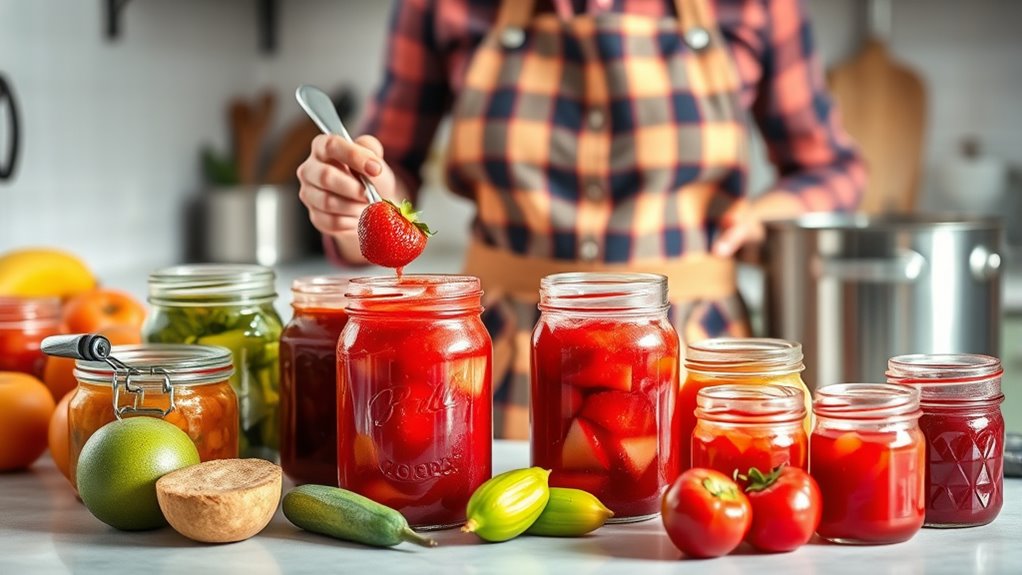
Canning and preserving food is a rewarding way to enjoy homemade flavors year-round, even if you’re new to the process. When starting out, your top priorities should be food safety and having the right equipment essentials. Proper food safety practices protect you and your loved ones from foodborne illnesses, so understanding the basics is essential. This means always using fresh, high-quality produce and following tested recipes. It’s crucial to keep everything clean—jars, lids, tools—as contamination can compromise safety and spoil your efforts. The process isn’t complicated, but it requires attention to detail to prevent bacteria growth and spoilage.
Canning is rewarding; prioritize safety, equipment, cleanliness, and following tested recipes to enjoy homemade flavors year-round.
Your equipment essentials include a large, heavy-duty stockpot or canner, jars with lids, a jar lifter, a canning funnel, a ladle, and a magnetic lid lifter. A canner with a rack helps ensure even heat distribution and makes handling hot jars safer. Using the right tools simplifies the process and reduces the risk of accidents. Invest in a reliable thermometer to monitor water temperature during processing, especially for boiling water or pressure canning. Glass jars specifically made for canning are your best choice—they’re designed to withstand heat and create a proper seal. Make sure your lids are new or in good condition, as compromised seals lead to unsafe food.
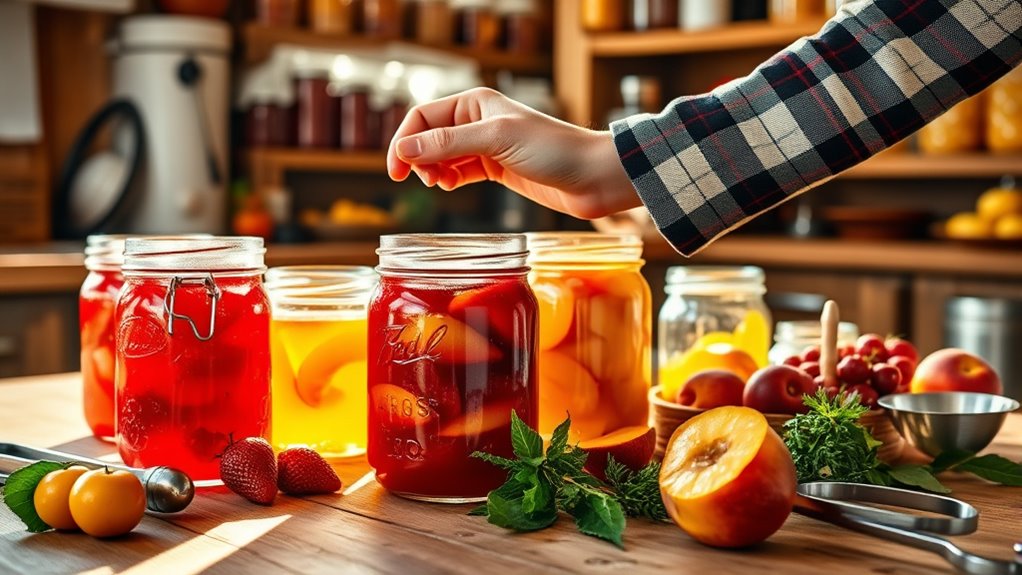
Before you begin, thoroughly sterilize all your jars and lids by boiling them in water for at least 10 minutes. This step is essential for food safety, as it eliminates bacteria and molds that could cause spoilage. Fill your jars with prepared food, leaving the recommended headspace as specified in your recipe. This space allows for expansion during processing and helps create a proper vacuum seal. Wipe the rims of the jars clean before securing the lids tightly but not overly tight. Proper sealing is vital to prevent air from entering and causing spoilage.
When processing, whether by boiling water bath or pressure canning, closely follow the guidelines for your specific food. For high-acid foods like fruits and pickles, boiling water bath canning works well. For low-acid foods such as vegetables and meats, pressure canning is necessary to reach the temperatures needed for safety. Always process jars for the recommended time and at the correct pressure to guarantee safety and longevity of your preserved foods. Once processed, let the jars cool undisturbed, and check the seals before storing. Properly canned and preserved foods can last months or even years when stored in a cool, dark place, providing you with tasty, homemade meals whenever you want.

Encheng 16 Pack Regular Mouth Mason Jars 16 oz with Lids,Pint Canning Jars with Metal Lids and Bands, Vintage Glass Mason Jar for Centerpieces,Preserving,Fermenting,Jelly, Jam,Candy, DIY Crafts
Perfect Pint Size for Daily Use:These 16 oz mason jars with lids are the perfect size for canning,…
As an affiliate, we earn on qualifying purchases.
As an affiliate, we earn on qualifying purchases.
Frequently Asked Questions
How Long Can Canned Foods Be Safely Stored?
Canned foods can be safely stored for 1 to 5 years, depending on the type and storage conditions. You should keep them in a cool, dark, and dry place to maximize shelf life. Always check for signs of spoilage, like bulging lids or bad odors before consuming. Proper storage conditions help preserve the quality and safety of your canned goods, ensuring they remain edible for years to come.
What Are the Best Types of Jars for Preservation?
You should choose glass jars like Mason or Ball jars for preservation, as they’re durable and come with reliable sealing methods. Look for jars with a wide mouth for easy filling and a sturdy lid that creates a good seal. Proper sealing methods, like using new lids and ensuring the rim is clean, help prevent spoilage. These jar types are best for safe, long-term storage of your canned foods.
Can I Reuse Canning Lids Safely?
Imagine you’re sealing homemade jam and wonder if your canning lids are safe to reuse. Typically, canning lid disposal is recommended after a single use because reusable jar lids, unlike the original canning lids, are designed for multiple uses. You can clean and inspect reusable lids for damage, but for safety, it’s best to replace traditional canning lids each time. This ensures your preserved foods stay safe and bacteria-free.
How Do I Prevent Mold Growth During Storage?
To prevent mold growth during storage, you should focus on proper storage techniques. Keep your canned goods in a cool, dark, and dry place to minimize moisture and warmth, which promote mold. Always confirm lids are sealed tightly and check for any signs of spoilage before storing. Properly sterilized jars and avoiding contamination during sealing also help with mold prevention, ensuring your preserved foods stay fresh longer.
Is It Safe to Preserve Low-Acid Foods at Home?
You shouldn’t preserve low-acid foods at home unless you follow proper safety measures. To do this, you need to use pH testing to confirm the acidity level is safe, typically below 4.6. If necessary, apply acidification techniques like adding vinegar or lemon juice to lower the pH. These steps help prevent harmful bacteria growth, making your preserved foods safe for storage and consumption.

Canning Kit, Canning Supplies Starter Kit, Food Grade Stainless Steel Canning Set for Beginner,Canning Essential Tools for Water Bath & Pressure Canner, Canning Accessories Equipment for Pot, Black
All-in-one Canning Supplies Kit consists of all essential tools:Stainless stell Jam Ladle perfect for serving and pouring,Canning Funnel…
As an affiliate, we earn on qualifying purchases.
As an affiliate, we earn on qualifying purchases.
Conclusion
Now, imagine jars filled with vibrant jams and hearty vegetables lining your pantry shelves, each one a tiny treasure chest of summer sunshine or autumn harvest. As you master canning and preserving, you’ll turn fresh produce into lasting memories, filling your home with the sweet aroma of victory. With each jar you seal, you’re not just saving food—you’re creating a delicious legacy that will bring comfort and joy long after the season’s end.

Presto 01781 Pressure Canner and Cooker, 23 qt, Silver
The only method recommended safe by the US Department of Agriculture for canning vegetables, meats, poultry, and seafood
As an affiliate, we earn on qualifying purchases.
As an affiliate, we earn on qualifying purchases.

Alpha Grillers Meat Thermometer Digital – Instant Read Food Thermometer for Cooking & Grilling – Professional Kitchen Gift for Men, Dad & Mom
Instant Read Food Thermometer | Our instant read thermometer features a temperature probe and advanced, highly accurate technology…
As an affiliate, we earn on qualifying purchases.
As an affiliate, we earn on qualifying purchases.