TL;DR

Get the little things that make your day delivered free with Prime
- Fast, free delivery on millions of items
- Prime Video, Amazon Music and more included
- Member-only deals all year
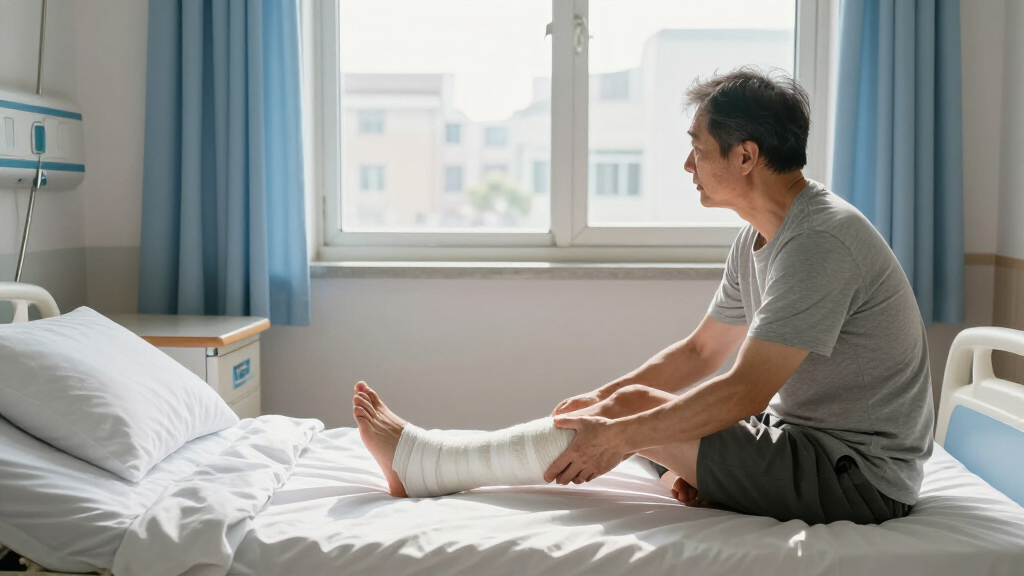
In a first-person account published by The Good Trade, a woman describes tearing her hamstring at age 56 and later having surgery after an MRI showed the injury. She says the pain focused her attention on the present while she was recovering from depression, but the account does not establish that injury or pain treats depression.
A woman writing for The Good Trade says a hamstring tear at age 56, followed by surgery and a demanding recovery, brought her attention back to the present while she was emerging from a five-month depressive episode. Her account describes her personal experience; it does not show that physical injury or pain is a treatment for depression.
The writer says the injury happened on Venice Beach while she was celebrating her birthday with a friend. After trying to lift a foot buried in the sand as a wave hit, she felt severe pain from her buttock down her right leg and could not stand. Bystanders helped her out of the water, and lifeguards examined her. They reportedly found no break and suggested the injury might be muscular. She declined an ambulance ride to an emergency room.
The next day, she was unable to drive home. A few days later, an MRI showed a hamstring tear from the sit bone, she writes. A doctor told her that without surgery she would have 50% less strength in her right leg for the rest of her life. The writer says she was referred to a sports medicine surgeon, underwent surgery, and was walking short distances with a limp within a day afterward. The source does not provide the injury date, the surgery date, or independent medical records.
She connects the physical crisis with a difficult period marked by depression, anxiety and major life changes. She writes that the injury’s pain interrupted depressive thought loops and anxiety by pulling her attention into the immediate moment. Recovery also meant she could not rely on her usual exercise routine, which included walking, hiking and swimming. She describes using writing, art, reading, breath work, physical therapy, psychotherapy, time outdoors, friends, meditation and music as part of her recovery.
Recovery Changed Her Daily Coping
The account matters as a personal report about how a serious injury can affect both physical independence and mental health. The writer lives alone and says she prepared her home for surgery by arranging a shower chair, raised toilet seat and shower grab bar. Those details show the practical work involved in returning home and managing daily tasks after an operation.
Her experience also highlights a tension in recovery: the injury prompted a stronger focus on the present, but it removed exercise, a major coping tool she had used to regulate her nervous system. She describes turning to other supports while healing. These are her reflections and choices, not clinical guidance or evidence that injury-related pain improves depression. Readers experiencing depression should seek advice from qualified health professionals rather than interpreting the account as a treatment recommendation.
As an affiliate, we earn on qualifying purchases.
A Difficult Period Before the Injury
The writer says her mental health had worsened earlier in the year after she left what she calls a toxic special education teaching job, went through a breakup and experienced strained relationships. She describes feeling uncertain about her purpose and future, and says she has dealt with anxiety and depression since childhood.
She reports having tried several forms of mental health care, including antidepressant medication, EMDR, cognitive behavioral therapy, Gestalt therapy, somatic therapy, guided meditation and mindfulness classes. She also says she began conscious connected breathwork and Spravato, a prescription esketamine nasal spray, in June, with treatment administered under medical supervision. The source excerpt says she believes the treatment helped her cope, but provides no clinical assessment of its effects and does not establish a connection between Spravato and the injury’s impact.
“The physical pain of my hamstring injury suddenly snapped me into the present moment.”
— The writer, in her account for The Good Trade
post-surgery physical therapy tools
As an affiliate, we earn on qualifying purchases.
As an affiliate, we earn on qualifying purchases.
Medical Details Are Not Provided
The account does not give the exact dates of the injury, MRI, operation or publication, nor does it name the treating clinicians or provide medical records. The reported 50% strength-loss warning is attributed to the writer’s account of what a doctor told her; no additional clinical detail is available to explain the estimate or the treatment decision.
The writer describes improvement after surgery and says the recovery was going better than expected, but she does not specify a full recovery timeline or long-term outcome. Her account also does not establish whether the injury itself changed her depression beyond her own perception that pain brought her into the present. The reported benefits of other mental health interventions, including Spravato, are likewise personal observations rather than evidence of treatment effectiveness.
As an affiliate, we earn on qualifying purchases.
Rehabilitation Continues Alongside Care
The writer says she is continuing physical therapy while using non-exercise activities and support from friends to manage her mental health during recovery. The account does not give a timetable for resuming walking, hiking or swimming, or describe a later follow-up with her surgeon.
No further medical update is included in the source material. Any next milestones—such as changes to activity, rehabilitation progress or mental health care—remain dependent on her individual clinicians’ guidance and future updates from the writer.
guided meditation for injury recovery
As an affiliate, we earn on qualifying purchases.
As an affiliate, we earn on qualifying purchases.
Key Questions
What injury did the writer describe?
She says an MRI showed that she had torn her hamstring from the sit bone after experiencing severe pain on Venice Beach.
Did she have surgery?
Yes. The writer says she underwent surgery and could walk slowly for short distances with a limp within a day. The source does not state the operation date or provide medical records.
What did she mean by saying the injury brought her into the present?
She says the intense pain focused her attention on what was happening in the moment and that depressive thought loops and anxiety dissipated. This is her personal account, not evidence that pain treats depression.
What remains unknown about her recovery?
The account does not give a full recovery timeline, a long-term strength outcome, or a date for when she might return to her usual exercise. It says she was using physical therapy and other coping activities.
Source: rss
Halloween Picks
halloween
As an affiliate, we earn on qualifying purchases.