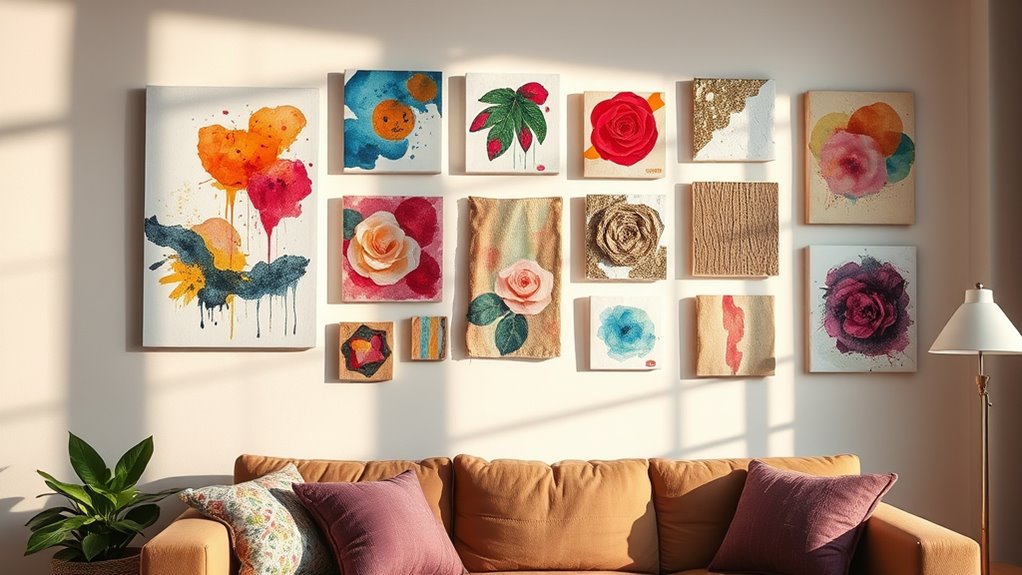

To create stunning DIY wall art, start by choosing a theme or color palette that complements your space. Use simple materials like paints, canvas, or reclaimed wood, and add personal touches with photos, quotes, or natural elements. Experiment with techniques like geometric patterns, collages, or layered textures to make your pieces unique. With a little creativity and effort, you can turn blank walls into eye-catching displays—keep exploring to discover more ideas and tips for impressive results.
Key Takeaways
- Select a cohesive theme, color palette, or style to ensure your wall art complements your space.
- Use simple materials like canvas, acrylic paints, and painter’s tape to create clean, professional-looking designs.
- Incorporate natural elements or mixed media for textured, unique pieces that reflect your personality.
- Experiment with geometric patterns, typography, or photo collages for bold visual impact.
- Plan a gallery wall with varied sizes and styles to showcase your personalized DIY artwork effectively.
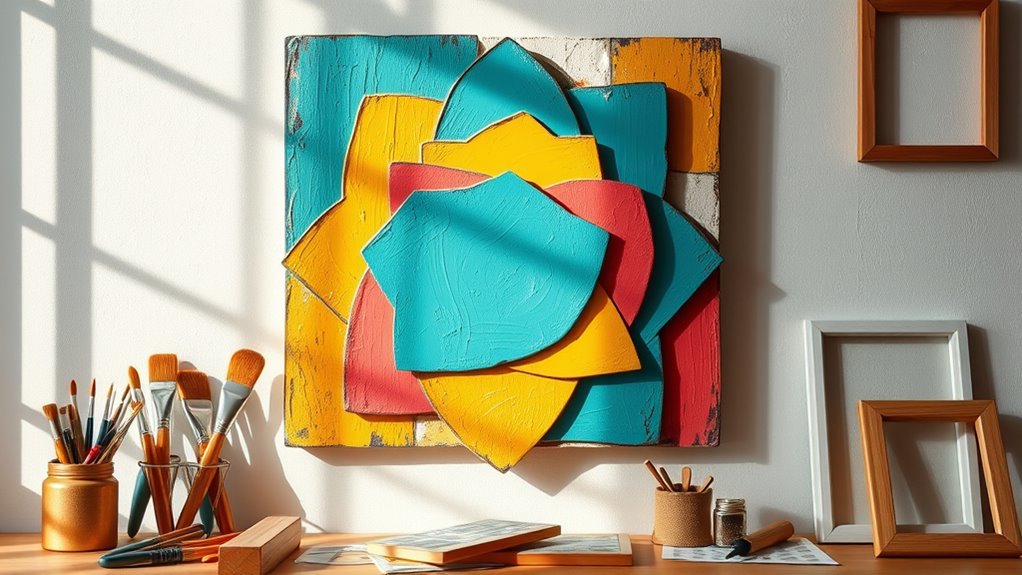
Creating your own wall art is a fun and affordable way to personalize any space. When you craft your own pieces, you infuse your environment with your personality, making it truly one-of-a-kind. The beauty of DIY wall art is that it doesn’t have to be complicated or expensive. With a few simple materials and some creativity, you can transform blank walls into compelling focal points. Whether you prefer abstract designs, inspirational quotes, or textured pieces, there’s a DIY approach that fits your style.
Start by choosing a theme or color palette that complements your existing decor. This helps ensure your artwork integrates seamlessly into the room. If you’re new to crafting, consider stenciling or using painter’s tape to create clean, sharp lines. For example, geometric patterns are easy to achieve with painter’s tape, and they lend a modern, stylish vibe. You can also use canvas, poster board, or even reclaimed wood as your base, depending on the look you want. Painting directly onto these surfaces is simple, especially if you use acrylic paints, which dry quickly and are easy to work with.
Choose a cohesive theme and use painter’s tape for clean, modern lines in your DIY wall art.
Another popular method involves creating textured art by applying different materials. For instance, you can glue fabric scraps, buttons, or natural elements like leaves and twigs onto a canvas or board. This adds depth and tactile interest to your piece. If you prefer a more minimal look, consider framing a favorite photograph or print. Large, bold typography with inspiring quotes can also serve as eye-catching wall decor. Use stencils or freehand your lettering with a brush or paint marker for a personalized touch.
If you’re into mixed media, combine different techniques. Layer paint, paper, and embellishments to craft a piece that reflects your style and creativity. Collage is another simple option—you can gather magazine cutouts, postcards, or personal memorabilia and arrange them into an artful composition. For a quick and fuss-free project, create a gallery wall with a collection of small, framed pieces that you make yourself. Mix and match different sizes and styles for an eclectic look.
Additionally, incorporating natural elements can add a unique touch and bring a sense of harmony to your space. Exploring local flora can inspire you to include dried flowers, branches, or other organic bits, making your art more meaningful and connected to your environment. Incorporating innovative materials such as eco-friendly, sustainable supplies can also elevate your DIY projects and contribute to environmental conservation. Ultimately, creating your own wall art allows you to experiment and express yourself freely. It’s about enjoying the process and making something that resonates with you. Plus, it’s a rewarding way to refresh your space without breaking the bank. With a little patience and imagination, you can turn ordinary walls into extraordinary conversations starters—proof that DIY art is both fun and fulfilling.
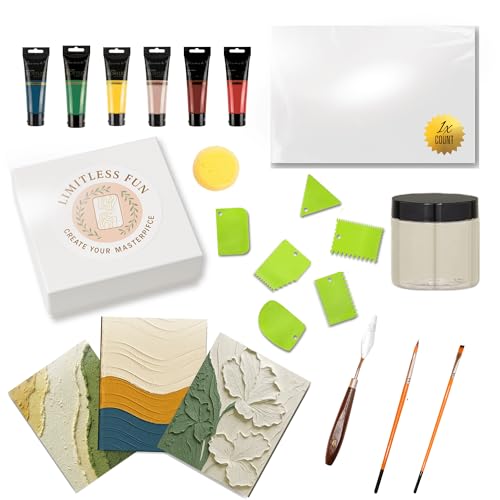
Textured Canvas Art Painting Kit – 3D Canvas Kit – Create Modern Wall Art at Home – Complete DIY Canvas Art – 6 Acrylic Paint Colors + Brushes & Tools
🎨 DIY Home Décor Made Easy – Create stunning textured canvas wall art with this complete kit.
As an affiliate, we earn on qualifying purchases.
As an affiliate, we earn on qualifying purchases.
Frequently Asked Questions
What Are Budget-Friendly Materials for DIY Wall Art?
You can use budget-friendly materials like inexpensive canvases or cardboard as your base. Acrylic paints, craft paper, or even old magazines work great for adding color and texture. String, yarn, or washi tape are affordable options for creating patterns or designs. Stamps, stencils, and printable images are also low-cost ways to add detail. With these materials, you can craft personalized wall art without breaking the bank.
How Can I Make Wall Art Waterproof?
To make your wall art waterproof, start by sealing it with a clear acrylic spray or waterproof varnish. Apply multiple coats evenly, allowing each to dry completely. For added protection, use waterproof materials like laminated paper, vinyl, or sealed canvas. Keep in mind, placing your art in areas with high humidity or direct water exposure requires extra sealing or framing behind glass to prevent damage.
What Are Quick DIY Wall Art Ideas for Beginners?
You can start with simple ideas like painting canvas panels with bold colors, creating a geometric pattern with painter’s tape, or framing your favorite fabric or wallpaper scraps. Use inexpensive materials and basic tools to keep it easy. You might also try making a photo collage or using washi tape to add designs directly on the wall. These quick projects boost your space’s style without requiring advanced skills.
How Do I Hang Large DIY Art Securely?
To hang large DIY art securely, start by choosing the right wall anchors and heavy-duty hooks suited for your weight. Measure and mark where you want the art to hang, then drill carefully into studs or use wall anchors if studs aren’t available. Use a level to ensure straight placement, and hang the art with sturdy cables or hooks. Double-check stability before stepping back to admire your work.
Can I Customize Wall Art for Different Room Themes?
Think of your walls as a storybook, each room a chapter with its own theme. Yes, you can customize your wall art to match each room’s vibe. Use colors, patterns, and materials that reflect the mood you want to set. Mix and match frames, add personal touches, or incorporate seasonal elements. This way, your space becomes a living, breathing narrative that evolves with your style and personality.
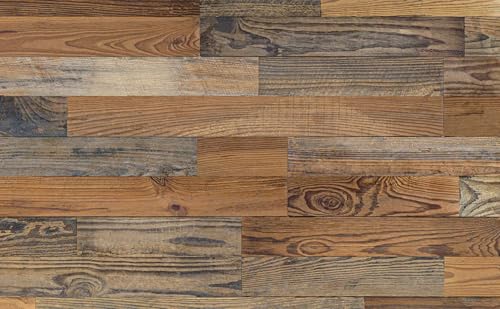
Luxdecor Real Reclaimed Wood Planks for Wall-10 Pieces Easy Nail-Up Shiplap Rustic Style 6" Wide Wood Shiplap Panels for Wall 19.44 Sq Ft (Natural Weathered Brown)
[Luxdecor Real Wood Wall Planks]:100% Real Barn Wood Wall Planks With Natural Knots and Dents, the Surface Of…
As an affiliate, we earn on qualifying purchases.
As an affiliate, we earn on qualifying purchases.
Conclusion
Now that you’ve unlocked your creativity, your walls are ready to tell your unique story. With each brushstroke or crafted detail, you’re turning blank space into a vibrant canvas of self-expression. Think of your DIY art as a garden blooming with your personality—each piece adding color and life. So, go ahead, let your imagination run wild, and transform your space into a masterpiece that’s as one-of-a-kind as you are.

TMOL Acrylic Paint Set, 24 Colors (2 oz/Bottle) with 12 Art Brushes, Art Supplies for Painting Canvas, Wood, Ceramic & Fabric, Rich Pigments Lasting Quality for Beginners, Students & Professional Artist
ALL INCLUSIVE PAINT SET: Unleash your creativity from beginner to professional level with this fun and educational acrylic…
As an affiliate, we earn on qualifying purchases.
As an affiliate, we earn on qualifying purchases.

Vittanly 15 Pack Picture Frames Collage Wall Decor for Mounting or Tabletop Display, Gallery Frame Set for Family, Multi Sizes Including 3pcs 8×10, 6pcs 5×7, 6pcs 4×6, Black
Versatile Sizes for Display: Vittanly 15-Pack Multi-Size Picture Frame Set includes 3x 8×10", 6x 5×7", and 6x 4×6"…
As an affiliate, we earn on qualifying purchases.
As an affiliate, we earn on qualifying purchases.