
To keep your home in great shape, use a thorough DIY maintenance checklist that covers seasonal inspections, routine tasks like changing filters and cleaning vents, and organizing your tools and records. Regular upkeep with proper tools prevents costly repairs and maintains your home’s value. Explore energy-efficient upgrades and online resources for tips. Staying proactive makes home maintenance manageable, and if you keep going, you’ll discover more ways to protect your biggest investment.
Key Takeaways
- Use essential tools like screwdrivers, pliers, and a tape measure for most repairs and maintenance tasks.
- Conduct seasonal inspections of gutters, roofs, HVAC, and plumbing to prevent costly damages.
- Perform routine tasks such as changing filters, cleaning vents, and sealing cracks regularly.
- Keep detailed records of maintenance activities to track history and plan future upkeep.
- Utilize online resources and proper planning to improve efficiency, safety, and home value.
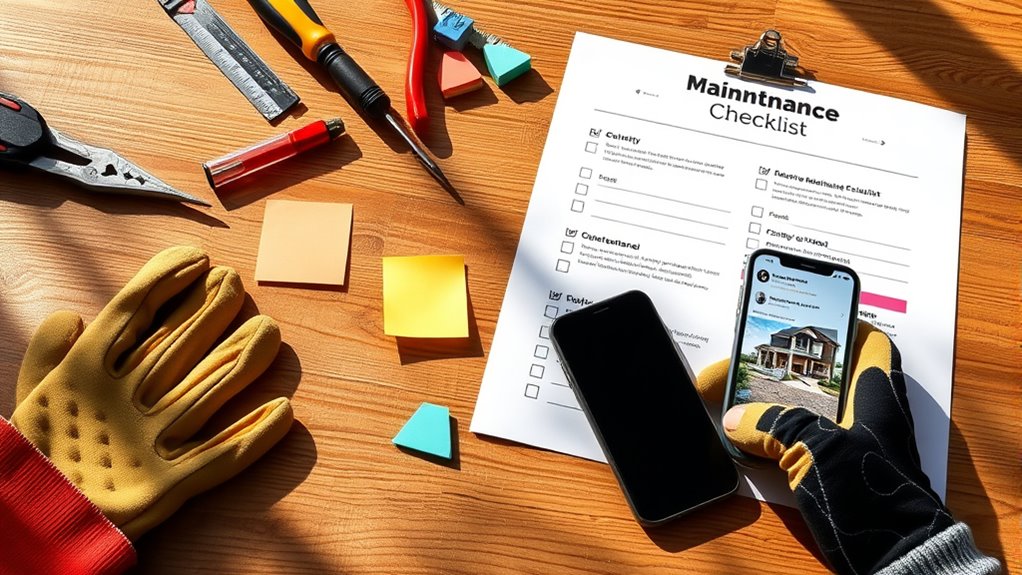
Are you looking for an easy way to keep your home in top shape without breaking the bank? A well-organized DIY home maintenance routine can save you money and prevent costly repairs down the line. The key is staying proactive with a simple yet effective plan. Start by creating a tools checklist that includes essentials like a hammer, screwdrivers, pliers, a wrench set, a tape measure, a utility knife, a flashlight, and safety gear such as gloves and goggles. These tools form the backbone of your maintenance efforts and allow you to handle most small repairs yourself. Keep your tools organized and accessible, so you’re ready to jump into action whenever needed.
Next, incorporate seasonal inspections into your routine. These inspections help you catch issues early before they escalate. For example, in the fall, check your gutters and downspouts for debris, and ensure your heating system is functioning efficiently before winter hits. During winter, inspect your pipes for leaks or freezing risks, and test smoke and carbon monoxide detectors. In spring, examine your roof for damage from winter storms, clean your windows, and service your air conditioning units. Summer is ideal for inspecting your deck, sealing any cracks, and checking outdoor faucets and irrigation systems. These seasonal inspections keep your home in good shape year-round and make regular maintenance more manageable. Additionally, exploring HVAC systems can help you optimize energy efficiency and indoor comfort.
Besides tools and inspections, it’s vital to develop a schedule for routine tasks. This might include changing HVAC filters every few months, cleaning dryer vents, or replacing weatherstripping around doors and windows. Staying consistent ensures small problems don’t turn into bigger, more expensive issues. Additionally, always keep a record of your maintenance activities. Noting what you’ve done and when helps you stay organized and reminds you of upcoming tasks. It also gives you a clear history should you need to call in a professional later.

SOLUDE Tool Set,148-Piece Home Repair Tool Kit for Men Women College Students,Household Basic Hand Tool Sets with Case for Home Maintenance,Dorm Essentials and DIY Projects
🔨【High Quality & Sturdy】The tool kits for home is forged from high-grade steel and finished in high-polish chrome,sturdy…
As an affiliate, we earn on qualifying purchases.
As an affiliate, we earn on qualifying purchases.
Frequently Asked Questions
How Often Should I Schedule Professional Inspections?
You should schedule professional inspections based on seasonal scheduling and inspection frequency recommendations. Typically, aim for a yearly HVAC check, biannual plumbing inspections, and an annual roof assessment. For appliances and safety systems, follow manufacturer guidelines or local regulations. Regularly planning these inspections helps catch issues early, preventing costly repairs. Adjust the schedule if you notice problems or after severe weather. Staying consistent with seasonal scheduling guarantees your home stays safe and well-maintained year-round.
What Tools Are Essential for DIY Home Repairs?
You need a well-stocked toolbox with essentials like screwdrivers, pliers, a hammer, a tape measure, and a utility knife. Don’t forget repair kits for quick fixes, such as caulk, glue, and spare parts. These tools and kits make DIY repairs easier and more efficient, helping you handle common issues around your home without needing a professional. Keep them handy for any unexpected repairs or maintenance tasks.
How Can I Identify Hidden Water Leaks?
You might notice a sudden spike in your water bill or unexplained damp spots, which hints at hidden leaks. Use plumbing diagnostics and leak detection methods like listening for sounds of dripping or hissing, inspecting under sinks, and checking your water meter for movement when no one’s using water. These clues help you catch leaks early, saving you money and preventing damage. Trust your instincts, as sometimes, small signs reveal bigger issues.
What Are Common Safety Precautions During Maintenance?
During maintenance, you should always prioritize safety. Keep fire safety in mind by having a fire extinguisher nearby and avoiding open flames near flammable materials. Be cautious of electrical hazards—turn off power before working on outlets or wiring, and use insulated tools. Wear protective gear like gloves and goggles, and make certain your workspace is well-ventilated. Following these precautions helps prevent accidents and keeps you safe while maintaining your home.
How Do I Prioritize Urgent Repairs Over Routine Checks?
You should prioritize urgent repairs over routine checks by evaluating the potential risks and safety hazards they pose. Address issues like leaking pipes, electrical problems, or structural damages first, since they can cause further damage or danger. Routine checks, such as cleaning gutters or inspecting HVAC filters, can wait until urgent repairs are handled. Focus on immediate safety concerns to protect your home and loved ones effectively.

Gutter Scoop Cleaning Tools – Easy Removal of Leaves and Dirt – Deep Curved Gutter Scooper Shovel for Leaves & Debris, High-Impact Polypropylene, Ergonomic Handle, Fits Most Rain Gutters
CLOGGED GUTTERS → FAST FIX Deep, curved scoop pulls out wet leaves, pine needles, and compacted debris in…
As an affiliate, we earn on qualifying purchases.
As an affiliate, we earn on qualifying purchases.
Conclusion
By staying on top of this DIY home maintenance checklist, you can save money and prevent costly repairs. Did you know that regular home maintenance can increase your property’s value by up to 10%? Taking just a little time each month keeps your home safe, efficient, and in great shape. So grab your tools and get started—your home will thank you for it! Staying proactive makes all the difference in maintaining a happy, healthy living space.

12" x 140" Air Vent Filters Kit – Cut to Size Floor Vent Filters for home. MERV 8 Electrostatic Air Filter Roll & Adhesive Hook Tape(30+ Filters)
【High quality】This series of filter is engineered from 100% non-woven blue and white polyester. Two distinctly different plies…
As an affiliate, we earn on qualifying purchases.
As an affiliate, we earn on qualifying purchases.

TrixHub Rechargeable Flashlights 2 Pack, Super Bright High Lumens Flash Light, 5 Modes Zoomable Linternas with LCD Digital Display, Powerful Handheld LED Flashlights for Home Emergencies Camping
【BRIGHT FLASHLIGHT】Flashlights high lumens equipped with an LCD real-time battery level display, which provides a clear and accurate…
As an affiliate, we earn on qualifying purchases.
As an affiliate, we earn on qualifying purchases.