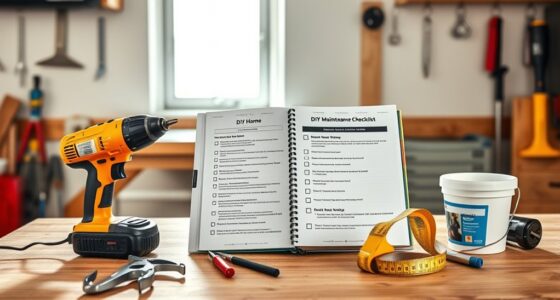
To cut your energy bills, start by sealing gaps and adding insulation to your attic, basement, and walls to prevent heat escape. Install weatherstripping and draft stoppers around windows and doors to block drafts. Upgrading to a smart thermostat allows you to optimize heating and cooling schedules easily. Combine these with simple DIY fixes like weatherproofing and regular maintenance to see big savings. Keep exploring for more easy tips to maximize your home’s efficiency.
Key Takeaways
- Seal gaps around windows and doors with weatherstripping or caulking to prevent heat loss.
- Add insulation to attics, basements, and walls to improve energy efficiency cost-effectively.
- Install DIY smart thermostats and program them to match your schedule for optimized heating and cooling.
- Use draft stoppers and door sweeps to block cold drafts beneath doors and enhance insulation.
- Combine smart devices like blinds and sensors with thermostats for automated, energy-saving home climate control.
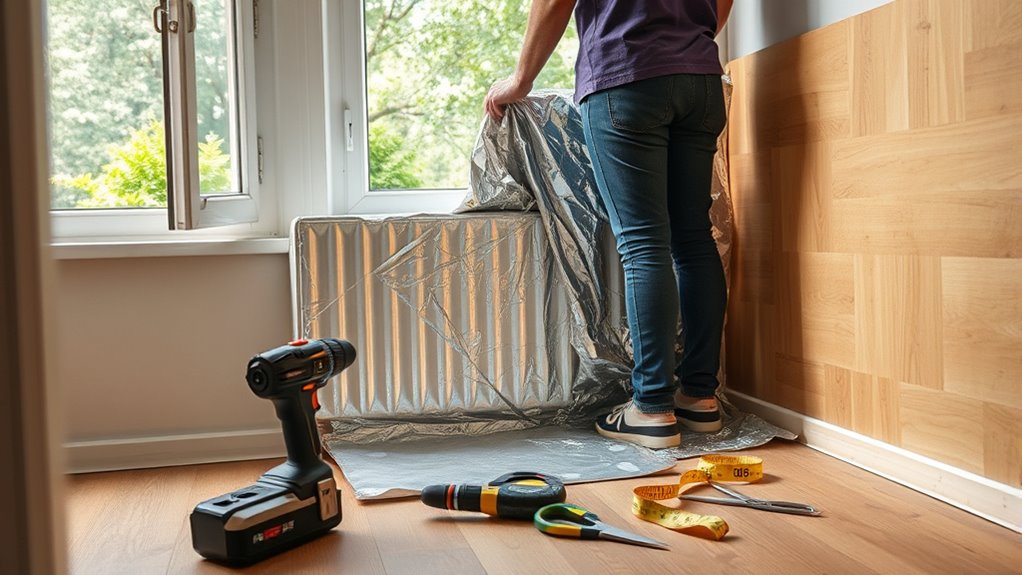
Are you looking for simple ways to upgrade your home without breaking the bank? One of the best places to start is with insulation tips. Improving your home’s insulation can considerably reduce energy waste, keeping your space warmer in winter and cooler in summer. Check your attic, basement, and walls for gaps or areas where heat escapes. Sealing leaks around windows and doors with weatherstripping or caulking can make a noticeable difference. Adding insulation to these areas is a cost-effective way to enhance your home’s energy efficiency. Additionally, consider installing draft stoppers or door sweeps to prevent cold drafts from sneaking in beneath doors. These small upgrades can add up over time, lowering your heating and cooling bills without requiring major renovations.
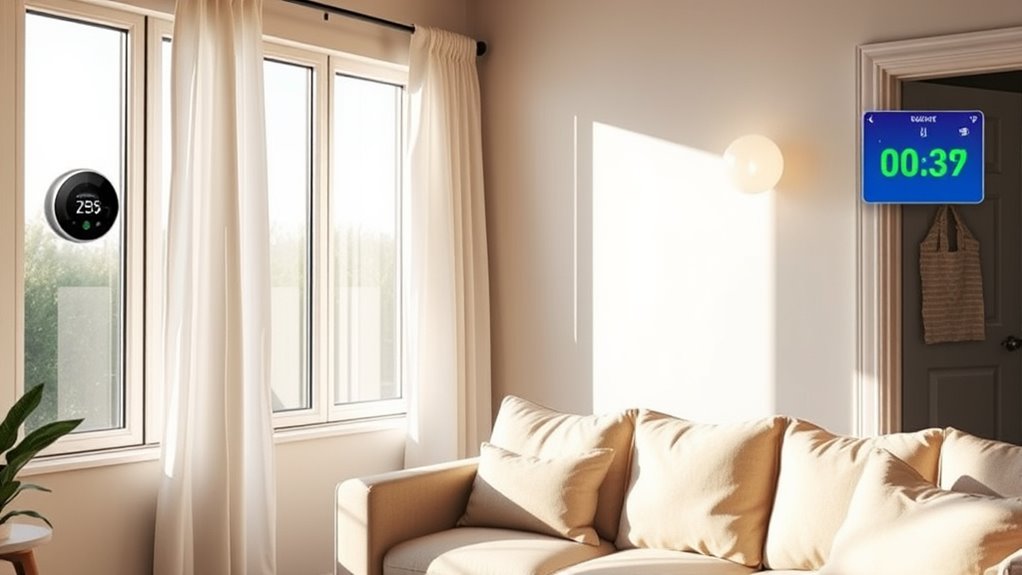
Alongside insulation tips, upgrading to smart thermostats is a clever move. These devices give you precise control over your home’s temperature, allowing you to set schedules that match your lifestyle. With a smart thermostat, you can program your heating and cooling systems to run only when needed, avoiding unnecessary energy consumption. Many models learn your preferences over time, optimizing your HVAC system to operate efficiently. This means you’re not wasting energy when you’re away or asleep. Plus, most smart thermostats can be controlled remotely via smartphone apps, so you can adjust the temperature even when you’re not home. This convenience ensures you’re never paying for conditioned air when it’s not needed, directly translating into lower energy bills.
Another effective tip is to leverage your existing technology by integrating smart thermostats with other home automation devices. For example, combining your thermostat with smart blinds or window sensors can further reduce heat loss or gain, enhancing overall efficiency. If you’re concerned about installation, many smart thermostats are designed for easy DIY setup, often requiring only a few basic tools and some simple instructions. This means you can implement these upgrades yourself without hiring a professional, saving additional costs. Also, exploring whole-house water filtration systems can help reduce household energy use by improving water heating efficiency and decreasing mineral buildup in appliances.
Frequently Asked Questions
How Do I Identify the Biggest Energy Drains in My Home?
You can identify your biggest energy drains by using thermal imaging to spot heat leaks around windows, doors, and walls. Additionally, invest in energy meters to monitor how much power appliances consume during operation. Regularly check these tools to pinpoint areas where heat escapes or where appliances draw excessive energy. This proactive approach helps you target specific issues, making your home more energy-efficient and lowering your bills.
Are DIY Energy-Saving Projects Suitable for Renters?
Think of DIY energy-saving projects as painting a room—you can refresh it without permanent changes. As a renter, you can usually do simple tasks like sealing leaks or adding window insulation, but your renters’ rights and DIY limitations mean you can’t make permanent modifications. These projects are suitable and effective, helping you lower bills without risking your security deposit or violating lease agreements. Just keep it simple and reversible.
What Safety Precautions Should I Take When Installing Insulation?
When installing insulation, prioritize insulation safety by wearing protective gear like gloves, goggles, and a dust mask to prevent irritation from fibers. Make sure your workspace is well-ventilated, and follow the manufacturer’s instructions carefully. Check for electrical wires or pipes behind walls before drilling or cutting. Taking these safety precautions helps you avoid injuries and guarantees a smooth, safe insulation installation process.
How Often Should I Perform Energy Audits at Home?
Think of your home as a living organism needing regular checkups. You should perform energy audits at least once a year, ideally during seasonal changes. This helps catch issues early and guarantees your home stays efficient. Incorporate utility monitoring to track consumption patterns and identify areas for improvement. Regular audits keep your energy bills in check, making sure your home remains comfortable and cost-effective year-round.
Can DIY Hacks Replace Professional Energy Efficiency Upgrades?
DIY hacks can’t fully replace professional energy efficiency upgrades. While DIY projects may save money upfront, a professional assessment offers a detailed cost comparison and identifies hidden issues you might miss. Professionals have specialized tools and expertise to optimize your home’s energy use effectively. Relying solely on DIY hacks may lead to short-term savings but could cost more long-term if energy efficiency isn’t maximized properly.
Conclusion
By trying these DIY home hacks, you could save up to 30% on your energy bills each year. It’s surprising to learn that heating and cooling account for nearly 50% of energy use in homes, but simple fixes like sealing leaks and adding insulation can make a big difference. So, don’t wait—start implementing these easy tips today and enjoy a warmer home with less money spent. Small changes really do add up!