
You can save money and boost your safety by performing simple DIY car maintenance tasks like checking tire pressure, changing your oil, replacing windshield wipers, and cleaning both the interior and exterior of your vehicle. Regularly inspecting these areas helps prevent costly repairs and keeps your car running smoothly. Following these straightforward steps is easier than you think, and if you continue exploring, you’ll discover even more ways to keep your car in top shape.
Key Takeaways
- Check and maintain proper tire pressure regularly to improve safety and fuel efficiency.
- Perform oil changes by draining old oil, replacing filters, and refilling with new oil.
- Replace windshield wipers to ensure clear visibility during adverse weather conditions.
- Conduct routine vehicle inspections, including tire wear, oil levels, and brake function.
- Clean exterior and interior surfaces regularly to protect your vehicle and extend its lifespan.

Ever wondered how you can save money and keep your car running smoothly? The good news is that many basic maintenance tasks are simple enough to do yourself, saving you both time and cash. With a little knowledge and the right tools, you can handle routine chores that keep your vehicle in top shape. Starting with checking your tire pressure, it’s a straightforward task that can improve fuel efficiency and extend tire life. Use a reliable pressure gauge to measure each tire’s pressure when the tires are cold, and inflate them to the recommended PSI found in your owner’s manual or on a sticker inside the driver’s door. Regularly inspecting your tires helps prevent uneven wear and reduces the risk of flats, saving you money on replacements and repairs. Proper tire maintenance also contributes to the overall safety of your vehicle on the road.
Next, changing your oil is one of the most crucial upkeep tasks you can do. It might seem intimidating at first, but with some patience, it’s quite manageable. Before you start, gather the necessary supplies—new oil, an oil filter, a wrench, a drain pan, and gloves. Warm up your engine slightly, then turn off the car and position the drain pan under the oil pan drain plug. Carefully loosen and remove the plug, allowing the old oil to drain completely. Once drained, replace the drain plug securely, then remove the old oil filter using the filter wrench. Lubricate the rubber seal of the new filter with a bit of fresh oil before installing it. Finally, pour in the new oil through the oil filler cap, check the level with the dipstick, and tighten everything back up. Regular oil changes improve engine performance and longevity, and doing it yourself saves you a trip to the shop. Being aware of your engine’s cooling system health can also prevent overheating and costly repairs down the line.
Another easy task is replacing your windshield wipers. Over time, wipers wear out and become less effective, especially during storms. To replace them, lift the wiper arm away from the windshield, press the tab or release mechanism on the wiper blade, and slide it off the arm. Attach the new blade by reversing these steps. This quick fix ensures clear visibility and safer driving without the need for professional help. Additionally, cleaning your car’s exterior and interior regularly isn’t just about appearance—removing dirt, dust, and debris helps preserve your vehicle’s paint and interior surfaces. Use suitable cleaners and soft cloths to avoid scratches and damage.
Top picks for "maintenance basic upkeep"
Open Amazon search results for this keyword.
As an affiliate, we earn on qualifying purchases.
Frequently Asked Questions
How Often Should I Change My Engine Oil?
You should change your engine oil every 3,000 to 5,000 miles, or roughly every 3 to 6 months, depending on your driving habits and vehicle type. Check your owner’s manual for specific recommendations. If you often drive in stop-and-go traffic, extreme temperatures, or tow heavy loads, consider changing the oil more frequently. Regular oil changes keep your engine running smoothly and extend its lifespan.
What Tools Are Essential for DIY Car Maintenance?
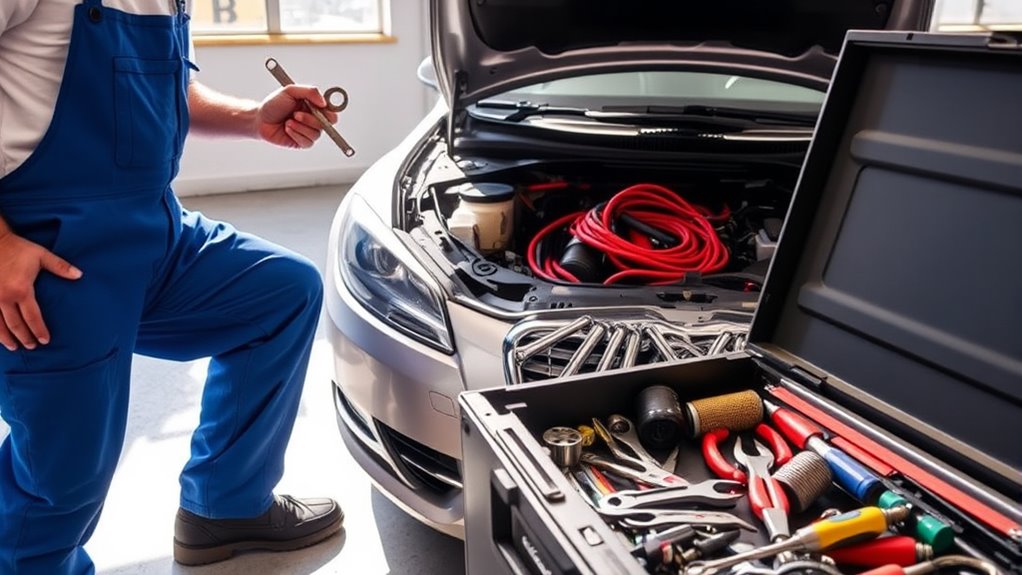
You need essential tools like a socket wrench set, screwdrivers, pliers, a funnel, gloves, and a jack to handle DIY car maintenance. A tire pressure gauge and a jumper cable kit are also handy. These tools help you perform tasks like oil changes, tire checks, and basic repairs. Keep them organized in a toolbox so you’re always ready to tackle maintenance projects safely and efficiently.
Can I Replace My Brake Pads Myself?
Yes, you can replace your brake pads yourself. Think of it like changing the batteries in your remote — it’s straightforward once you understand the steps. You’ll need some basic tools, like a jack, wrench, and new brake pads. Just follow a reliable tutorial, keep safety in mind, and take your time. With patience, you’ll save money and gain confidence, just like fixing that squeaky door latch.
How Do I Check and Refill Windshield Washer Fluid?
To check and refill your windshield washer fluid, open the hood and locate the washer fluid reservoir, usually marked with a windshield icon. Remove the cap, then pour in the appropriate washer fluid until it reaches the fill line. Be careful not to overfill. Close the cap securely, then test your washer system by activating it from inside your car to verify everything works properly.
Is It Safe to Perform Tire Rotations at Home?
Yes, it’s generally safe to perform tire rotations at home if you have the right tools and follow safety precautions. But, don’t rush—improperly rotating tires can cause issues. You’ll need a jack, jack stands, a wrench, and the vehicle’s manual. Carefully lift the car, follow the rotation pattern, and tighten everything properly. If you’re unsure, consult a professional or the manual to avoid risking safety or damaging your tires.
Conclusion
Now that you know how to check your oil, replace your filters, and inspect your tires, you’re empowered to keep your car running smoothly, save money, and enjoy the satisfaction of doing it yourself. With simple tools and a little time, you can handle basic maintenance tasks confidently, prevent costly repairs, and extend your vehicle’s lifespan. Embrace these skills, stay proactive, and take pride in caring for your car—because regular upkeep makes a difference.