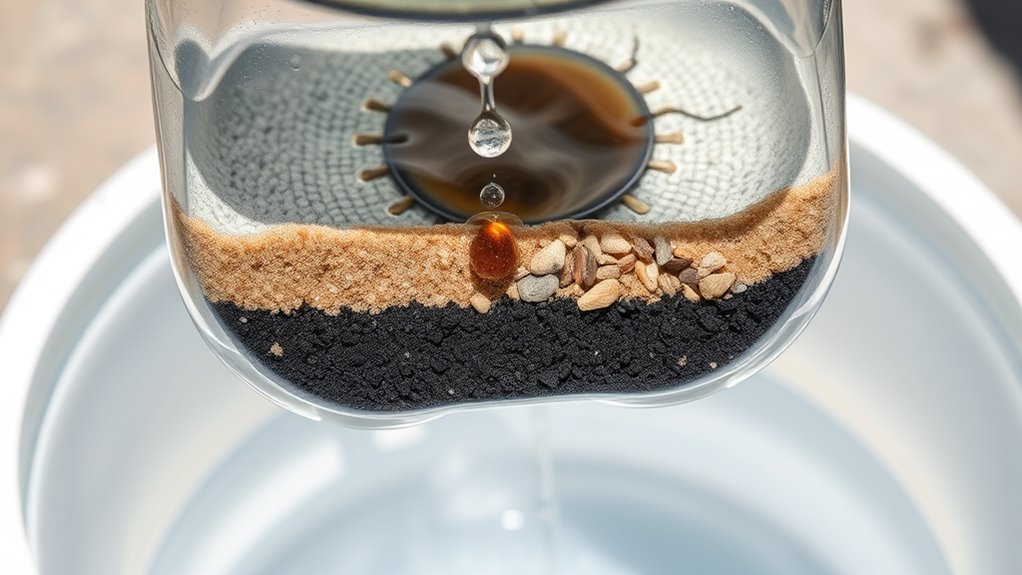

To construct a basic emergency water filter, start with a clean plastic bottle or container with a small hole at the bottom. Cover the hole with cloth or coffee filter, then add layers of crushed activated charcoal, sand, and gravel. Pour water slowly through the top, allowing it to pass through each layer for better filtration. Keep in mind, this method improves clarity but may need boiling to guarantee safety. Continue exploring to learn more about optimizing your filter.
Key Takeaways
- Use a plastic container with a small hole, layered with cloth, activated charcoal, sand, and gravel for effective filtration.
- Cover the drain hole with cloth or coffee filter to prevent material mixing and slow water flow.
- Pour water slowly into the top, allowing it to pass through each layer to remove contaminants and improve clarity.
- Regularly replace charcoal and sand to maintain filtration efficiency and prevent clogging.
- Boil the filtered water to eliminate bacteria and viruses, ensuring safe drinking water in emergencies.
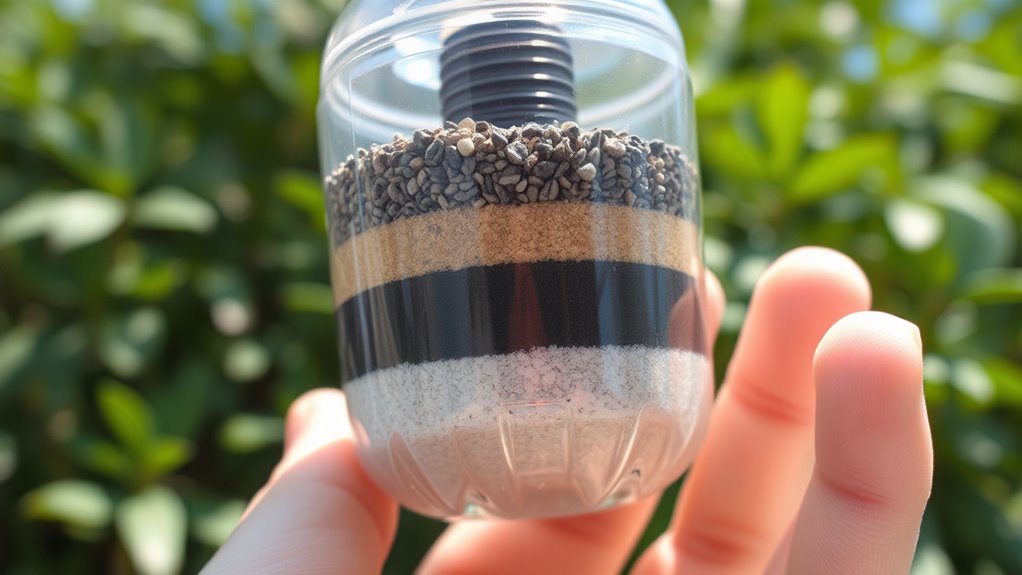
Having access to clean water is essential, and building your own water filter is a practical way to guarantee safe drinking water. When you’re faced with an emergency or need a quick solution, knowing how to create a simple filter can make all the difference. The key to effective filtration lies in contaminant removal; you want to eliminate bacteria, sediments, chemicals, and other impurities that could harm you. To do this, you’ll need to understand the role of filtration materials—substances that trap or block unwanted particles and contaminants. Common materials include charcoal, sand, gravel, and cloth, each serving a specific purpose in the filtration process.
Start by selecting a container to hold your filter. A plastic bottle or a container with a lid works well. Cut a small hole in the bottom to allow water to drain and place a piece of cloth or coffee filter over the opening. This initial layer acts as a pre-filter, removing larger debris like leaves, dirt, and sediment. Next, you’ll add your filtration materials in layers: first, a layer of charcoal, which is excellent for contaminant removal because it adsorbs many chemicals, odors, and toxins. Crushed activated charcoal is preferable as it provides a larger surface area for trapping impurities. Follow this with a layer of clean sand, which helps filter out smaller particles and further removes impurities. Finish with gravel or small stones at the top, which prevent the sand and charcoal from mixing and help slow the water flow, giving it more time to filter thoroughly.
Pour water slowly into the top of your filter, allowing it to pass through each layer. As the water trickles down, the filtration materials work together to remove contaminants and impurities. Keep in mind that while this homemade filter can drastically improve water clarity and reduce certain contaminants, it might not eliminate all pathogens or chemicals. Boiling the filtered water afterward is highly recommended if you’re concerned about bacteria or viruses. Regularly replace the filtration materials—especially the charcoal and sand—to maintain effectiveness, as they can become clogged or less efficient over time. Understanding the benefits of high-quality filtration materials can significantly enhance your filter’s performance.
Building your own water filter is a straightforward process that leverages simple materials to enhance water safety. By understanding contaminant removal principles and choosing appropriate filtration materials, you can craft an effective system for emergency situations. Remember, this DIY filter is a supplement, not a complete solution—boiling or chemical disinfection should follow filtration to ensure your water is truly safe to drink. Being prepared with this knowledge can help you stay safe and healthy when access to clean water is limited or compromised.
Frequently Asked Questions
Can I Use Tap Water in My Emergency Water Filter?
Yes, you can use tap water in your emergency water filter, but you should consider water safety first. Tap water may contain contaminants or impurities, so running it through your filter helps eliminate harmful substances. Always check local water quality reports. Filtering tap water ensures it’s safer to drink during emergencies, especially if you’re unsure about the water’s cleanliness or if your tap water source isn’t reliable.
How Long Does the Filtered Water Remain Safe to Drink?
After filtering water in an emergency, you can typically store it safely for up to 24 hours if kept in a clean, covered container. For example, in a recent case, hikers stored filtered water overnight, but after that, contamination risk increases. To guarantee safety, always check for signs of spoilage and refresh your supply regularly, especially if storage duration extends beyond a day.
What Materials Are Most Effective for Filtering Bacteria?
You should use ceramic filters combined with activated charcoal to effectively filter bacteria. Ceramic filters trap bacteria and protozoa physically, while activated charcoal absorbs chemicals and improves taste. Together, these materials create a strong barrier against harmful microorganisms. Make certain your filter is properly maintained and replaced when needed, as bacteria can bypass ineffective or degraded materials. This combo offers a practical, reliable method to make water safer to drink in emergencies.
Can I Reuse the Filter Materials After Cleaning?
You can reuse filter materials after cleaning, but it depends on the type of filter and how thoroughly you clean it. To clean the filter, rinse it with clean water and scrub away any debris or bacteria. However, keep in mind that repeated cleaning may reduce its effectiveness over time. Always check for signs of wear or contamination before reusing filter material, and replace it if necessary to ensure safe drinking water.
How Do I Know if My Water Is Safe After Filtering?
Did you know that over 2 billion people worldwide lack access to safe drinking water? To verify if your filtered water is safe, you should perform water testing for contaminant detection. Use test kits to check for bacteria, chemicals, or heavy metals. If the results show no harmful contaminants, your water is safe to drink. Always test regularly, especially after filtering, to ensure it remains safe.
Conclusion
Building a simple water filter can be a lifesaver in emergencies. While it’s effective for removing dirt and debris, it doesn’t eliminate all pathogens. Some believe boiling afterward isn’t necessary, but scientific evidence shows boiling is essential for safe drinking water. Trusting your homemade filter combined with boiling gives you the best protection. So, always verify your method’s effectiveness before relying on it—your health depends on it. Stay prepared and stay safe.