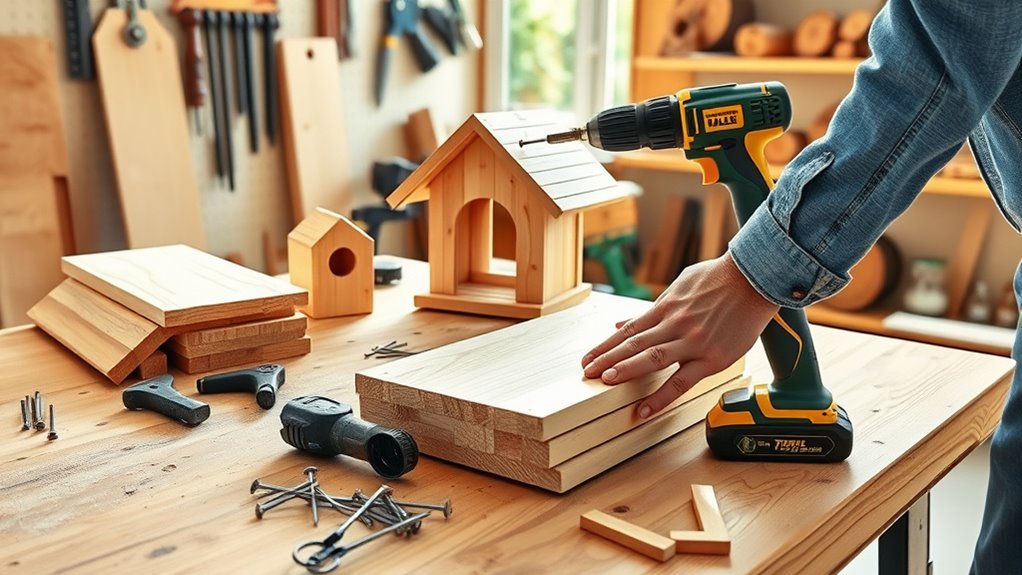

If you’re starting out and want quick wins, try simple projects like making a picture frame, coasters, or a small tray. These projects teach you basic skills such as measuring, cutting, and joining while letting you finish in a day. They boost your confidence and give you a sense of accomplishment. Keep exploring different ideas and techniques, and you’ll build a solid foundation for more advanced woodworking in no time.
Key Takeaways
- Choose simple projects like picture frames or coasters that require minimal tools and time.
- Gather basic hand tools such as saws, sandpaper, clamps, and wood glue for efficient assembly.
- Measure and cut carefully to ensure proper fit and reduce frustration during assembly.
- Focus on finishing touches like sanding and staining to enhance appearance and build confidence.
- Use scrap wood to practice techniques safely and keep projects manageable within a day.
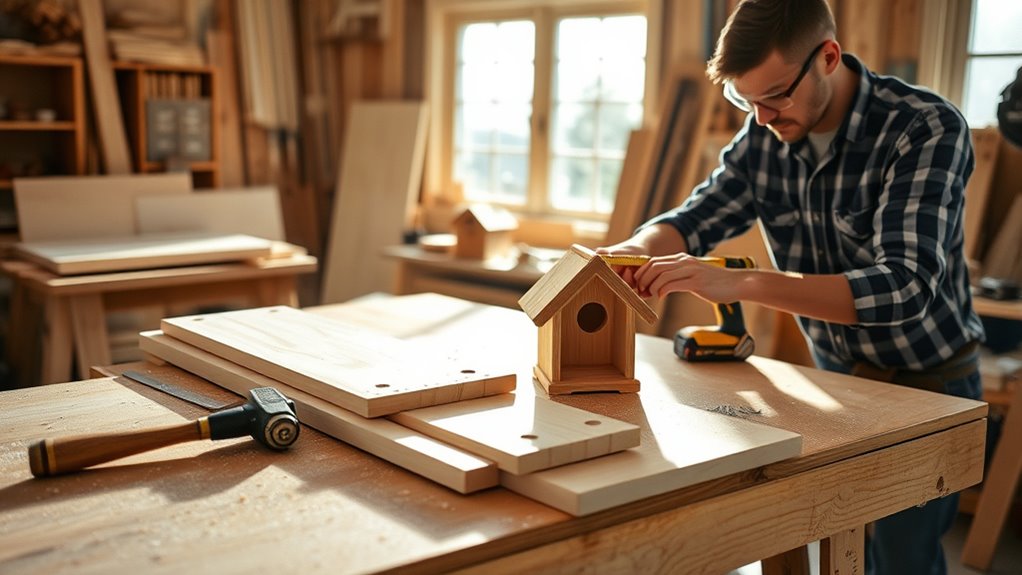
Are you interested in trying woodworking but unsure where to start? If so, you’re in luck—there are plenty of simple projects you can complete in a day that will boost your confidence and give you a sense of accomplishment. These projects don’t require advanced skills or a ton of specialized tools, making them perfect for beginners. The key is to choose something manageable that allows you to learn fundamental techniques like measuring, cutting, and assembling. Starting with small projects also helps prevent frustration and keeps the process fun.
Beginner woodworking projects that boost confidence and teach essential skills in just one day.
One great project to get you going is a basic wooden picture frame. All you need is some scrap wood, a saw, sandpaper, and a bit of wood glue. Measure and cut four pieces to size, then glue and clamp them together to form a rectangle. Once the glue dries, sand the edges smooth for a clean finish. You can personalize your frame by painting or staining it, making it a perfect gift or a piece to display your favorite photo. This project teaches you essential skills like precise measuring and proper corner joining, which are foundational in woodworking.
Another simple project is a wooden coatrack or key holder. Use a small plank of wood, drill a few holes for hooks or pegs, and attach it to a wall with screws. You can add a decorative touch by painting or staining the wood beforehand. This project is practical and quick, and it offers hands-on experience with drilling and securing hardware. Plus, it’s a functional item you’ll use daily, making your effort feel worthwhile.
A small wooden tray is also a satisfying beginner project. Cut a piece of wood to your desired size, then create a frame around the edges with thinner strips. Attach the sides with nails or screws, and sand everything smooth. Adding a handle or two can enhance its usefulness and appearance. This project introduces you to assembling flat pieces with perpendicular joints and helps you practice using clamps and nails.
Finally, consider making simple wooden coasters. Cut small squares or circles from scrap wood, sand the edges, and finish with paint, stain, or a protective sealant. They’re quick to make, require minimal tools, and give you a chance to experiment with different finishes. Plus, they’re useful around the house and make thoughtful handmade gifts.
These projects prove that you don’t need a full workshop or advanced skills to create something meaningful in a day. Focus on safety, measure carefully, and enjoy the process of turning raw wood into something functional and beautiful. With each project, you’ll build your confidence and develop the skills needed for more complex woodworking adventures.
Top picks for "beginner woodwork project"
Open Amazon search results for this keyword.
As an affiliate, we earn on qualifying purchases.
Frequently Asked Questions
What Safety Gear Is Essential for Beginner Woodworking Projects?
You should always wear safety glasses to protect your eyes from flying debris and dust. Ear protection is essential if you’re working with loud power tools. A dust mask helps prevent inhaling sawdust, and gloves can shield your hands from splinters and cuts, though they should be used carefully around machinery. Additionally, wearing appropriate clothing and securing loose items minimizes accidents, keeping you safe while working on your project.
Which Tools Are Necessary for Quick Woodworking Projects?
You need a sharp handsaw, a reliable drill, and a versatile jigsaw for quick woodworking projects. These tools are your magic wands, transforming simple wood into impressive creations with lightning speed. Don’t forget a measuring tape and a square to guarantee your cuts are precise, and safety glasses to protect your eyes. With these essentials, you’ll craft with confidence and finesse, turning raw wood into beautiful masterpieces faster than you ever imagined.
How Do I Choose the Right Type of Wood for Beginners?
You should choose softwoods like pine, cedar, or poplar for beginner projects because they’re affordable, easy to cut, and less likely to splinter. Look for wood with a smooth, even grain and avoid knots or warping. Consider project size and purpose, ensuring the wood is suitable for indoor or outdoor use. Always buy from reputable suppliers to get quality, fresh wood that’s easier to work with.
Are There Any Beginner-Friendly Woodworking Project Kits Available?
Yes, there are beginner-friendly woodworking project kits available. Imagine opening a neatly packed box, where smooth pine pieces, simple tools, and clear instructions await your hands. These kits make it easy to start, offering pre-cut materials and step-by-step guides. You’ll be able to shape and assemble with confidence, creating practical items like birdhouses or small shelves without feeling overwhelmed. It’s a perfect way to build skills and enjoy woodworking from the very first cut.
How Can I Prevent Wood From Splitting During Assembly?
To prevent wood from splitting during assembly, you should drill pilot holes before driving screws or nails. This relieves pressure on the wood fibers and reduces the risk of splitting. Use sharp tools to make clean cuts, and avoid over-tightening fasteners. Additionally, select the right type of wood for your project, especially softer woods, and work slowly to maintain control. These steps help guarantee your project stays intact and looks professional.
Conclusion
Now that you’ve explored these simple projects, imagine what you could create next. With just a day’s effort, you’ve opened a world of possibilities—but this is only the beginning. The skills you’ve gained today are your stepping stones to more ambitious pieces. So, are you ready to take the next step? Your woodworking journey has just started, and the best projects are waiting just around the corner. Stay inspired—you never know what you’ll build next.