
To plan a cross-country road trip step-by-step, start by choosing your destination and mapping out a flexible route with online tools, balancing scenic stops and driving time. Budget ahead for gas, accommodations, and food, and book reservations early. Pack essentials and make sure your vehicle is road-ready. Keep important documents handy and share your plans with someone for safety. With a solid plan in place, you’ll enjoy a smooth journey—continue to learn how to optimize your trip from start to finish.
Key Takeaways
- Define your destination, route options, and daily driving limits, allowing flexibility for spontaneous stops.
- Budget for gas, lodging, food, and emergencies, and book accommodations in advance when possible.
- Prepare your vehicle with maintenance checks and pack essentials like clothing, snacks, chargers, and maps.
- Organize important documents, share your itinerary, and download offline maps for areas with limited service.
- Plan your itinerary with must-see attractions, establish a manageable schedule, and use travel apps for updates.
Planning Your Cross-Country Road Trip

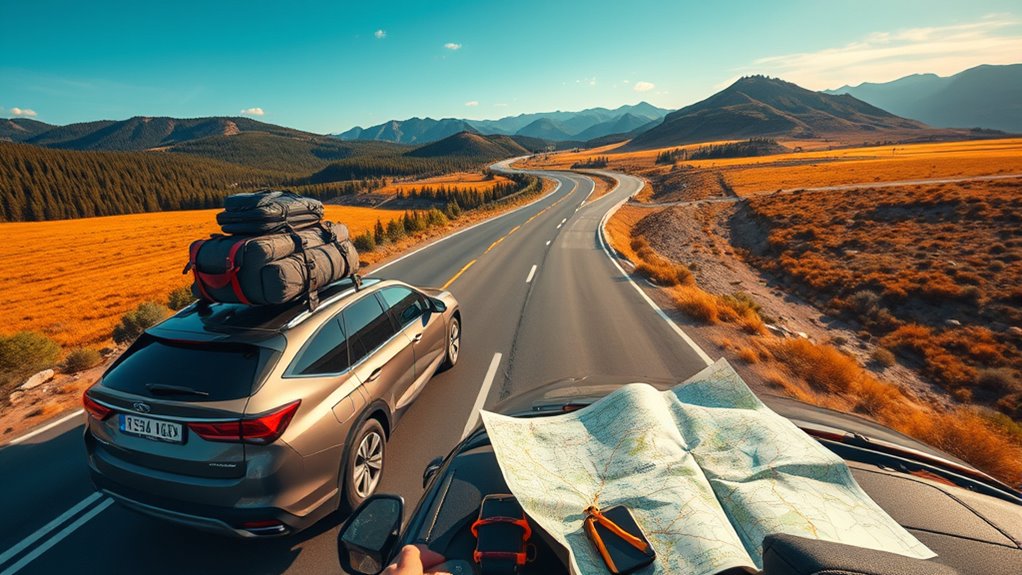
Are you ready to set out on an epic adventure across the country? Before you hit the road, you need a solid plan. Start by figuring out your destination and overall route. Decide whether you want a direct path or a more scenic, leisurely drive. Use online maps and travel apps to plot major highways and interesting stops along the way. Remember, flexibility is key, so leave room for spontaneous detours and discoveries. Once you have a rough route, break it down into manageable daily segments. Consider how many hours you want to drive each day, factoring in breaks, meals, and sightseeing. This helps prevent exhaustion and keeps your trip enjoyable.
Plan your route with flexibility, balancing scenic stops and daily driving to enjoy the journey.
Next, create a budget. Estimate expenses for gas, lodging, food, and activities. Don’t forget to include a contingency fund for emergencies or unexpected costs. Decide if you’ll camp, stay in hotels, or mix both. Booking accommodations in advance can save you from last-minute stress and often offers better rates. If you prefer hotels, look for deals and loyalty programs to stretch your dollar further. For camping, research campgrounds and ensure you have the necessary gear. Planning your budget early allows you to prioritize must-see attractions and experiences without overspending.
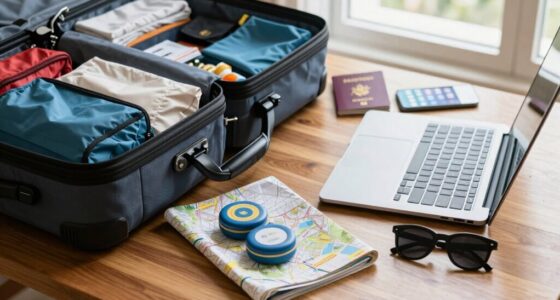
Now, focus on packing smart. Make a checklist of essentials: clothes suitable for varying weather, toiletries, chargers, a first-aid kit, and snacks. Remember, space is limited, so pack versatile clothing and only bring what you really need. Bring a portable phone charger, a physical map as a backup, and entertainment like audiobooks or playlists to keep everyone engaged during long stretches. Consider packing a cooler with drinks and snacks to save money and avoid unhealthy fast-food stops. Also, double-check your vehicle’s maintenance—tire pressure, oil, brakes—to prevent breakdowns. Having your car serviced beforehand minimizes unexpected issues on the road.
Finally, prepare your documentation and emergency contacts. Ensure your driver’s license, registration, and insurance are up to date and easily accessible. Share your itinerary with a trusted friend or family member, so someone knows your plans in case of emergencies. Download offline maps and travel guides for areas with poor service. The key to a smooth cross-country trip is planning ahead, so you can relax and enjoy the journey rather than stressing about logistics. With these steps in place, you’re ready to embrace the adventure that awaits, confident that you’ve laid a solid foundation for an unforgettable road trip.
Frequently Asked Questions
How Do I Choose the Best Route for My Trip?
You should start by researching popular scenic routes and landmarks along your desired path. Use maps and GPS tools to compare different options, considering travel time, road conditions, and attractions. Think about your interests—whether nature, history, or cities—and tailor your route accordingly. Be flexible to explore spontaneous detours, and check for any road closures or construction that might affect your plans. This way, you’ll create a memorable, personalized trip.
What Are Essential Safety Precautions for Long Drives?
Think of your long drive as a voyage across uncharted seas—safety is your sturdy ship. Always check your vehicle’s condition, including tires and brakes, before hitting the road. Keep an emergency kit, snacks, and water handy. Stay alert and take regular breaks to avoid fatigue. Follow speed limits and avoid distractions like texting. These precautions will keep your journey smooth and your crew safe, no matter how far you go.
How Can I Budget Effectively for a Cross-Country Trip?
To budget effectively for your cross-country trip, start by estimating your total expenses, including gas, food, accommodations, and activities. Track your spending daily to stay on target, and look for ways to save, like camping or packing snacks. Set aside an emergency fund for unexpected costs. Use budgeting apps to monitor your progress, and adjust your plans if you’re overspending. Planning ahead keeps your trip affordable and stress-free.
What Should I Pack for Varying Weather Conditions?
You should pack versatile clothing like layers, including T-shirts, long sleeves, and a waterproof jacket. Don’t forget a hat, sunglasses, and sturdy shoes for different weather conditions. Bring a compact umbrella for rain and warmer clothes for chilly areas. Packing a thermal or fleece is smart for cold nights, while lightweight options keep you comfortable in warmer weather. Always check forecast updates to adjust your packing list accordingly.
How Do I Find Affordable Accommodations Along the Way?
To find affordable accommodations, start by researching budget hotels, hostels, and campgrounds online. Use apps like Booking.com, Hostelworld, or Airbnb to compare prices and read reviews. Consider staying slightly outside popular areas for lower rates. Book in advance when possible, especially for peak travel seasons. Also, look for last-minute deals or memberships that offer discounts. Flexibility and thorough research help you save money on your journey.
Conclusion
Now that you know the steps to plan your cross-country road trip, you’re ready to hit the road with confidence. Remember, over 37 million Americans take long road trips each year, highlighting how popular and rewarding this adventure can be. With proper planning, you’ll create unforgettable memories and enjoy the journey as much as the destination. So, pack your essentials, stay flexible, and embrace the open road ahead—you’re about to set out on an incredible adventure!