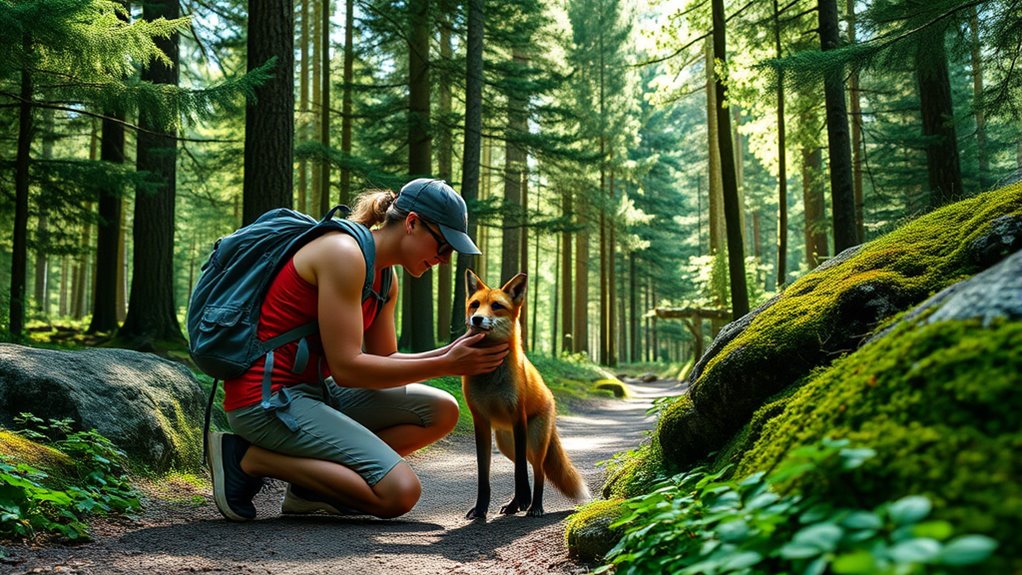

The golden rule of wildlife encounters while hiking is to always respect animals’ space and natural behaviors. Keep a safe distance, avoid startling or feeding them, and stay calm if you approach wildlife. Make noise to alert animals of your presence and use binoculars or zoom lenses for a better view. Following these guidelines helps guarantee your safety and protects the animals—continue to explore these principles for a safer, more respectful hike.

Get the little things that make your day delivered free with Prime
- Fast, free delivery on millions of items
- Prime Video, Amazon Music and more included
- Member-only deals all year
Key Takeaways
- Observe wildlife from a safe distance without disturbing or feeding animals.
- Avoid approaching, touching, or making sudden movements around animals.
- Make noise to alert animals of your presence and prevent startling them.
- Respect animal behaviors and give them space to avoid provoking defensiveness.
- Use binoculars or zoom lenses instead of getting close for better and safer viewing.
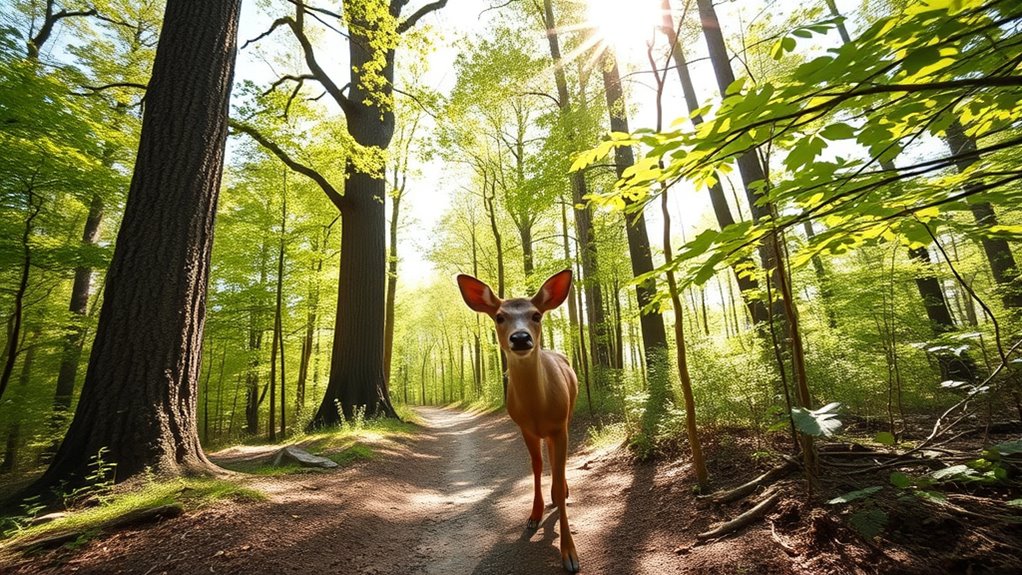
Have you ever wondered what it’s like to come face-to-face with wildlife while hiking? Encountering animals in their natural habitat can be an exhilarating experience, but it also requires respect and caution. The golden rule when it comes to wildlife encounters is simple: observe from a safe distance and never disturb or try to feed the animals. This rule isn’t just about safety—it’s about respecting animal behavior and ensuring both your safety and theirs.
Knowing animal behavior is key to practicing good safety tips. Many animals, especially those that are foraging or caring for their young, may act defensively if they feel threatened. For example, a deer might freeze or flee when it spots you, while a bird might alarm call to warn others. Predators like bears or mountain lions may exhibit more aggressive behaviors if they sense danger or hunger. Recognizing these signs can help you decide how to react. If an animal appears agitated—such as puffing up, making loud noises, or showing teeth—your best move is to slowly back away without turning your back and avoid eye contact, which can be perceived as a threat.
Recognize animal warning signs and back away calmly to stay safe during wildlife encounters.
It’s important to remember that animals often behave unpredictably, especially if they feel cornered or startled. Never attempt to approach, touch, or feed wildlife, no matter how tempting it might seem. Feeding animals can alter their natural behaviors, making them more aggressive or dependent on humans for food. Keep your distance, stay quiet, and let the animals go about their day peacefully. Carrying binoculars or a camera with a zoom lens can help you observe wildlife without getting too close. Additionally, understanding animal behavior patterns can significantly improve your safety and observation skills.
In addition to understanding animal behavior, be mindful of your surroundings. Make noise as you hike, especially in dense areas, to alert animals of your presence and reduce the chances of startling them. Keep your food stored securely and dispose of trash properly to avoid attracting animals to your campsite or trail. If you do encounter wildlife, stay calm and avoid sudden movements. Remember, most animals prefer to avoid humans, but their reactions are based on their instincts and perceptions of threat.
Following these safety tips and respecting animal behavior creates a safer, more enjoyable hiking experience for everyone. It ensures you can appreciate the beauty of wildlife without putting yourself or the animals at risk. Remember, the golden rule is about coexistence—respecting their space and giving them the freedom to go about their day while you enjoy the natural world around you.
As an affiliate, we earn on qualifying purchases.
Frequently Asked Questions
What Should I Do if a Wild Animal Approaches Me Aggressively?
If a wild animal approaches you aggressively, stay calm and avoid sudden movements. Observe its behavior carefully; signs of aggression include growling, posturing, or charging. Back away slowly without turning your back, and give the animal space to retreat. Follow safety precautions by carrying deterrents like bear spray if appropriate. Remember, respecting wildlife and understanding their behavior helps keep you safe during encounters.
Are There Specific Times When Wildlife Encounters Are More Common?
Did you know that most wildlife encounters happen during dawn and dusk? These times align with seasonal activity and nocturnal behavior, making animals more active and visible. You’re more likely to see deer in autumn or raccoons in spring. To stay safe, hike during daylight hours when animals are less active, and always stay alert, especially during dawn and dusk when wildlife is naturally more active.
How Can I Identify Local Wildlife Before Encountering Them?
You can identify local wildlife before encountering them by paying attention to animal tracks and bird calls. Look for footprints or markings in the dirt, mud, or snow to determine which animals are nearby. Listen carefully for distinct bird calls or sounds that reveal the presence of certain species. Familiarize yourself with these signs beforehand through guides or apps, helping you stay alert and respectful during your hike.
What Safety Gear Is Recommended for Wildlife Encounters?
When encountering wildlife, you should carry essential safety equipment like bear spray, a whistle, and a flashlight. Wearing protective gear such as sturdy boots, long pants, and gloves can help prevent bites or scratches. Always have a well-stocked first aid kit nearby, and consider carrying a multi-tool for emergencies. These safety measures help you stay prepared, reduce risks, and guarantee a safer, more confident experience in wildlife habitats.
Can I Feed or Interact With Wildlife Responsibly?
You should avoid wildlife feeding or direct interaction, as it can harm animals and disrupt their natural behaviors. Instead, observe wildlife from a safe distance, respecting their space and environment. Responsible interaction means appreciating animals without trying to touch or feed them. By doing so, you help preserve their health and habitat, ensuring they remain wild and free. Always follow park guidelines for safe and respectful wildlife viewing.
zoom lens for camera wildlife photography
As an affiliate, we earn on qualifying purchases.
As an affiliate, we earn on qualifying purchases.
Conclusion
Remember, the golden rule is to respect wildlife and keep your distance. By observing quietly and giving animals space, you guarantee both your safety and theirs. As the saying goes, “Take only pictures, leave only footprints.” When you respect nature’s boundaries, you help preserve its beauty for future hikers and wildlife alike. Stay mindful, stay respectful, and enjoy your adventures with the wild in harmony.
As an affiliate, we earn on qualifying purchases.
As an affiliate, we earn on qualifying purchases.
Halloween Picks
halloween
As an affiliate, we earn on qualifying purchases.