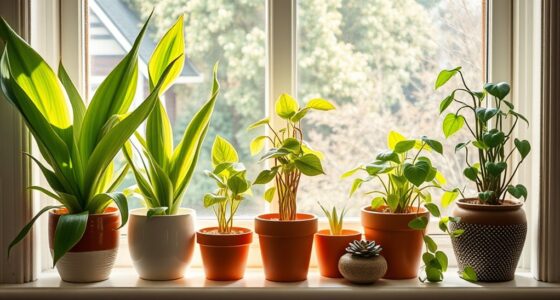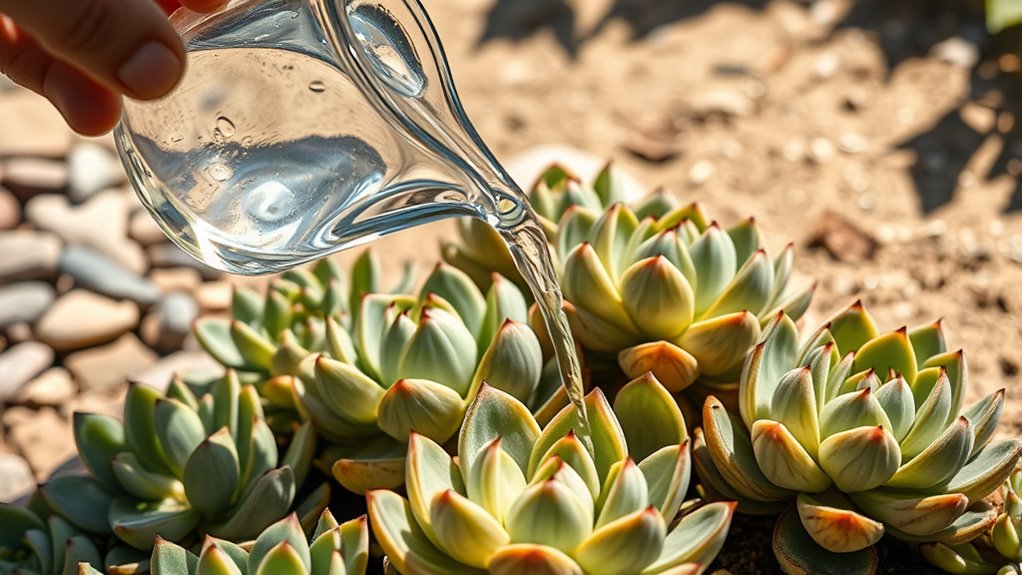

To avoid killing your succulents, always check that the soil is dry before watering and water deeply so excess drains out. Use well-draining soil to prevent water from sitting at the roots, and place your plants where they get at least six hours of bright sunlight daily. Remember, infrequent but thorough watering keeps succulents healthy, while overwatering causes root rot. Keep these tips in mind, and you’ll give your succulents the perfect care they need to thrive.

Get the little things that make your day delivered free — and shop member deals
- Fast, free delivery on millions of items
- Access to Prime Big Deal Days deals on October 6–7
- Prime Video, Amazon Music and more included
Key Takeaways
- Always check that the soil is completely dry before watering to prevent overwatering.
- Water deeply until excess drains out, then discard standing water to avoid root rot.
- Use well-draining soil mixes with sand, perlite, or pumice to ensure proper drainage.
- Provide at least six hours of bright, direct sunlight daily for healthy succulent growth.
- Adjust watering frequency based on season, watering less during dormancy to avoid overhydration.
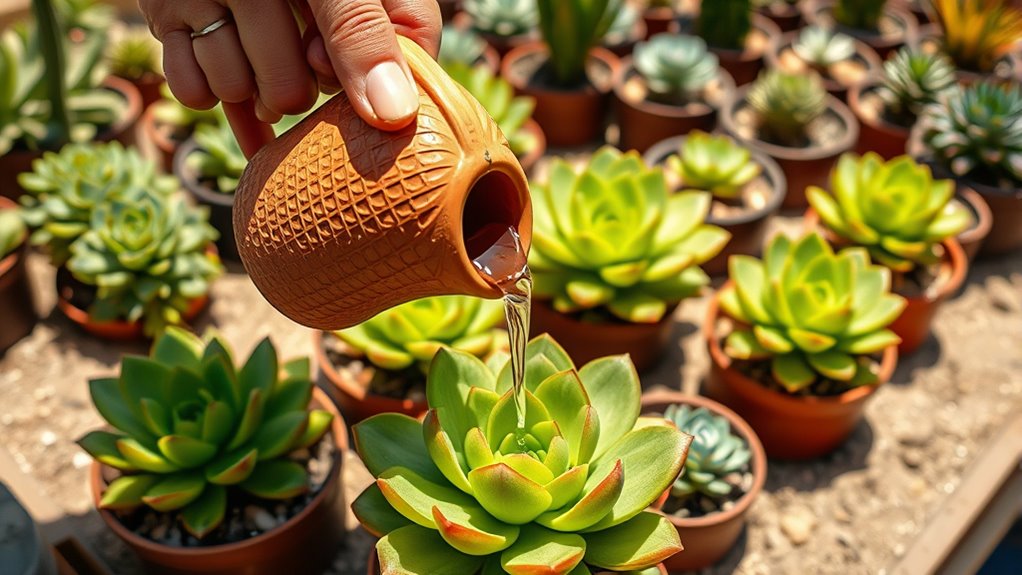
Watering succulents properly is essential to their health and growth. These plants are adapted to dry environments, so overwatering them can lead to root rot and other issues. To avoid this, you need to understand the importance of soil composition and sunlight requirements. The soil you use plays a significant role in how well your succulents thrive. A well-draining soil mix is critical; it should contain materials like sand, perlite, or pumice to ensure excess water doesn’t linger around the roots. Regular garden soil retains too much moisture, which can drown the roots and cause decay. When planting or repotting your succulents, opt for a specialized cactus or succulent mix or create your own blend with good drainage properties. This setup allows water to pass through quickly, preventing water from sitting at the bottom of the pot.
Sunlight requirements are equally crucial when caring for succulents. Most succulents need plenty of bright, direct sunlight—at least six hours a day—to stay healthy and maintain their vibrant colors. Without enough sunlight, they can become leggy, stretching toward the light and weakening their structure. Conversely, too much intense midday sun, especially during the hottest months, can cause sunburn spots or scorch their leaves. Position your succulents in a spot where they receive ample light but are protected from the harshest rays if necessary. If natural sunlight is limited, consider supplementing with grow lights designed for succulents. Proper sunlight exposure encourages robust growth and helps your plants develop thick, healthy leaves. Additionally, understanding the solar system and energy insights can help you optimize the placement of your plants relative to natural light sources for maximum benefit.
When watering your succulents, always check the soil’s dryness first. Use your finger or a moisture meter to determine if the top inch of soil feels dry. If it does, it’s time to water. If not, wait a few more days. When watering, do so thoroughly—water until it drains out of the bottom of the pot—then discard any excess to avoid water sitting in the saucer. Remember, succulents are drought-tolerant, so they prefer infrequent, deep watering rather than frequent shallow sips. During the growing season, you might water once every two to three weeks, but during dormancy, reduce watering even further. Consistent, mindful watering, combined with appropriate soil composition and adequate sunlight, will keep your succulents healthy and thriving for years to come.
As an affiliate, we earn on qualifying purchases.
Frequently Asked Questions
Can I Water My Succulents With Tap Water?
Yes, you can water your succulents with tap water, but be mindful of tap water minerals, which can accumulate and harm your plants over time. To avoid this, let the water sit for 24 hours before watering or use filtered water. Adjust your watering frequency to prevent overwatering, and always make sure the soil dries out completely between waterings to keep your succulents healthy.
How Often Should I Water Succulents During Winter?
During winter dormancy, you should reduce watering frequency to once every three to four weeks. Succulents slow their growth and need less water, so overwatering can cause root rot. Check the soil first; only water when it’s completely dry. This careful approach helps your succulents stay healthy through winter, preventing overwatering issues while still providing enough moisture to keep them alive and happy.
Is It Okay to Use a Spray Bottle to Water Succulents?
Think of your succulent as a delicate jewel that needs gentle care. Using a spray bottle for watering technique is okay if you want to give your plant a light mist, mimicking dew. However, it’s not ideal for thorough watering, as succulents prefer soaking their roots. Save the spray bottle for occasional misting and use a watering can for deep, infrequent drinks to keep your succulent happy and healthy.
Should I Water Succulents From the Top or Bottom?
You should water succulents from the bottom to guarantee proper watering techniques. Place the pot in a shallow dish of water and let the soil absorb moisture through drainage holes. This method promotes even soil absorption and prevents overwatering, which can harm your succulents. Avoid pouring water directly on top, as excess moisture can lead to root rot. Bottom watering helps keep your plants healthy and thriving.
How Do I Tell if My Succulent Is Overwatered?
You can tell if your succulent is overwatered by checking for leaf discoloration, which often appears as yellowing or mushy leaves. Additionally, soil drainage issues cause water to linger around roots, leading to root rot. If your plant’s leaves feel soft, translucent, or are falling off easily, and the soil stays soggy, overwatering is likely the culprit. Adjust your watering schedule and guarantee proper soil drainage to save your succulent.
well-draining succulent soil mix
As an affiliate, we earn on qualifying purchases.
As an affiliate, we earn on qualifying purchases.
Conclusion
To keep your succulents thriving, remember to water sparingly, water wisely, and water thoughtfully. Avoid overwatering and underwatering, and instead, find that perfect balance. Watch your succulents flourish, their leaves firm and vibrant, their roots healthy and strong. With patience and attention, you’ll nurture plants that thrive in drought, grow resilient in drought, and beautify your space in drought. Embrace these watering habits, and your succulents will reward you with lasting beauty.
As an affiliate, we earn on qualifying purchases.
As an affiliate, we earn on qualifying purchases.
Fall Picks
fall essentials
As an affiliate, we earn on qualifying purchases.