
To save money on groceries each week, plan your meals and stick to a detailed shopping list, avoiding impulse buys. Shop with a budget in mind, focus on store brands, buy in bulk for non-perishables, and take advantage of discounts and coupons. Properly store leftovers to reduce waste, and cook at home more often. If you keep these strategies in mind, you’ll discover simple ways to stretch your budget even further as you explore more tips.
Key Takeaways
- Create a weekly meal plan and shopping list based on your pantry, avoiding impulse purchases and reducing waste.
- Shop with a strict budget, using cash or limited cards, and compare prices to find the best deals.
- Buy seasonal and local produce to maximize freshness and cost savings.
- Purchase store brands and bulk non-perishable items to lower per-unit costs.
- Cook at home regularly and prep meals in advance to avoid costly takeouts and impulsive buys.
Plan Your Meals and Make a Shopping List

Creating a meal plan and making a detailed shopping list can considerably cut your grocery bills. When you plan ahead, you avoid impulse buys and unnecessary purchases. Start by deciding what meals you’ll prepare for the week, considering your schedule and nutritional needs. Check your pantry and fridge to see what ingredients you already have, then list only what you need. This focused approach helps prevent waste and keeps your spending on track. Stick to your list when you shop, resisting the temptation of extra snacks or special treats. Planning also allows you to compare prices and choose the most affordable options. Incorporating energy-efficient appliances and strategies can further reduce your overall grocery costs and environmental impact. Overall, a well-thought-out meal plan and precise shopping list streamline your grocery trips and save you money.
Shop With a Budget in Mind
Once you’ve planned your meals and made a detailed shopping list, it’s time to set a clear budget for your grocery trip. Decide how much you can spend before heading to the store. This keeps you focused and prevents impulse buys. Carry cash or set a limit on your card to help guarantee you stick to your budget. As you shop, regularly check your total to ensure you’re staying on track. Prioritize the items on your list and avoid unnecessary extras. If a product is more expensive than your plan allows, look for more affordable alternatives or skip it. Staying within your budget encourages mindful shopping and helps you avoid overspending, making your grocery trips more economical each week. Being aware of cost-saving strategies can further enhance your savings during each shopping trip.
Buy in Bulk for Non-Perishable Items
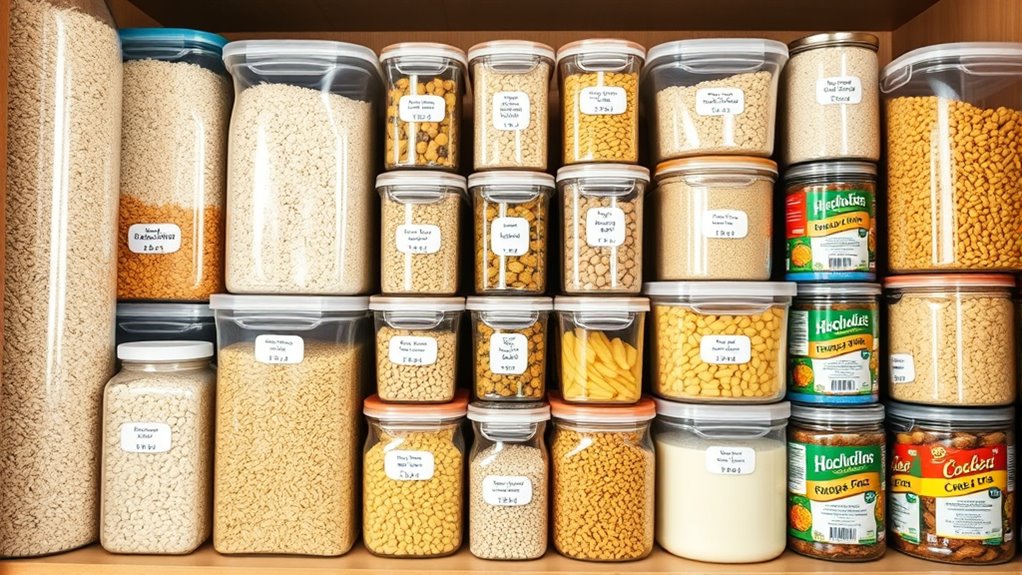
Buying in bulk for non-perishable items can considerably cut your grocery costs over time. To maximize savings, organize your storage space and choose high-quality products that last longer. Making smart choices when selecting bulk items helps ensure you’re getting the best value for your money. Additionally, understanding cost-effective purchasing strategies can further enhance your savings.
Cost Savings Benefits
Have you ever wondered how purchasing in bulk can save you money? When you buy non-perishable items in larger quantities, the cost per unit drops markedly. Stores often offer discounts on bulk packages, meaning you pay less overall compared to buying smaller sizes repeatedly. This approach helps you avoid frequent trips to the store, saving you both time and transportation costs. Plus, buying in bulk reduces the likelihood of impulse purchases and packaging waste, which can add up financially. Over time, these savings accumulate, freeing up your budget for other essentials. Additionally, understanding Free Floating concepts can help you optimize your shopping strategies for maximum savings. By choosing to buy non-perishable items in larger quantities, you make smarter financial decisions, ensuring you get the most value for every dollar spent on groceries.
Storage and Organization Tips
Storing bulk non-perishable items properly can maximize your savings and keep your kitchen organized. When you store items correctly, you reduce waste and make it easy to find what you need. First, use clear, airtight containers to keep items fresh and visible. This prevents spills and helps you monitor inventory. Second, label each container with the product name and purchase date to avoid confusion and ensure freshness. Third, organize your pantry by grouping similar items together, such as grains, canned goods, and snacks. This makes shopping and meal prep more efficient. Proper storage not only extends the shelf life of your bulk purchases but also saves you money by reducing unnecessary trips to the store and minimizing spoilage. Additionally, ventilating storage areas can help prevent moisture buildup and maintain optimal conditions for your stored goods.
Choosing Quality Bulk Items
Choosing quality bulk items can substantially impact your savings, especially when you focus on purchasing non-perishable goods. Look for items with long shelf lives and good quality to avoid waste and ensure value. Buying in bulk often lowers the cost per unit, saving you money over time. Check for store brands or trusted suppliers that offer fresh, durable products. Before purchasing, compare prices and quality to get the best deal. Organize your bulk items properly to prevent spoilage and keep track of expiration dates. Here’s a quick guide:
| Item Type | Tips |
|---|---|
| Grains | Buy whole, store in airtight containers |
| Canned Goods | Check expiration dates, buy in bulk |
| Oils & Vinegars | Opt for larger bottles for savings |
| Dried Fruits | Ensure proper storage to maintain freshness |
| Spices | Purchase in resealable packs to preserve flavor |
Choose Store Brands Over Name Brands

Opting for store brands instead of name brands is one of the easiest ways to cut your grocery bills. Store brands often offer similar quality at a fraction of the price, helping you save without sacrificing value. To maximize your savings, consider these tips: 1. Compare prices and ingredients to guarantee quality matches. 2. Purchase store brands for staples like rice, pasta, and canned goods. 3. Use store brand products during sales to get the best deals. Additionally, exploring store brand options in water-related products like hydrotherapy supplies or pool accessories can further enhance your savings.
Take Advantage of Discounts and Coupons
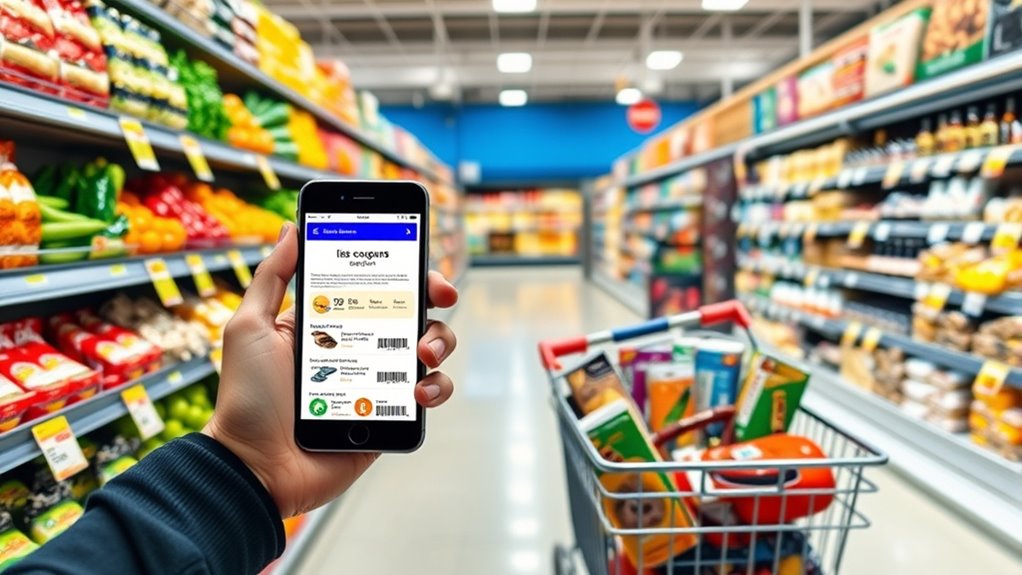
Have you ever wondered how to stretch your grocery budget further? Using discounts and coupons is one of the easiest ways. Always check store flyers and digital apps before shopping, so you know what deals are available. Clip coupons from newspapers or save digital ones online; many stores accept both. Combine coupons with sales to maximize savings on items you already buy. Be strategic—only use coupons for products you need, so you avoid unnecessary purchases. Sign up for store loyalty programs, which often offer exclusive discounts or cashback. Keep an organized coupon binder or digital folder to easily find deals. Understanding how different brewing methods affect caffeine content may help you choose lower-cost, lower-caffeine alternatives. By actively seeking discounts and coupons, you can considerably reduce your weekly grocery expenses while still getting everything you need.
Buy Fruits and Vegetables in Season
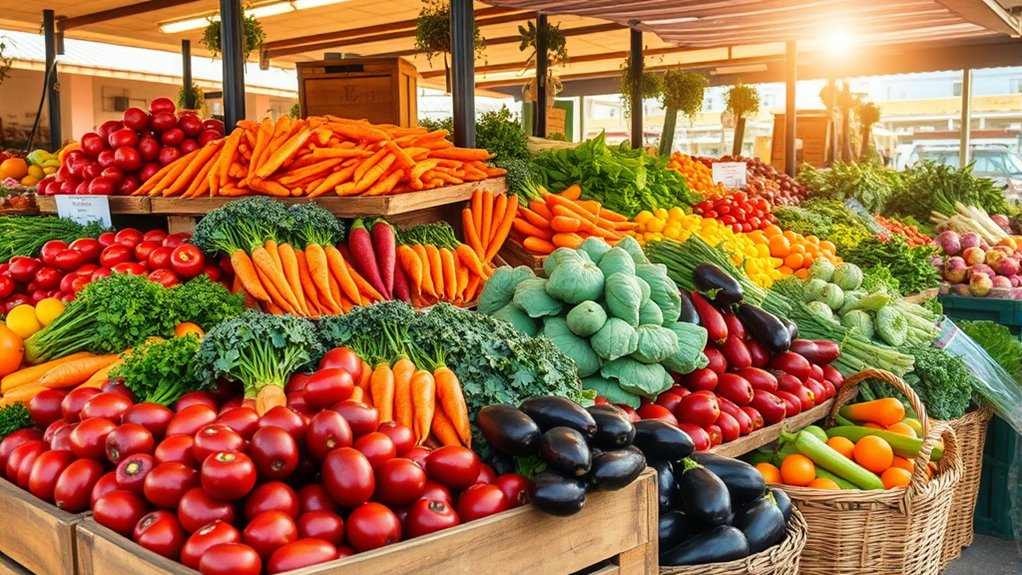
Buying fruits and vegetables in season guarantees you get the freshest and most flavorful produce. When you choose local harvests, you often pay less and support nearby farmers. Plus, seasonal choices can make your meals more vibrant and enjoyable. Additionally, understanding your inner wisdom can help you make more mindful decisions about your food choices and lifestyle.
Freshness and Flavor
When you choose fruits and vegetables that are in season, you’ll enjoy better flavor and higher freshness. Seasonal produce is picked at its peak, so it tastes better and lasts longer once you bring it home. Plus, buying in season often means lower prices because the supply is plentiful. To maximize freshness and flavor, consider these tips:
- Shop at farmers’ markets during peak season to find freshly picked options.
- Look for vibrant colors and firm textures when selecting produce at the store.
- Store fruits and vegetables properly to maintain their freshness longer.
- Seasonal produce is often sourced locally, which can reduce your carbon footprint and support local farmers.
Local Harvest Benefits
Choosing locally harvested fruits and vegetables in season guarantees you’re getting produce at its peak freshness and flavor. When you buy seasonal, you often pay less because these items are abundant and require less transportation. Plus, supporting local farmers benefits your community and reduces your carbon footprint. To visualize the savings and benefits, consider this table:
| Season | Produce Examples | Cost Benefits |
|---|---|---|
| Spring | Asparagus, strawberries | Lower prices, fresher |
| Summer | Tomatoes, peaches | Bumper harvests, savings |
| Fall | Apples, pumpkins | Reduced transportation costs |
Buying in season ensures better quality, lower prices, and supports local agriculture—all ways to save money and eat healthier. Additionally, AI tools can help you plan meals around seasonal produce to maximize savings and reduce waste.
Reduce Food Waste by Proper Storage
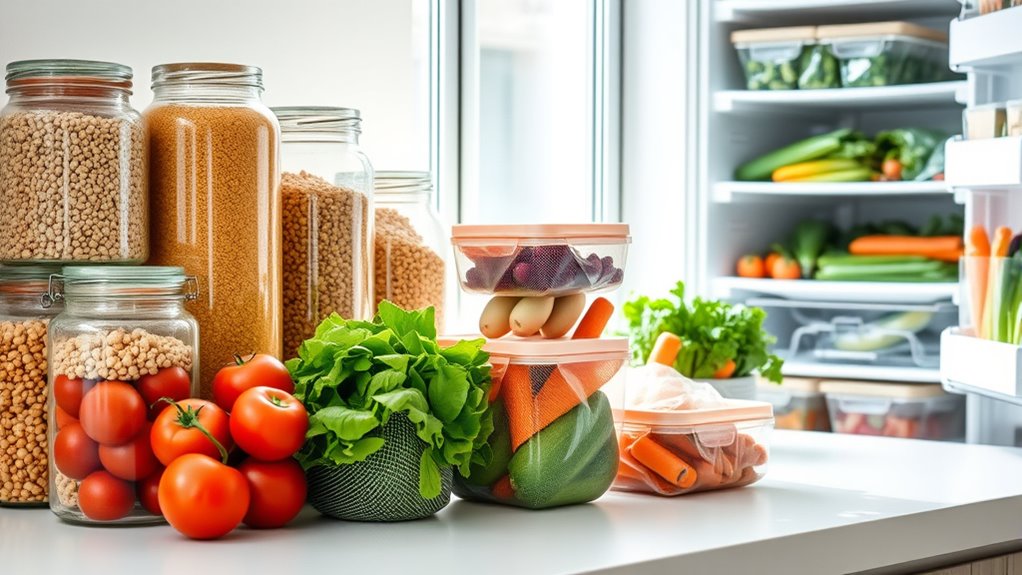
Proper storage is essential for minimizing food waste and saving money on groceries. When you store food correctly, it stays fresh longer, reducing the need to toss spoiled items. To achieve this, consider these tips:
Proper storage keeps food fresh longer and reduces waste and costs.
- Use airtight containers for leftovers and perishables to prevent spoilage.
- Store fruits and vegetables separately, as some emit gases that cause others to ripen or spoil faster.
- Keep your fridge at the right temperature (around 37°F/3°C) and organize items to ensure proper airflow and easy access.
Limit Impulse Buys and Stick to Your List
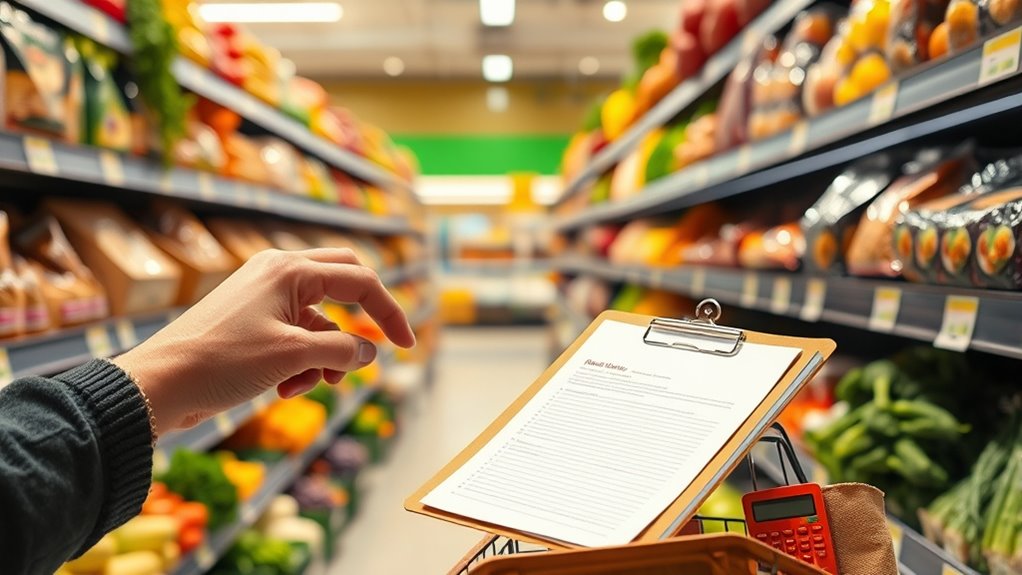
After ensuring your food stays fresh longer through proper storage, the next step is to prevent unnecessary spending. To do this, always bring a shopping list and stick to it. Before heading to the store, plan your meals and check what you already have at home. Resist the urge to buy snacks, drinks, or extras that aren’t on your list, even if they seem tempting. Impulse buys often add up quickly and aren’t budget-friendly. Shop with a clear purpose, and avoid browsing aisles aimlessly. Consider shopping during off-peak hours to reduce temptations from promotional displays. If you’re tempted by a non-list item, give yourself a moment to reconsider—most of the time, it’s not needed. Staying disciplined helps you save money and keep your grocery bill in check.
Use Cashback and Reward Programs

Using cashback and reward programs can markedly cut your grocery costs over time. By signing up for store loyalty cards or cashback apps, you earn money back on your purchases, lowering your overall expenses. To maximize benefits, consider these strategies:
Maximize savings by using cashback programs and loyalty cards to lower grocery costs over time.
- Join store loyalty programs to access exclusive discounts and earn points on every purchase.
- Use cashback credit cards or apps that offer a percentage back on grocery shopping.
- Combine offers with coupons for extra savings, stacking rewards whenever possible.
Consistently using these programs turns regular shopping into a money-saving opportunity. Keep track of your rewards and redeem them wisely to get the most value. Over time, this simple habit can substantially decrease your weekly grocery bills.
Cook at Home More Often
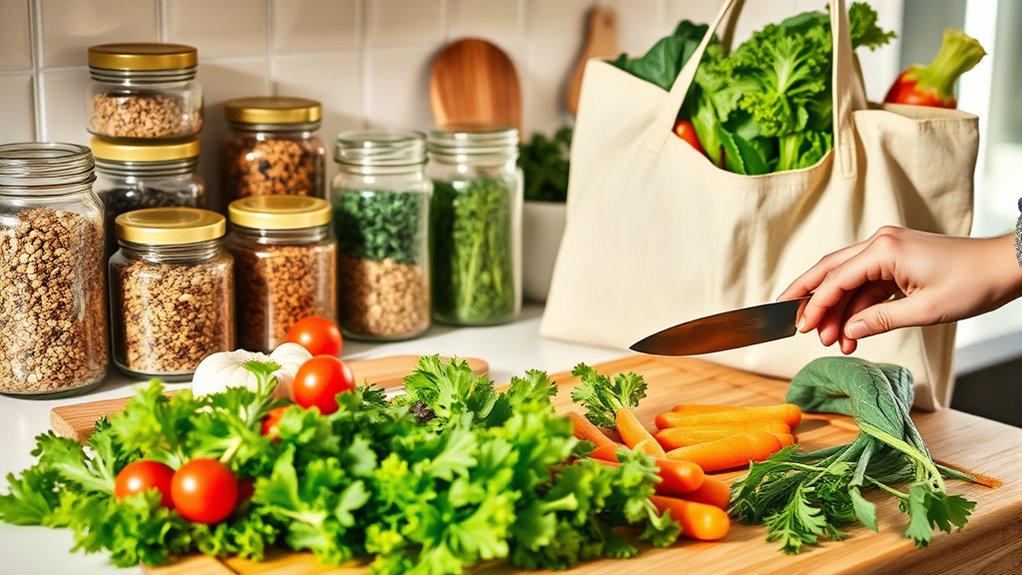
Cooking at home more often helps you plan meals efficiently, reducing waste and saving money. When you buy ingredients in bulk, you get better prices and have what you need for multiple dishes. These strategies make it easier to stick to your budget and enjoy healthy, homemade meals.
Meal Planning Efficiency
Have you ever noticed how meal planning can make grocery shopping more efficient and save you money? When you plan your meals ahead, you avoid impulse buys and reduce waste. You’ll know exactly what ingredients you need, which cuts down on extra trips and unnecessary spending. To boost your meal planning efficiency:
- Create a weekly menu based on your staples and sales.
- Make a detailed shopping list aligned with your plan.
- Prep ingredients in advance to streamline cooking during the week.
Sticking to your plan keeps you focused and prevents last-minute, costly decisions. Plus, it helps you make better use of leftovers, reducing food waste. With a clear plan, you’ll save both time and money, making your grocery trips more productive and budget-friendly.
Bulk Ingredient Benefits
Buying bulk ingredients can make it easier to cook at home more often, saving you money and time. When you buy in larger quantities, you often get lower prices per unit, reducing your overall grocery bill. Plus, having staples like rice, beans, pasta, and spices readily available means you can whip up meals quickly without multiple trips to the store. Bulk buying also minimizes packaging waste and helps you avoid impulse purchases of small, expensive packages. You can prep ingredients in advance, making meal prep faster and more efficient. This consistency encourages you to cook more at home rather than eating out or ordering takeout. Over time, these habits add up, helping you save money while enjoying nutritious, home-cooked meals.
Frequently Asked Questions
How Can I Track My Grocery Spending Effectively?
You can track your grocery spending effectively by using budgeting apps or creating a simple spreadsheet. Keep receipts and record every purchase, noting the amount spent and items bought. Set a weekly spending limit and review your expenses regularly to stay on track. Also, categorize your purchases to identify areas where you can cut costs, making it easier to manage your grocery budget and avoid overspending.
Are There Specific Days to Shop for Better Deals?
Yes, shopping on specific days can help you snag better deals. Many stores offer discounts on certain days, like mid-week sales on Wednesdays or Thursdays, when inventory is fresh and prices are lowered. Sign up for store newsletters or loyalty programs to get alerts. Planning your shopping trips around these days guarantees you capitalize on discounts, ultimately saving you money and making your grocery budget go further.
How Do I Compare Prices Across Different Stores?
You can’t judge a book by its cover, so don’t assume one store is cheaper than another without checking. To compare prices, list the items you need and note their prices at each store, either online or in person. Use grocery apps or flyers to spot deals. Keep track of unit prices to see which offers the best value, and don’t forget to contemplate quality and brand preferences.
What Are the Best Apps for Finding Grocery Coupons?
You should try apps like Ibotta, Rakuten, and RetailMeNot to find grocery coupons. These apps offer cash-back deals, digital coupons, and discounts that you can redeem at checkout. Simply scan receipts or browse offers before shopping to maximize savings. Downloading multiple apps can give you a broader range of deals, helping you save more each week effortlessly. Stay consistent, and you’ll notice your grocery bills shrink over time.
How Can I Involve My Family in Saving Money on Groceries?
You can involve your family by making shopping a team effort. Involve everyone in planning meals and creating a shopping list, so they feel invested. Encourage kids to find coupons or compare prices, and set a budget together. Share the savings and reward responsible shopping habits. This approach not only saves money but also teaches valuable financial skills and fosters teamwork during grocery trips.
Conclusion
So, next time you’re tempted by those flashy, expensive snacks at checkout, remember: saving money is as simple as sticking to your list—you know, that little piece of paper that keeps you from spending more than you need. Ironically, the best way to splurge less is to plan ahead and resist impulse buys. Who knew that a little discipline could actually make your wallet happier? Sometimes, the simplest tricks are also the easiest to forget!